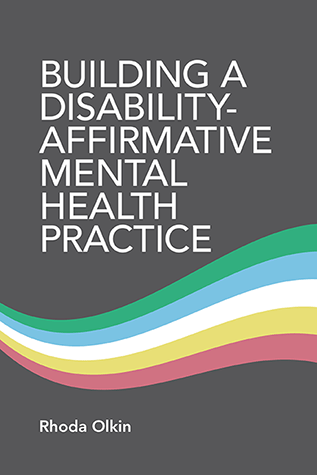
Building a Disability-Affirmative Mental Health Practice
ISBN: 978-1-4338-4355-6Available formats
Also available from
Build a disability-affirmative practice that is inclusive, culturally responsive, and grounded in ethical care.
Despite the prevalence of disability across clinical populations, it remains one of the least addressed areas in professional training, often resulting in misdiagnoses, exclusionary practices, and therapeutic environments that fail to meet the needs of disabled clients. This volume bridges that gap by offering clinicians concrete strategies for integrating disability into case formulation, treatment planning, assessment, and everyday practice.
Therapists, counselors, and other helping professionals will find essential guidelines and tools for evaluating the needs of disabled clients, analyzing the accessibility of their practice, and navigating the complex intersections of disability with other identities. They will learn how to communicate respectfully and clearly with disabled clients while avoiding inadvertent microaggressions. Disability culture and community are also examined, with an emphasis on how disability intersects with other cultural identities and manifest at different developmental stages, helping clinicians build competency in working with a diverse array of clients. Guidelines for incorporating one's own disability into therapy and creating more opportunities and pathways for disabled students and mental health professionals are also provided.
Whether working with clients managing chronic medical conditions or navigating physical, cognitive, sensory, or other disabilities, this book is an essential resource for mental health professionals committed to equity, competence, and inclusive care.
Preface: My Personal Disability Story
Introduction: A Clinical Guide to Gaining Disability Competence
Part I. Introduction to Key Concepts
- Chapter 1. Language—How We Talk About Disability
- Chapter 2. Disability, Health, and Disability Disadvantage
- Chapter 3. Making Your Practice Disability Accessible
- Chapter 4. Conceptualizing Disability: Moral, Medical, Social, and Biopsychosocial Models
- Chapter 5. Disability Laws and Civil Rights
Part II. About Specific Populations and Intersectionality
- Chapter 6. Disability in the Family: A Systemic Approach
- Chapter 7. Romantic Partners With Disabilities
- Chapter 8. Disabled Children and Teens
- Chapter 9. Parenting Disabled Children and Teens
- Chapter 10. Disabled Parents
- Chapter 11. Intersectionality: Disability in Context
- Chapter 12. Disability in LGBTQ+ Communities
Rhoda Olkin and Kristin J. Conner - Chapter 13. Disability and Aging
Part III. Areas of Knowledge and Skills
- Chapter 14. Pain and Disability Fatigue
- Chapter 15. Assistive Technology and Devices
- Chapter 16. Ableism and Microaggressions
Rhoda Olkin and Kristin J. Conner - Chapter 17. Disclosure of Disability
- Chapter 18. Assessment and Disability
Rhoda Olkin, Hadas Pade, and Julia Feinberg - Chapter 19. Disability Culture and Community
- Chapter 20. The Clinician's Disability
- Chapter 21. Being an Ally and an Advocate
Appendix A. Beliefs About Disability Measure
Appendix B. Overall Quality of Life (OQOL) Measure
Appendix C. Able-Bodied Privilege Questionnaire
Appendix D. Self-Assessment
Appendix E. Disability Questionnaire
Appendix F. Practice Vignettes
References
Index
About the Author
Rhoda Olkin, PhD, is a clinical psychologist and a distinguished professor at the California School of Professional Psychology at Alliant International University. Her specialties include disability in clients, families, students, and faculty. She developed disability-affirmative therapy and has trained therapists for over 30 years. Dr. Olkin received the California Psychological Association Award for advancement of psychology and diversity, is on the Board of Polio Health International, executive director of the Institute of Disability and Health Psychology, and associate editor for Rehabilitation Psychology. As a polio survivor, she is a disability advocate and activist integrating disability studies and clinical psychology.
Rhoda Olkin is the leading authority on disability inclusion in psychology, and this is her most comprehensive offering yet. Disability competency doesn’t end with working with clients; it must be infused in clinician training, research, and advocacy. That is why all psychologists—and those who train them—should read this book.
—Kathleen Bogart, PhD, Professor, School of Psychological Science, Oregon State University, Corvallis
This text provides an extremely approachable, accessible, and comprehensive introduction to working effectively with clients with disabilities and their families. Readers will gain a strong understanding of the psychosocial experiences of people with disabilities, and how those experiences can impact the therapeutic relationship and process. This text will help prepare a new generation of culturally competent disability therapists.
—Emily Lund, PhD, CRC, Associate Professor, College of Education, The University of Alabama, Tuscaloosa
Building a Disability-Affirmative Mental Health Practice is an invaluable guide that every psychotherapist should have on their shelf. With clarity and depth,it illuminates how to create truly accessible, respectful, and empowering therapeutic spaces for clients with disabilities and chronic illness. This book is not only essential reading—it’s a call to action for a more inclusive and just mental health field.
—H’Sien Hayward, PhD, Licensed Clinical Psychologist; Chair, American Psychological Association Committee on Disability Issues in Psychology
This accessible, personal, and deeply engaging book offers the essential history and modern context needed to build a disability-affirming mental health practice. Drawing on her lived experience as a disabled person since childhood and her expertise as a mental health professional, Olkin brings humor, unflinching honesty, and steadfast optimism to the challenges disabled people face today—leaving abled readers inspired to do better as allies and advocates. An easy read packed with pragmatic strategies and resources, this is a book you’ll reach for time and again.
—Anna L. Kratz, PhD, Professor, Department of Physical Medicine and Rehabilitation, University of Michigan, Ann Arbor; Editor-in-Chief of the journal Rehabilitation Psychology
Rhoda Olkin is a gifted and person-centered practitioner, scholar, and advocate; her work affirms disability as a form of diversity, and is focused on and mindful of the needs of disabled clients and their families. This excellent book will ensure interested therapists develop the necessary clinical skills to promote the mental health, flourishing, and well-being of people with disabilities.
—Dana S. Dunn, PhD, Professor of Psychology, Department of Psychology, Moravian University, Bethlehem, PA; author of On the Foundational Principles of Rehabilitation Psychology: Origins, Understanding, and Applications
The author is a person with a disability herself and has experienced many instances of discrimination and marginalization. She emphasizes the disadvantages that many people with disabilities encounter because of the built environment and negative social attitudes. Being an ally of people with disabilities means using our privilege to help dismantle ableism, and counter structural ableism—to be actively alert to the barriers to full inclusion for individuals with disabilities, and to be mindful of our own privileges and of the challenges that individuals with disabilities face every day. This book will help mental health trainees gain an understanding of disability, and help push mental health training programs to increase the representation of clinicians with disabilities.
—Fabricio E. Balcazar, PhD, Professor Emeritus of Human Development; College of Applied Health Sciences; University of Illinois at Chicago