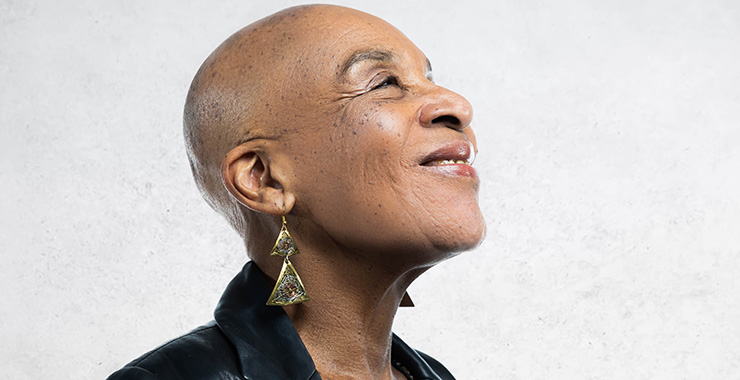

For many in the psychological profession, and in American society overall, recent years have highlighted questions of equity and inequity, especially questions of racial inequity. For Linda James Myers, PhD, such questions have been at the core of her work for more than 4 decades.
Myers, an academy professor emeritus at The Ohio State University, is known internationally for her development of the theory of optimal psychology, also called optimal conceptual theory. Optimal psychology posits that there is an optimal worldview that emphasizes the interrelatedness of all living people and things. It provides a framework for shifting consciousness to experience a healthy, holistic, integrative reality that is sustainable. Myers holds that an unhealthy, fractured, suboptimal worldview is dominant in much of Western society and underlies racism and other inequities. In contrast, there is a healthy, unitary, optimal worldview that emerges from the wisdom tradition of African deep thought, which promotes healing and sustainable well-being. Myers says her theory emerged from the need to understand, among other things, how humans could build a social structure rationalizing the enslavement of other human beings as chattel—and also how African people endured centuries of such unprecedented enslavement to emerge as the moral and spiritual leaders of this nation toward equity for all.
The Monitor spoke with Myers about how her theory can apply to current discussions about equity.
In what ways does your theory of optimal psychology allow us to understand how history led to the current social and political climate?
Race is a social construct created to serve as the elusive justification for assigning value and allocating opportunity based on phenotypic differences such as skin color, privileging Whites, and disenfranchising Blacks. With the suboptimal mindset support for materialism, self-indulgence and systems of dehumanization are seldom overridden by values for equity, justice, or human decency. The suboptimal mindset sanctioned the kidnapping, capturing, and trafficking of millions of Africans to America to build the material wealth of the captors, this nation, and most of the Western world. It also failed to provide the mechanisms for honest self-correction of blatant contradictions. For example, claiming to build a democracy with freedom and justice for all but excluding the humans held captive, enslaved as property without any human rights. Our current social and political climate is still grounded in the fractured, suboptimal view that prevents adherents from being fully in touch with their own humanity and the capacity to recognize and honor that of others.
And that’s why Black Lives Matter still exists in the 21st century to proclaim and insist on the acknowledgment of the humanity of Black people. Until people begin to penetrate to the core roots of racism and other societal isms, which optimal psychology posits is a faulty worldview, mindset, or conceptual system, overcoming those societal isms will remain an impossibility.
Last fall, APA issued an apology for the ways in which it has contributed to and upheld racism. What are your thoughts on this apology and whether it has the potential to affect the field and society?
Optimal psychology helps explain why it has taken APA 130 years (and the field of psychology about a century and three quarters) to come to this realization, as professionals assumedly trained and devoted in their careers to exploring and improving mental health. The apology can become an important first step toward affecting the field and society if it encourages honest acknowledgment of systemic racism and deep understanding of the field’s negative impact on its targets and perpetrators of the injustice and inhumanity. Openness to building the capacity to make needed changes within the profession, and society at large, will require accessing the knowledge, wisdom, and understanding existing beyond the current mainstream. The good news is that those equipped to assist are ready to help, having done so successfully for many others over the decades.
You recently retired from decades as a full-time tenured professor. With so many faculty leaving universities now, what advice would you give to current and would-be tenured professors?
My advice for people seeking tenure is to look for universities and environments committed to true diversity, not just the superficial appearance of diversity. We really need educators who realize that what we’ve been doing has gotten us to where we are now and to go forward transformative change is required.
What’s next in your work?
I will continue to teach, train, and write about how to live and sustain optimal psychology, individually and collectively, through the process of shifting your consciousness from suboptimal to optimal levels of human development. This is especially exciting work right now because in the turmoil of the pandemic, people are searching for substantial change in their lives and there is real possibility of a shift.
Those wanting to live their optimal psychology can encourage the creation of their best self, think critically and deeply, learn to stand for what they know in their heart is right and illuminates their soul. That’s what we need today to bring harmony and balance capable of creating a just, sacred, sustainable world where peace is possible.