skip to main content

Abortion bans cause outsized harm for people of color

Increasing restrictions on reproductive care inflict a significant physical and mental burden that ripples across generations—especially for people of color

APA Style leaf logo Cite This Article in APA Style
Abrams, Z. (2023, June 1). Abortion bans cause outsized harm for people of color. Monitor on Psychology. https://www.apa.org/monitor/2023/06/abortion-bans-harm-people-of-color

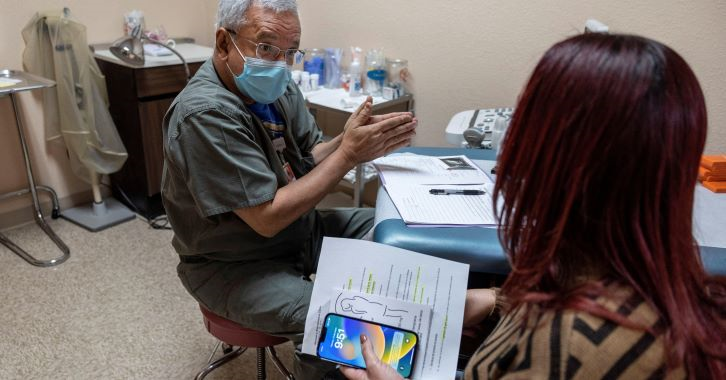
woman of color having a conversation with a medical professional

More than 60% of those who seek abortions are people of color and about half live below the federal poverty line, according to the Guttmacher Instituteopens in new window, a reproductive health research and policy group. And many people of color, including the majority of Black Americans, live in Southern states with some of the most restrictive abortion laws.

Those laws—triggered by the June 24, 2022, U.S. Supreme Court ruling in Dobbs v. Jackson Women’s Health Organization, in which the court refused to strike down a Mississippi state law banning abortion after the fifteenth week of pregnancy—overturned the 1973 decision of Roe v. Wade, which protected abortion access under the Fourteenth Amendment.

Compared with women who had an abortion, women who were denied one report higher stress and anxiety, lower self-esteem, and lower life satisfaction, according to the landmark Turnaway Study of more than 1,000 women seeking abortions across 21 states (Biggs, M. A., et al., JAMA Psychiatry, Vol. 74, No. 2, 2017opens in new window). Combined with the harm caused by racism and centuries of structural inequality, these findings have left psychologists deeply concerned about the mental health impacts of overturning Roe v. Wade.

[Related: The facts about abortion and mental health]

“Women of color face more structural barriers to care to begin with, and those inequities are exacerbated when these policies further diminish their power and bodily autonomy,” said Wizdom Powell, PhD, who is the chief social impact and diversity officer at Headspace Health. “You end up having a domino effect of negative impact on women’s overall health and well-being.”

Psychologists and other mental health care providers have a crucial role to play—not just in research and practice, but in linking people with support services, advocating for equitable legislation, and supporting women of color in raising their voices.

“It’s really important that we don’t sit on the sidelines with so much subject matter expertise, while folks with less expertise are making critical decisions about the public’s health,” Powell said.

Denying bodily autonomy

Research shows that, in addition to medical necessity, people tend to seek abortions because they do not feel financially prepared or are worried about their age, health, or marital status or caring for their children (Biggs, M. A., et al., BMC Women’s Health, Vol. 13, 2013opens in new window).

Most people who have abortions are not White. In 2019, the abortion rate was 23.8 per 1,000 Black women, 11.7 per 1,000 Hispanic women, 13 per 1,000 Asian American, Native American, and other women—and just 6.6 per 1,000 White women, according to data reported to the Centers for Disease Control and Prevention (CDC) (Abortion Surveillance—United States, 2019, CDC, 2021opens in new window).

For people of color in this country, the denial and violation of bodily autonomy is nothing new. Enslaved Black women were raped and forced to carry children, while their descendants faced involuntary sterilization throughout the 20th century. Native American, Puerto Rican, and other women of color have endured similar horrors (Kozhimannil, K. B., et al., New England Journal of Medicine, Vol. 387, No. 17, 2022opens in new window).

“To have this shadow of a reminder that we don’t have say over our bodies, it feels especially minimizing and devaluing when this right is taken away,” said Jessica Smedley, PsyD, a clinical psychologist based in Washington, D.C.

Even in 2023, people of color still get worse medical care overall, including worse reproductive health care and less access to contraceptionopens in new window, and are more likely to be uninsured than White people. About 19% of American Indian and Alaska Native people and about 18% of Hispanic or Latino people are uninsured, compared with less than 6% of non-Hispanic White people (Health Insurance Coverage by Race and Hispanic Origin, U.S. Census Bureau, 2021 [PDF, 498KB]opens in new window).

Restricted access to abortion can be particularly distressing for people of color, Smedley said, because of the unsafe conditions they may face during and after pregnancy. In addition to being three times as likely to die in childbirth as their White counterparts (Working Together to Reduce Black Maternal Mortality, CDC, 2022opens in new window), Black women face much higher rates of severe maternal complications. Women living in majority Hispanic communities also face severe complications 32% more often than those living in majority White communities (Racial Disparities in Maternal Health, BlueCross BlueShield, 2021opens in new window).

Because of these disparities, women of color are more likely to need lifesaving abortions, including in the event of an ectopic pregnancy, a life-threatening condition where a fertilized egg implants outside of the uterus (Stulberg, D. B., et al., Fertility and Sterility, Vol. 102, No. 6, 2014opens in new window). In other cases, women who have had miscarriages may need medication or procedures that are now illegal where they liveopens in new window.

But because of entrenched interpersonal and medical racism, “people stereotypically associate Black women with poor sexual decision-making and childrearing, which means they are less likely to be believed when they say they need an abortion for medical reasons, especially if they are poor,” said Candice Hargons, PhD, an associate professor of counseling psychology at the University of Kentucky who studies sexual wellness and healing racial trauma.

Research suggests that due to racial bias, medical providers often fail to take Black patients’ pain seriously (Hoffman, K. M., et al., PNAS, Vol. 113, No. 16, 2016opens in new window). That bias affects reproductive health care, where Black women who report pelvic pain and other symptoms are less likely than White women to receive a diagnosis of endometriosis (Bougie, O., et al., BJOG, Vol. 126, No. 9, 2019opens in new window).

Recent data also indicate that some women of color may be more likely to attempt abortions at home if they face barriers to receiving care. In a recent survey of nearly 20,000 patients seeking abortion across the U.S., Hispanic women were more likely to attempt a “self-managed” abortion, or one outside the health care system through medication, herbs and botanicals, or self-harm (Aiken, A. A., et al., JAMA Network Open, Vol. 6, No. 4, 2023opens in new window).

To complete this grim picture, more than 6% of women in the Turnaway Study who were forced to carry unwanted pregnancies faced serious health consequences, including eclampsia, postpartum hemorrhage, and even death (Gerdts, C., et al., Women’s Health Issues, Vol. 26, No. 1, 2016opens in new window).

“When you’re told you cannot have ownership over your body, how is that affecting Black girls and women? It’s affecting every part of their lived experience,” said Jameta Nicole Barlow, PhD, MPH, a community health psychologist and an assistant professor of writing at the George Washington University in Washington, D.C.


Grief, distress, and angst

Unsurprisingly, the mental health impacts of abortion restrictions are already being felt among communities of color. “Just like we’ve seen in the research, on the ground we’re noticing collective distress and angst, as well as a lot of processing of grief around the impact of these policies,” said Josephine Serrata, PhD, a clinical and community psychologist based in Austin, Texas, who does culturally and community-grounded work with local Latinx populations.

While having an abortion does not increase the risk for mental health problems, being denied one does, and women who seek abortions may already have worse baseline mental health than the general population. That’s because the same systemic factors that make unplanned pregnancies more likely—abuse during childhood, intimate partner violence, low socioeconomic status—also increase the risk for mental health problems (Major, B., et al., American Psychologist, Vol. 64, No. 9, 2009opens in new window).

Pregnancy, childbirth, and the postpartum period are a psychologically high-risk time, especially for people with a history of mental illness (Leight, K. L., et al., International Review of Psychiatry, Vol. 22, No. 5, 2010opens in new window). Women of color again face a disproportionate risk, with an estimated 38% experiencing postpartum depression, compared with less than 20% of new mothers overall (Keefe, R. H., et al., Social Work in Mental Health, Vol. 14, No. 5, 2016opens in new window). Black women are about twice as likely as White women—and Asian women nearly nine times as likely—to have suicidal thoughts in the week after giving birth (Tabb, K. M., et al., Journal of Affective Disorders Reports, Vol. 1, 2020opens in new window). But as many as half of these individuals receive no support or treatmentopens in new window.

Though psychologists expect abortion restrictions to threaten psychological well-being for women across the board, women of color face some of the greatest risks (Biggs, M. A., & Rocca, C., BMJ, Vol. 378, 2022opens in new window). That’s partly because of the racial discrimination they endure on a day-to-day basis, said Lucy Ogbu-Nwobodo, MD, an assistant professor of psychiatry at the University of California, San Francisco. Research has shown that race-based trauma can lead to depression, anxiety, suicidal ideation, posttraumatic stress symptoms, and an increased allostatic load (Fact Sheet: Health Disparities and Stress, APA, 2012).

“Racism can kill. It can kill you physically and it can kill you psychologically,” Ogbu-Nwobodo said. “This is not just a moral issue; it’s also a health imperative, because it’s causing real physical harm that can contribute to premature death.”

Cultural stigma surrounding abortion may also increase mental harm for people of color. Among women in the Turnaway Study, those who reported experiencing stigma around the time they sought an abortion were more likely to have psychological distress years later (Biggs, M. A., et al., PLOS ONE, Vol. 15, No. 1, 2020opens in new window). Qualitative research suggests that certain marginalized groups, such as Latinx immigrant women, may face a complex web of stigmas, including pressure to keep abortions secret and difficulty navigating the U.S. health care system (Brown, K., et al., Sexual and Reproductive Health Matters, Vol. 30, No. 1, 2022opens in new window).

Abortion restrictions in some states may even carry the threatopens in new window of criminal prosecution. That has the potential to further intensify psychological distress. “It really criminalizes a woman’s reproductive choices,” said Powell. “That creates yet another layer of structural inequity for women of color, who are already disproportionately represented in carceral settings.”

Economic and psychological burdens

Even before the Dobbs decision, abortion costs were on the rise (Upadhyay, U. D., et al., Health Affairs, Vol. 41, No. 4, 2022opens in new window). Now that the procedure is severely restricted or threatenedopens in new window in 24 states, people seeking abortions commonly spend thousands of dollars on transportation, lodging, childcare, and time off work to travel and obtain treatment.

But about half of those who have abortions live below the federal poverty line, with women of color experiencing some of the greatest economic inequities.“We have a system in this country designed to marginalize certain communities, which has led to a significant wealth gap,” Ogbu-Nwobodo said. “If you don’t have enough money to feed yourself and to put your kids through school, how will you have enough money to leave the state to access abortion resources?”

Again, historical data indicate that restricting access to abortions will only widen that gap. Women in the Turnaway Study who were denied abortions were more likely to live in poverty, less likely to be employed full time, and more likely to receive public assistance than women who obtained abortions—and those differences persisted for at least four years (Foster, D. G., et al., American Journal of Public Health, Vol. 108, No. 3, 2018opens in new window).

Many state abortion laws refer specifically to “women,” but transgender men and nonbinary people can also become pregnant and seek abortions. At least 1 in 4 trans people has faced insurance issues related to their gender, including denial of coverage for routine sexual and reproductive health care (2015 U.S. Transgender Survey, National Center for Transgender Equalityopens in new window). And trans people of color—who are more likely to live in poverty, be unemployed, and experience discrimination than their White counterparts—often encounter additional barriers in health care settings. That can make the prospect of obtaining an abortionopens in new window particularly terrifying.

Regardless of gender, forcing a person to give birth to an unwanted child introduces economic and psychological burdens for the entire family. For example, men already receive less structural support for parenting, including less time off for parental leave. “You can imagine that stripping this power away from a couple can have an impact on the psychological well-being of both partners in ways that are gendered,” Powell said.

Turnaway Study researchers found that women denied an abortion were not more likely to stay with the man involved in the pregnancy than those who obtained one. But being denied an abortion did double the chance that a woman reported being in a “poor-quality” intimate relationship five years later (Upadhyay, U. D., et al., Perspectives on Sexual and Reproductive Health, Vol. 54, No. 4, 2022opens in new window).

Pregnancy may increase a person’s risk for intimate partner violence (IPV), including extreme attacks such as strangulation and homicide (Alhusen, J. L., et al., Journal of Women’s Health, Vol. 24, No. 1, 2015opens in new window). CDC data indicates that women of color, especially multiracial women and American Indian or Alaska Native women, face a heightened risk for IPV during their lifetimes (The National Intimate Partner and Sexual Violence Survey: 2016/2017 Report on Intimate Partner Violence, CDC, 2022 [PDF, 1.28MB]opens in new window). These figures are particularly concerning, Serrata said, because people from marginalized communities are less likely to seek support from formal sources such as police, hospitals, or mainstream organizations if they experience IPV.

“The idea of having to keep a pregnancy is really alarming in the context of these intimate partner violence trends,” she said. “Considering the potential links between antiabortion laws and things like intimate-partner homicide, the alarm bells are going off right now for a lot of people in the field.”

Healing and creating change

Psychologists have a vital part to play in addressing the compounding physical, mental, and economic impacts of abortion restrictions. That should start with educating themselves about reproductive health, Serrata said. In a 2018 study of 142 psychologists and graduate students, participants quizzed on their abortion knowledge answered only 68% of questions correctly (Mollen, D., et al., The Counseling Psychologist, Vol. 46, No. 6, 2018opens in new window).

“Our field needs to do its own work of processing and undoing some internalized ‘isms’ that each of us holds,” Serrata said, including unpacking harmful biases about who gets abortions and why.

Practitioners should also educate themselves about their state’s abortion policies and how those may impact patients, as well as resources available in their community—then empower their clients to seek out those resources. Is medication abortionopens in new window an option in the state? Do local peer support groups, faith-based communities, or culturally grounded organizations offer help centered on reproductive rights? If not, do mental health or medical providers in other areas offer virtual support groups? What sort of financial assistance is available for people who may need to travel out of state?

Advocacy is also needed at the local, state, and federal levels. Psychologists can help by contacting their congressional representatives to express support for key legislation, such as the Black Maternal Health Momnibus Actopens in new window, or by joining APA’s Psychology Advocacy Networkopens in new window.

“Abortion is just one part of reproductive health care,” said Megan Simmons, director of policy and advocacy for the National Birth Equity Collaborativeopens in new window, which advocates for racial equity in reproductive health care. “Psychologists can support and initiate outreach, research, and policy that helps verify and certify this notion to the general public.”

Advocacy also exists in the therapy room, said Smedley. Providers can commit to learning more about community resources to empower patients to access those resources as well as strengthening their personal stake in these community partners. Providers can support patients in gaining the knowledge and confidence to talk with medical providers, and even to determine when a medical provider should be reported, such as for refusing to perform a legal procedure.

“The change is going to come from this demand, when we get so loud in the spaces that really matter and make a difference, such as doctor’s offices,” Barlow said. “That’s what I see as my role—giving people the tools to heal, but also to create change in their community.”

Above all, psychologists can continue to breathe life into a fight that will likely stretch on for years.

“This is one of the most precarious times for birthing people in this country, and all of us who care about equal access should feel very, very nervous about what we’re seeing,” said Ogbu-Nwobodo. “These things can go by the wayside after the momentum dies, but it’s important that we keep the attention on this, because it has repercussions that will be felt for generations.”

Recommended Reading

Speaking of Psychology

Subscribe to APA’s audio podcast series highlighting some of the most important and relevant psychological research being conducted today.

Subscribe to Speaking of Psychology and download via:

Appleopens in new window
Apple podcast logo

Spotifyopens in new window
Spotify logo

You may also like