Member nominations are in. Following are the President-Elect candidates known at the time of publication. Read on for more information on each candidate’s experience and priorities. See the President-elect candidates page for more information. The winning psychologist will serve as APA’s 2024 president-elect and 2025 president.
Eric M. Butter, PhD
 Everyday. Everyone. Everything.
Society is facing great challenges. America’s psychologists have been responding with compassionate care, science, grit, and creativity. APA’s staff, psychologists, and students are taking actions that bring our science, application, and practice as well as the nation’s best thinkers forward to solve some of our biggest problems.
Whether it is addressing health equity, promoting mental health alongside physical health, understanding and confronting antiscience and misinformation, standing against racism and standing up for inclusion and belonging, responding to the impacts of climate change, reimagining the work place, and battling the children’s mental health crisis, we have become the “go to” expert source.
Yet, we can’t do all the things. What we can do is provide critical pivots for society where we are uniquely positioned to do so. As a scientific and professional organization, APA is very much on the right course; we have had exceptional leadership in recent years. However, society and our field are at an inflection point. Moving psychology into the places where people live, work, play, and love is our priority for the next 5 years. Population health is every psychologist’s business. We will be adapting our models of care, practice, and inquiry, collaborating more across our historic boundaries, integrating research into practice, and bringing applied psychology to our research and health care services.
We must always do the next, right thing. We need leadership who can lead at a responsive pace in these ambiguous and challenging times. An “everyday APA” is one where we can call upon our members to be engaged with APA every day and an APA that is relevant to every one of our members for everything that matters to them. This values-based leadership starts with our shared understanding of psychology and our expectations for a safer, healthier, and more equal society.
Debra M. Kawahara, PhD
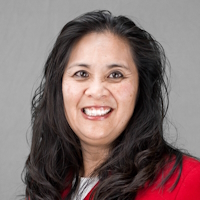 APA represents the full breadth of psychology and is transforming to be more inclusive and diverse. The association is creating a new strategic plan and will need a leader who can bridge its current goals and activities to the new strategic plan. It will be important for this leader to have knowledge and experience in APA and organizational systems.
As a professor, therapist, researcher, administrator, and advocate, I have found systems theory and the translatable skills vital in guiding my work with students, clients, communities, and organizations. In keeping with systems conceptualization of facilitating change, my 26-year career in academia and independent practice shows that organizations become stronger when different elements are unified toward one objective. This outcome has been seen in many of my leadership roles, including my 8-year tenure in the position of CSPP Associate Dean of Academic Affairs. I also served in various APA governance roles, including the Board of Directors and Strategic Plan Advisory Group, to being, on the Council of Representatives, Finance Committee, and Leadership Institute for Women in Psychology.
As APA President, my goal is to actualize my campaign slogan “Strength in Unity.” Because I believe an ethos of strengths-based unity provides us with an opportunity to continue to dismantle exclusive structures, my action plan will be to amplify all voices and create initiatives that illuminate all our expertise in APA and psychology for the betterment of all. I want psychologists to feel that APA is a welcoming professional home that empowers all its members.
I believe that our organization has an important role to play in shaping the future of psychology through our science and knowledge and in promoting the health and well-being of individuals and communities. Together, we can fulfill our association’s mission as we enact an inclusive vision for a better APA and world.
Margaret Bull Kovera, PhD
 Few would disagree that events over the last several years have been difficult. Political polarization, racial injustice and unrest, a reduction in women’s rights, attacks on the LGBTQIA+ community, the climate crisis, a loneliness epidemic, and a global pandemic have all taxed our collective well-being. As society grapples with these challenges, psychologists must ensure that the knowledge we have accumulated through our science and practice is centered in the attempts to address these critical issues. How do we achieve this goal?
We must harness our psychological science and practice to:
- Identify and dismantle the structures that produce racial and mental health disparities in the criminal legal system;
- Inoculate people against disinformation, which is prevalent and unchecked;
- Advocate for science-based policies and undo the psychological harm that comes from restricting access to appropriate reproductive and gender-affirming health care;
- Persuade the public to adopt public health and environmental conservation measures that science tells us will save lives; and
- Explore new ways, in this virtual age, of encouraging people to interact with others in person at work, school, and play.
We have a moral imperative to give psychology away. As a professional society, we are already contributing to these discussions. But we can do more, which is why I have been proud to serve on APA’s Council of Representatives and partner with APA to reinvigorate the amicus curiae program, working with an expert panel to identify legal cases with psychological issues at their core and helping knowledgeable psychologists submit briefs that translate our science for the courts. As President, I would work to ensure that we not only redouble our efforts to have the voice of psychology heard as society grapples with these challenges but also find new avenues for psychologists to make a difference.
Grant J. Rich, PhD
 The issues facing psychologists today are many. As APA President I will aim to build unity with diversity to achieve our shared goals through:
a) Encouraging excellence and representation in both the research and practice domains. APA and psychology are stronger when we work together effectively. We must make space for both those in academe and those in private practice and organizational settings (e.g., government, business, health care facilities, hospitals).
b) Creating and sustaining meaningful opportunities for both senior scholars and students and early career professionals, while not neglecting midcareer psychologists.
c) Examining best practices for effectively and efficiently integrating primary care with behavioral health. Many social issues today require psychologists to partner with colleagues in other disciplines when working on issues like climate change, poverty, health care equity, and prejudice, discrimination, and decolonization (e.g., race/ethnicity, religion, gender, disability, national origin, age, LGBTQAI+). Promoting a worldview of living peacefully and cooperatively through greater international scholarship exchange.
d) Ensuring ample, appropriate dissemination of psychology to other health care providers and the public. Psychoeducation should be proactive, not only reactively responding to crises after the fact. Publications should be more affordable and publications and policy briefs should be accessible in the USA and internationally.
e) Working together with the profession and the public to make progress towards positive social change. To succeed, psychology must partner with other behavioral health professionals, insurance organizations, policymakers, and advocacy groups. We must respectfully engage with both ends of the political spectrum. We must build a system where diverse stakeholders can meaningfully engage, and better communicate our shared mission.
As APA President, to achieve these ambitious goals, I bring over 20 years’ extensive experience managing organizations/projects in APA divisions, state government, and academe, including life and work in diverse settings in the USA and abroad (e.g., Alaska, Cambodia, India).