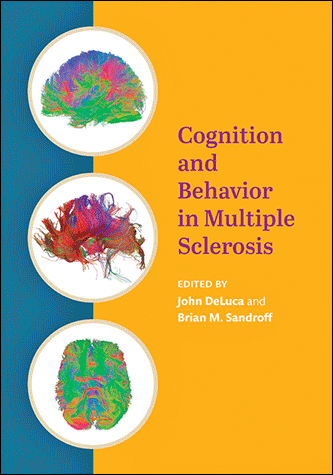
Cognition and Behavior in Multiple Sclerosis
ISBN: 978-1-4338-2932-1Available formats
Also available from
Multiple sclerosis (MS) is a disease of the central nervous system that can strike people in their prime with devastating impact.
In recent years, researchers have begun to study the multilayered and complicated cognitive problems that are often associated with MS. But there is surprisingly little information available today for neuropsychologists and other mental health practitioners about how cognitive impairment impacts life and behavior, and how patients can manage their disease through medication, exercise, and rehabilitation.
Cognition and Behavior in Multiple Sclerosis addresses this dearth of scholarly work by offering a comprehensive analysis of the effects of MS on cognition.
The chapter authors survey the ramifications of cognitive impairment for behavioral problems, employment-related issues, and the development of neuropsychiatric disorders.
Practitioners will learn to interpret MRIs and provide treatment for a wide range of symptoms and disorders including depression, fatigue, and the many challenges with daily living that patients with MS often confront.
This volume also examines the broad social impact of MS, as well as cutting-edge studies showing how cognitive rehabilitation can be achieved through exercise, pharmacological treatment, online tests and mobile applications.
Contributors
Introduction
John DeLuca and Brian M. Sandroff
- Assessment of Cognitive Impairment in Multiple Sclerosis
Shumita Roy and Ralph H. B. Benedict - Cognition and Multiple Sclerosis: The Role of Magnetic Resonance Imaging
Quinten van Geest, Kim A. Meijer, Jeroen J. G. Geurts, and Hanneke E. Hulst - Cerebral Reorganization and Cognition in Multiple Sclerosis
Ekaterina Dobryakova, Maria Assunta Rocca, and Massimo Filippi - Cognition and Depression in Multiple Sclerosis
Peter A. Arnett, Margaret Cadden, Cristina Roman, and Erin Guty - Cognition and Neuropsychiatric Disorders in Multiple Sclerosis
Anthony Feinstein and Bennis Pavisian - Cognition and Fatigue in Multiple Sclerosis
Massimiliano Calabrese and Marco Pitteri - Personality and Behavioral Problems in Multiple Sclerosis
Chiara Concetta Incerti, Ornella Argento, and Ugo Nocentini - Cognition and Activities of Daily Living in Multiple Sclerosis
Yael Goverover - Cognition and Employment in Multiple Sclerosis
Lauren B. Strober - Economic Impact of Cognitive Impairment in Multiple Sclerosis
Sten Fredrikson - Pediatric Multiple Sclerosis and Cognition
Nadine Akbar, Christine Till, and Brenda Banwell - Pharmacological Treatment for Cognitive Impairment in Multiple Sclerosis
Maria Pia Amato and Benedetta Goretti - Cognitive Rehabilitation in Multiple Sclerosis
Nancy D. Chiaravalloti and John DeLuca - Exercise, Physical Activity, Physical Fitness, and Cognition in Multiple Sclerosis
Brian M. Sandroff and Robert W. Motl - Neuroprotection and Cognition in Multiple Sclerosis: Effects of Cognitive and Brain Reserve
Bruno Brochet
Index
John DeLuca, PhD, is the senior vice president for research and training at Kessler Foundation and a professor in the Department of Physical Medicine & Rehabilitation and the Department of Neurology at Rutgers, New Jersey Medical School.
He is a licensed psychologist in New Jersey and New York, and is board certified in rehabilitation psychology by the American Board of Professional Psychology.
Dr. DeLuca has been involved in neuropsychology and rehabilitation research for more than 25 years. He is internationally known for his research on disorders of memory and information processing in a variety of clinical populations, including multiple sclerosis, traumatic brain injury, aneurysmal subarachnoid hemorrhage, and chronic fatigue syndrome.
Dr. DeLuca has published more than 300 articles and chapters in these areas, has edited five books in neuropsychology, neuroimaging and rehabilitation, and is a co-editor for the Encyclopedia of Clinical Neuropsychology. He has received more than $32 million in grant support for his research.
Dr. DeLuca's most recent research ventures include the cerebral mapping of human cognitive processes using functional neuroimaging, as well as the development of research-based techniques to improve cognitive impairment. He serves as an associate editor of several journals and is on the editorial boards of many other journals.
He is the recipient of several awards in recognition of his work including the 2015 Arthur Benton Award from the International Neuropsychological Society, and 2012 Rodger G. Barker Distinguished Research Contribution Award from APA Division 22 (Rehabilitation Psychology).
Dr. DeLuca has been very involved for many years in the training of postdoctoral fellows in neuropsychology and rehabilitation, and has directed several advanced research and training programs sponsored by the National Institute on Disability and Rehabilitation Research, the National MS Society, and the National Institutes of Health since 1990.
Brian M. Sandroff, PhD, is an assistant professor in the Department of Physical Therapy and codirector of the Exercise Neuroscience Research Laboratory at the University of Alabama at Birmingham.
Dr. Sandroff earned his PhD in kinesiology from the University of Illinois at Urbana–Champaign and further completed a postdoctoral fellowship in neuropsychology and neuroscience at the Kessler Foundation.
He has focused on multiple sclerosis (MS) research for the past 9 years and is an expert on exercise/physical fitness effects on cognition in this population.
Dr. Sandroff has published more than 100 articles and chapters in this area and has received more than $2.5 million in grant support for his research. His current foci involve systematically developed randomized controlled trials of exercise training on cognition, brain structure, and brain function in cognitively impaired persons with MS.