
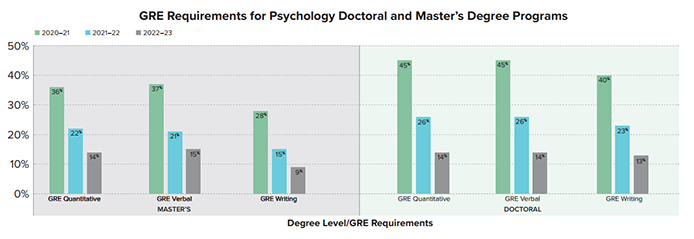
The percentage of psychology graduate programs requiring GRE scores decreased substantially between the 2020–21 and 2021–22 academic years and continued to decrease in the 2022–23 academic year.1 The percentage of doctoral programs requiring GRE Quantitative and GRE Verbal scores decreased from 45% to 14%, and GRE Writing score requirements decreased from 40% to 13%. Psychology master’s programs saw similar declining patterns in GRE requirements, with fewer master’s programs requiring GRE scores compared with previous years. These trends suggest that graduate programs have reduced their emphasis on standardized test scores.
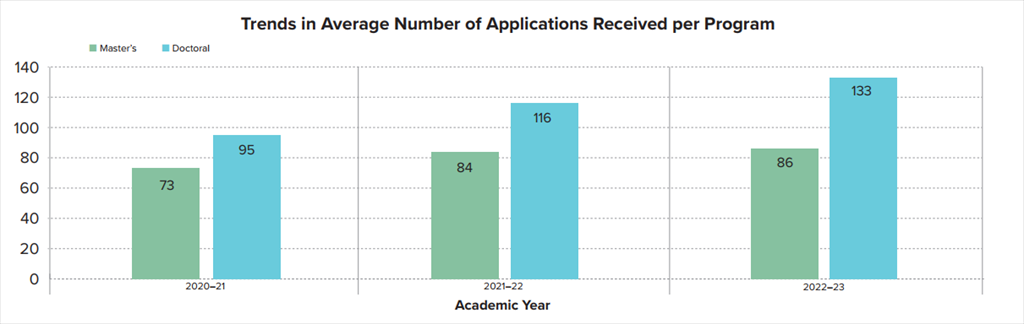
At the same time, the number of applications for both master’s and doctoral programs has been increasing steadily. Doctoral psychology program applications saw a continuous rise from an average of 95 applications in 2020–21 to 133 applications in 2022–23. Master’s psychology programs also rose, though at a slower rate, from an average of 73 to 86 applications. It is possible that, among other factors, the lack of a GRE requirement may have removed a perceived barrier to graduate education and may have led to more students applying to psychology graduate programs.
Want more information? See CWS’s interactive data tools or contact CWS.