Clay, R. A. (2024, January 1). Policymakers are taking aim at women and LGBTQ+ individuals. Monitor on Psychology, 55(1). https://www.apa.org/monitor/2024/01/trends-policy-developments-women-lgbtq
A barrage of new policies is targeting the most intimate parts of the lives of those living in the United States—their reproductive choices, sexual orientations, and gender identities. And these policy developments are having a severe impact on the mental health of those targeted, say psychology researchers and practitioners.
Individuals who are unable to obtain an abortion are more likely to experience worse mental and physical health, increased poverty, and prolonged contact with abusers, for example. LGBTQ+ youth are facing greater stigma, increased mental health problems, and less access to medical care.
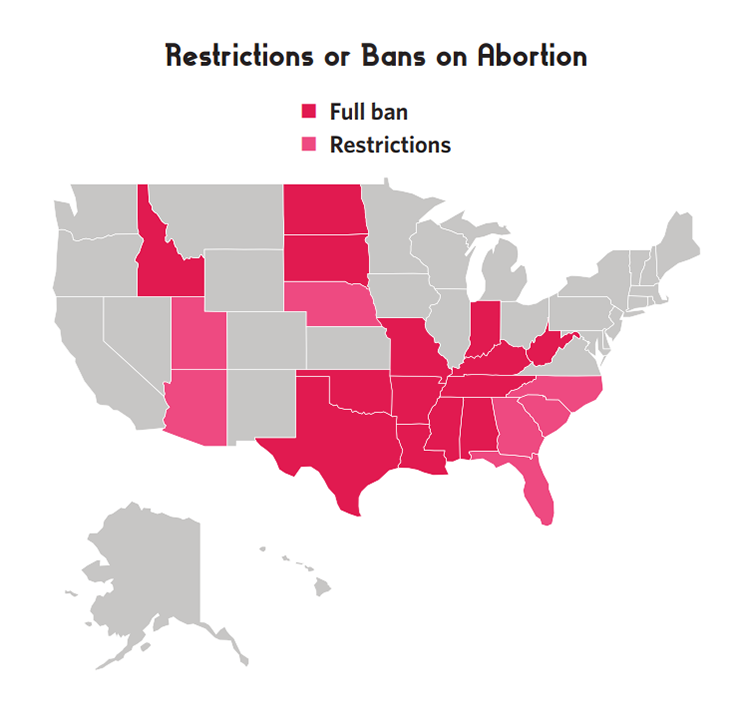
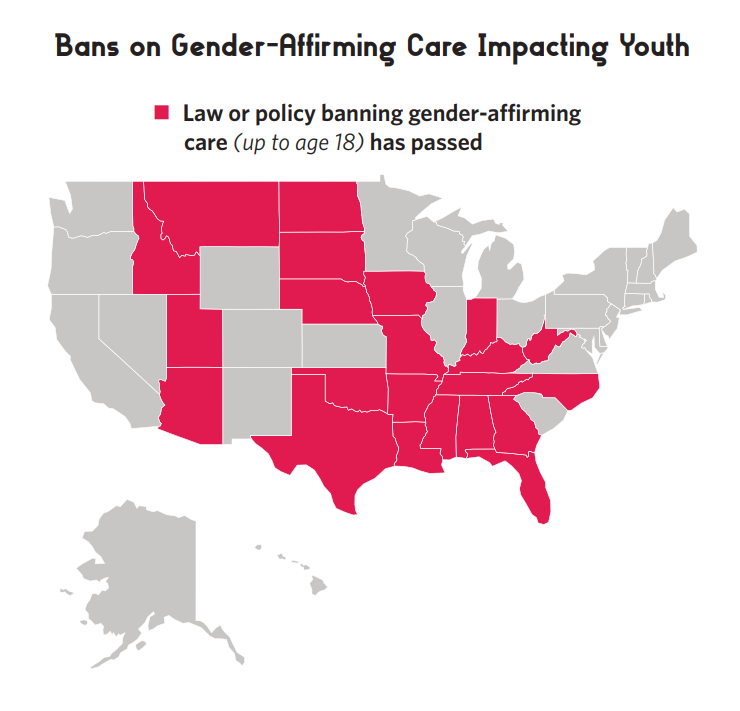
The U.S. Supreme Court’s 2022 decision to overturn the constitutional right to abortion was a high-profile event. And since then, 21 states have put in place additional restrictions on abortionopens in new window or outlawed the procedure almost altogether, and five more have enacted restrictions or bans that are still in legal limbo. Now some lawmakers have set their sights on outlawing gender-affirming care for transgender youth; more than 35% of transgender young people now live in states that have passed bans, according to the Human Rights Campaignopens in new window. Following Florida’s lead, some states are also trying to enact “Don’t Say Gay”-style policiesopens in new window that outlaw even the mention of LGBTQ+ people—such as books showing different types of families—in schools.
What all these policies share: the issue of bodily autonomy and individuals’ right to make their own decisions.
The mental health repercussions of these policies not only affect those targeted directly but also ripple outward. Parents are worried about their children. Physicians and other health care providers are no longer able to provide the care patients need. Some survey data even suggest that people are deciding not to have children for fear of being denied emergency care during pregnancy. And relatives, friends, and acquaintances are concerned about those they love.
The individuals affected by these policies may find it increasingly difficult to get the mental health care they need, too. As the legal environment becomes more fraught, psychologists may become wary of discussing health care services like abortion or gender-affirming care with their patients. But psychologists are already fighting back, both within the therapy office and beyond: They are empowering patients to advocate for themselves and fighting misinformation with science-based evidence.
Targeting the most vulnerable
Many of these new policies claim to protect individuals’ mental and physical health but have the opposite impact. Take abortion. “The antiabortion rhetoric continues to claim that having an abortion harms pregnant people,” said Antonia Biggs, PhD, an associate professor of obstetrics/gynecology and reproductive sciences at the University of California, San Francisco. “But we know that abortion restrictions can force people to carry unwanted pregnancies to term, which harms people’s mental and physical health, increases their chances of living in poverty, and lowers their aspirations for the future.”
Biggs points to the landmark Turnaway Studyopens in new window, which for 5 years tracked women who were denied abortions. The researchers found that having an abortion did not harm women’s well-being, said Biggs, who led the study’s mental health analysis. But being denied an abortion was harmfulopens in new window to both women and their families, the study found. Compared with those who got the abortions they wanted, those denied faced increased poverty, continued contact with abusive partners, and serious health problems. Some women even died in childbirth. The next generation suffered, too, with existing children suffering worse developmental outcomes and children of unwanted pregnancies experiencing poorer maternal bonding.
Forced childbirth will hit people of color especially hard. Black women, for example, have a maternal mortality rate nearly triple that of White women, according to the U.S. Centers for Disease Control and Preventionopens in new window.
That differential policy impact is by design, said Sara McClelland, PhD, an associate professor of psychology and women’s and gender studies at the University of Michigan, who studies abortion policy’s racist and sexist underpinnings. It’s not for nothing that policies in states like Texas echo slavery-era policies about bodily autonomy and travel restrictions, she said. The bounty hunter provision in Texas’s SB8 law, which allows citizens to sue people who help patients get abortions, parallels the practice in the antebellum South of empowering armed private citizens to police the movement of enslaved people and recapture those who escaped, for instance. “Everyone becomes an agent of the state,” said McClelland.
Research by McClelland and colleagues has confirmed that racist, sexist attitudes rooted in stereotypes about Black women’s sexuality and motherhood predict opposition to abortion (Sex Roles, Vol. 87, 2022opens in new window). In another study, McClelland and colleagues found that even before the Dobbs decision, participants described abortion as violating the law, gender norms, and religious doctrine and deserving of such punishments as fines, jail time, and forced sterilization (Psychology of Women Quarterly, Vol. 47, No. 1, 2022opens in new window).
Anti-LGBTQ+ policies are having a similarly dire impact on well-being in the LGBTQ+ community, especially among youth. In Florida, for example, the state’s Board of Education declared that the material on sexual orientation and gender identity within the Advanced Placement (AP) Psychology course violated state law (see Education under siege, Monitor on Psychology, November/December 2023). Although an outcry from APA and other advocates resulted in the state reversing its decision, some schools canceled the class anyway and other states are looking for ways to ban teaching or even discussion of such topics in classrooms.
These efforts to censor school curricula aren’t the only policies affecting LGBTQ+ youth. According to The Trevor Projectopens in new window, an unprecedented 633 anti-LGBTQ+ bills were active as of September, with 53 already enacted into law. These policies—which purport to protect children—are instead taking a toll on young people’s mental health. In The Trevor Project’s 2023 National Survey on the Mental Health of LGBTQ Young People, nearly 1 in 3 LGBTQ 13- to 24-year-olds said their mental health was poor most or all the time because of such policies, regardless of whether they lived in a state where these policies are being debated or implemented.
Almost two-thirds of respondents said that just hearing about potential laws banning discussion of LGBTQ people at school worsened their mental health considerably. “Sometimes the bills don’t get passed, but that doesn’t mean there’s not an impact on young people,” said Myeshia Price, PhD, who was the principal investigator of the survey and is now an associate professor of counseling and educational psychology at Indiana University. “Their very existence is being debated on a huge platform.”
School-related policies, such as not allowing youth to choose their pronouns, participate in sports, or use the bathrooms or locker rooms they want, can be especially harmful given how much time kids spend at school, added Price, noting that fewer than 40% of respondents to the Trevor Project survey described their homes as LGBTQ-affirming. “It could be that school is the only place where their identity is being affirmed,” Price said.
Policymakers are now singling out transgender and gender-diverse youth for particular attention. For Roberto Abreu, PhD, an assistant professor of psychology at the University of Florida, such policies are part of a backlash against marriage equality and other progress the LGBTQ+ community has made in recent years. “Their larger goal is to erase LGBTQ people, and they are predominantly targeting trans youth and their families,” said Abreu, adding that some policymakers are even trying to define gender-affirming care for young people as child abuse. “They want us to be in constant fear, wondering ‘What next?’”
Policies banning young people’s access to gender-affirming care are particularly harmful, said Abreu. In one study he and colleagues conducted, parental figures of transgender and gender-diverse youth reported that such policies had increased children’s depression, suicidality, and gender dysphoria; increased stigma; and decreased safety and access to medical care (Journal of Family Psychology, Vol. 36, No. 5, 2022opens in new window). In another study, Abreu and his colleagues found that these policies left parental figures feeling fearful, anxious, and angry about the violation of their rights (Psychology of Sexual Orientation and Gender Diversity, Vol. 9, No. 4, 2022opens in new window). Some spoke of relocating to new states so their children would be safe.
As Abreu’s findings suggest, the impact of all these policies goes beyond the specific groups targeted.
Abortion bans, for instance, may be making many rethink parenthood. A recent poll by the nonprofit organization All In Together found that more than a third of women ages 18 to 39 said they or someone they knew had decided not to get pregnant because of concerns about being unable to manage pregnancy-related medical complications, even in states where abortion remains legal. In addition to worrying about dying if a pregnancy goes wrong and abortion is denied, would-be parents are worried about the growing trend toward criminalizing miscarriages, said Julie Bindeman, PsyD, who codirects Integrative Therapy of Greater Washington and specializes in reproductive psychology. “In certain states, being pregnant is like Russian roulette,” she said.
The mental health of obstetricians/gynecologists, emergency room physicians, and other health care providers is also suffering, Bindeman said. “If they are dealing with miscarriages or pregnancy complications, they can’t do what they are trained to do and know is the right thing to do,” she said, adding that the result in states like Idaho has been a mass exodus of physicians and medical trainees. “It’s a moral injury.”
While there are signs of hope—with some states making themselves into safe havens for people seeking abortions or gender-affirming care—the sociopolitical context around reproductive and LGBTQ+ rights may get even worse, psychologists warn. Advocates worry that access to birth control and gender-affirming care for adults may be under threat, for instance. In 2022, for example, 195 policymakers voted against the Right to Contraception Actopens in new window, which would guarantee access to birth control. On the LGBTQ front, Missouri has already put in place major restrictions on gender-affirming care for adults as well as young people, with other states making moves to erode access for adults.
As all these policies are damaging mental health, it may be increasingly difficult to find good mental health care, warned Shirley Higuchi, JD, associate chief of professional practice for justice, legal, and state advocacy at APA. In addition to the shortage of mental health practitioners in some areas, the chilling effect of such policies could affect psychologists’ willingness to discuss topics like abortion or gender-affirming care because of uncertainty about risks.
While psychologists have not yet been targeted the way medical providers of abortion or gender-affirming care have, Higuchi said, that day may come in a few states. Psychologists could face insurers unwilling to cover mental health services related to reproductive or LGBTQ+ issues. Others might fear the risk of being accused of aiding and abetting patients seeking services that have been banned. “Everything is in flux right now,” said Higuchi, adding that APA Services has developed resources to help psychologists practice safely with patients affected by abortion lawsopens in new window and is developing similar resources around gender-affirming care laws. “There’s just a fear that psychologists could become collateral damage.”
Advocating for better policies
Psychologists are fighting back to protect their patients and themselves. In 2022, APA’s Council of Representatives reaffirmed APA’s denunciation of abortion restrictions and its commitment to reproductive justice. In 2020, the council issued updated resolutions opposing discriminatory LGBTQ+ policies. Having the backing of APA and other organizations makes it easier to share evidence-based messages and makes it less scary to speak out, said Laura Kuper, PhD, ABPP, a pediatric psychologist who works on a multidisciplinary team that has historically provided medical treatment for transgender youth.
Individual psychologists can help by empowering patients to speak out, said Antoine L. Crosby, PhD, vice president for professional affairs at the D.C. Psychological Association and founder of Affirmative Spaces Psychological Services, a practice that primarily serves LGBTQ+ people of color. Crosby helps his patients find ways to counter an ever-increasing sense of what they describe as “impending doom,” in whatever way works best for them. “Some are out protesting. Some write letters. For some, the call for advocacy is too much of an ask because of all the traumas they’re dealing with. Some are tired of fighting to simply exist as human beings,” said Crosby. “It’s about being attuned to yourself and what you can handle.”
Psychologists are also taking action beyond the therapy office.
For example, Megan Mooney, PhD, a child and adolescent psychologist, is currently a co-plaintiff in a lawsuit in Texas challenging the restrictions there. Mooney provides therapeutic services treating a wide range of concerns, including affirming care for LGBTQ+ youth and their families.
Kuper and her colleagues have developed a menu of advocacy ideas that includes collaborating with psychological associations, promoting evidence-based information via traditional and social media, and getting involved in political advocacy at all levels, from school board meetings to state legislatures and Congress (Clinical Practice in Pediatric Psychology, Vol. 10, No. 3, 2022opens in new window). “Mental health providers can play an important role…since our licenses are not directly at stake,” said Kuper. “It can be harder for physicians in some contexts, so we can step in and help share messages and be advocates,” said Kuper.
“Just knowing that progress isn’t linear gives me hope,” said Kuper. “Big picture, I try to stay optimistic knowing that, in general, society’s views are changing and becoming more supportive.”
Further reading
Resources for grassroots and state-level advocacy on LGBTQ+ issues
APA and Division 44 (Society for the Psychology of Sexual Orientation and Gender Diversity), 2023
Frequently asked questions about abortion laws and psychology practiceopens in new window
APA Services, 2022
Subverting the mandates of our methods: Tensions and considerations for incorporating reproductive justice frameworks into psychological scienceopens in new window
Avery, L. R., & Stanton, A. G., Journal of Social Issues, 2020
When the political is professional: Civil disobedience in psychologyopens in new window
Flynn, A. W. P., et al., American Psychologist, 2021