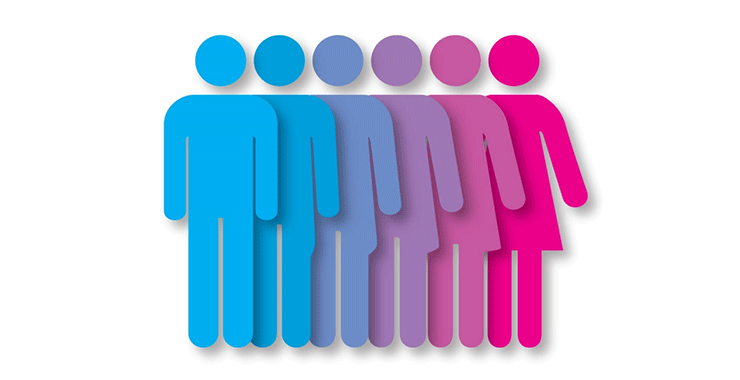
Sexual orientation and gender identity (SOGI) change efforts, referred to colloquially as “conversion therapy,” arose during an era when diverse sexual orientations, gender identities, and gender expressions were considered by psychologists and many others to be illnesses that required treatment. Modern psychological research overwhelmingly shows that efforts to change sexual orientation and gender identity are ineffective and harmful. Studies show that individuals who undergo SOGI change efforts are more likely to report poor mental health, engage in hazardous health behaviors, and attempt suicide than those who do not undergo SOGI change efforts.
Research also finds that these and other adverse consequences are more pronounced when individuals experience change efforts during adolescence. In 2021, APA passed evidence-based resolutions critical of SOGI change efforts.
Some jurisdictions have determined that SOGI change efforts pose health risks to minors and have enacted laws to prohibit covered providers from engaging in practices intended to change minors’ sexual orientation, gender identity, or gender expression. “Covered providers” typically include people licensed to provide professional counseling but exclude people working under the auspices of a religious organization. These laws also specifically allow counseling support for people undergoing gender transition. In contrast to SOGI change efforts, affirmative therapy adapted from evidence-based treatments such as cognitive behavioral therapy can be beneficial for helping LGBTQ individuals navigate stressors, including those stemming from internalized stigma, identity concealment, and rejection by close others. Recent research outlines a framework for integrating such evidence-based therapies into sexual and gender-affirming care.
One such law, enacted in 2017 in Palm Beach County, Florida, was challenged by licensed therapists who argued that their services—which consisted of “talk therapy” that they claim helps patients reduce same-sex attraction—constituted speech protected under the First Amendment. The U.S. Court of Appeals for the 11th Circuit agreed, holding that “the First Amendment does not allow communities to determine how their neighbors may be counseled about matters of sexual orientation” (Otto v. City of Boca Raton, Fl., 27 [2020]opens in new window).
However, a similar law enacted in Washington state survived a challenge from a licensed therapist who argued that the state’s ban on SOGI change efforts violated his First Amendment rights to free speech and the free exercise of religion. The U.S. Court of Appeals for the 9th Circuit held that the law fell “within the well-established tradition of constitutional regulations on the practice of medical treatments” (Tingley v. Ferguson, 65 [2022]opens in new window).
The U.S. Supreme Court declined in December 2023 to hear an appeal of the 9th Circuit’s decision and resolve the split between the federal circuits (Tingley v. Ferguson, No. 22–942opens in new window).
As a result, the availability of SOGI change efforts—and governments’ ability to limit their application to minors—will vary across U.S. jurisdictions. As of January, 22 states and the District of Columbia have banned conversion therapy for minors. Five additional states have partial bans. Indiana prohibits bans on conversion therapy, and the 11th Circuit’s decision prevents bans from being enacted in Georgia, Florida, and Alabama. The remaining 19 states have no statewide law that either bans or prohibits bans on conversion therapy, but some municipalities within those states have enacted local bans on conversion therapy. Thus, therapists who practice in this area must remain watchful for state and local rule developments.