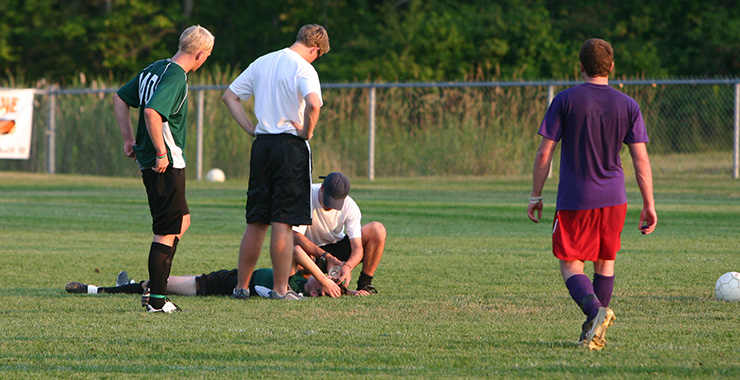
While athletic programs now have a framework for handling head injuries, concussions that take place outside of formalized sports may go unrecognized. Nowhere is this truer than in the case of intimate partner violence (IPV).
“Most of the physical injuries in this context are to the head, face, and neck,” said Angela Colantonio, PhD, OT, a professor at the University of Toronto who researches TBI in underserved populations. People in abusive relationships often experience multiple concussions alongside repeated lower-level blows to the head and strangulation injuries, all of which can damage the brain. Posttraumatic stress disorder symptoms can further overlap with brain injury symptoms. And the injuries occur in a context where identification and treatment are often a low priority: The IPV survivor may still be in danger from their abuser and may have immediate financial and legal concerns, such as ensuring they can keep custody of their children.
Despite the high frequency of head injury from IPV, experts know far less about concussion in that context compared with sports and recreation.
“There has been such an appalling gap in research here that we should all be furious and outraged and shouting from the rooftops,” Dams-O’Connor said. “The reality is, we just know far less, and what we have learned from the studies of male contact sport athletes, we should be extremely hesitant to apply to women in general. This is not the female equivalent of football.”
Regardless of the origin of a concussion, sex and gender differences may influence the outcome of the injury. The research on the impact of sex and gender in recovery from a concussion is mixed, but some evidence suggests women are at risk for a slower recovery. This finding may be driven in part by access to care, said Carrie Esopenko, PhD, an associate professor and research psychologist in the Brain Injury Research Center at the Icahn School of Medicine at Mount Sinai. Women are more likely than men to report feeling dismissed when they describe their concussion symptoms to professionals, Colantonio said.
There is also evidence that women’s recovery may be more affected by hormonal factors compared with men. Women who sustain a mild TBI in the luteal phase (between ovulation and the beginning of menstruation) display worse outcomes than women injured at other points in their cycle (Wunderle, K., et al., The Journal of Head Trauma Rehabilitation, Vol. 29, No. 5, 2014opens in new window). During the luteal phase of the menstrual cycle, the pituitary gland, which is tucked into the base of the brain, coordinates a higher concentration of progesterone in the blood. An impact to the pituitary may disrupt this progesterone spike, leading to progesterone withdrawal and thus a persistence of symptoms. However, Esopenko said, this is just a hypothesis.
“We truly need large, funded studies to be able to track cycles,” she said.
In a recent study using Concussion Assessment, Research, and Education Consortium data, Esopenko and her colleagues found similar recovery trajectories between male and female athletes when female athletes had the same access to care as males (
Sports Medicine
, 2023
opens in new window). “For me, right now, that’s one of the biggest pushes we can make,” Esopenko said.
Access to care is extremely challenging in cases of IPV. “Women may not be aware that they’ve had a brain injury,” Colantonio said. “They may not be in a position to seek care. We have reports where care is sought out, but the perpetrator is present, and women are asked whether their partner did the injury in front of the partner.”
Often, women with a history of IPV do not see a psychologist until years later, said Dams-O’Connor. This may mean the psychologist has the opportunity to recognize a history of concussion and brain injury that has never been diagnosed before. Dams-O’Connor and her colleagues have developed a screening tool for IPV-related brain injury that asks specific questions: Instead of “Have you ever had a traumatic brain injury?” the screener uses context clues to remind people of events they might not have associated with head injury. For example, the screening tool asks if a sexual or intimate partner has ever shaken the person violently, hit them on the head with a fist or other object, strangled them, or hit their head into a surface such as the wall or floor. These detailed questions yield much higher reporting rates than more general screeners, Dams-O’Connor said.
“For a psychologist who is seeing someone who may have a history of IPV, whether or not they know about a potential head trauma history, asking these detailed questions is really important,” she said.
Colantonio and her colleagues have codeveloped a tool kit for front-line providers working at the intersection of IPV and TBI. Another organization focused on women and brain injury, PINK Concussions, also hosts and supports research and knowledge exchange on concussion in women.
Esopenko founded and leads a large research collaboration, the Enhancing Neuroimaging Genetics through Meta-Analysis (ENIGMA) Consortium Intimate Partner Violence Working Group, which includes Dams-O’Connor. The group has the goal of better understanding the consequences of IPV-related brain injury. Recently, Esopenko and her colleague Michael Ellis, MD, a neurosurgeon specializing in IPV brain injury care, launched an educational offshoot, the ENIGMA IPV Global Knowledge Exchange Network, which holds regular virtual fireside chat sessions; their May chat was about mental health symptoms associated with brain injury, which will be followed by an education session in late July. The goal is to facilitate front-line service providers and community partners in learning from one another, Esopenko said.
“In the IPV world, I just don’t know how we could do this without social workers and psychologists,” she said. “There is just so much to unpack in what these individuals have been through.”