
skip to main content

When trauma becomes complex

Nature of patients’ experiences and symptoms requires a more flexible therapeutic approach
APA Style leaf logo Cite This Article in APA Style
Fairbank, R. (2025, March 1). When trauma becomes complex. Monitor on Psychology, 56(2). https://www.apa.org/monitor/2025/03/ce-complex-ptsd

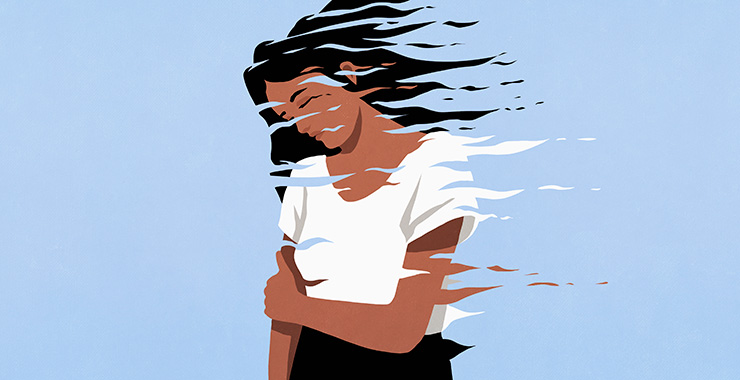
graphic of woman looking like parts of her body are being blown away

Key points

  • Complex PTSD (CPTSD)—which is included in the ICD-11 but not the DSM-5—refers to prolonged PTSD, typically as a result of long-term childhood exposure to trauma.
  • CPTSD includes all of the symptom clusters of PTSD plus difficulties with emotional regulation, difficulties with interpersonal relationship, and a negative concept of self.
  • Because CPTSD sufferers typically have no previous life experience of safety and emotional health, practitioners must first stabilize the patient before safely beginning treatment.

Earn CE credit for reading articles in the Monitor on Psychology

Buy the companion exam to be guided through a commitment-to-change exercise and earn credit with a passing score of 75% or higher.

According to the National Institute of Mental Health, approximately half of U.S. adults will experience a traumatic stressor in their life. Some of these people will go on to develop post-traumatic stress disorder (PTSD), with the yearly prevalence estimated to be 3.6% of Americans.  

Although there are treatment protocols for PTSD that are very effective, traumatic stressors can cause patients to develop additional social, mental, and emotional difficulties, which complicate treatment. The main differences seem to be how long a person was exposed to the traumatic stressor, when they were exposed to the traumatic stressor, and whether they experienced one or multiple types of traumatic stressors.

These differences have led clinicians and researchers to differentiate PTSD into two subtypes, which include non-complex PTSD and complex PTSD (CPTSD). CPTSD, which was first proposed by the psychiatrist Judith Herman in 1988, refers to PTSD that develops after prolonged exposure to trauma, such as domestic violence or childhood abuse.

“PTSD is the only formal psychiatric diagnosis for which we have a known etiology. We know it is caused by trauma or traumatic stress,” said Golan Shahar, PhD, a clinical psychologist and faculty at Ben-Gurion University of the Negev, in Beersheba, Israel. “In that sense, both PTSD and CPTSD are caused by traumatic stress.”

Although CPTSD is not currently in the Diagnostic and Statistical Manual of Mental Disorders (Fifth Edition), the World Health Organization has included it in the International Classification of Diseases (11th Edition). In the ICD-11, non-complex PTSD consists of three symptom clusters: flashbacks, avoidance, and hypervigilance. In addition to these symptom clusters, CPTSD also includes three more symptom clusters: difficulties with emotional regulation, struggles with interpersonal relationships, and a negative concept of self. These three additional symptom clusters—referred to as disturbances of self-organization, or DSO for short—are thought to stem from traumatic stressors affecting a person’s sense of self. DSO requires additional treatment.


How CPTSD differs from regular PTSD

The main difference between complex and non-complex PTSD is the cause. Although both types of PTSD stem from traumatic stress, the type of stress can be quite different in PTSD versus CPTSD. “For non-complex PTSD, the traumatic stress can be quite severe, like rape. It can be isolated. It’s either a single event or it’s a string of events that start and end at a certain point in time that is quite identifiable and not that prolonged,” Shahar said. “In complex PTSD, the traumatic stressor is highly multilayered; it is very interactive in the sense that one aspect of the traumatic stress interacts with or augments another.” 

The common denominator in CPTSD is that the stress is being delivered through multiple channels, whether physical, emotional, cognitive, or sexual. There is also a sense of being trapped in the situation. The most common example is complex child maltreatment, where a child is exposed to various forms of abuse, such as physical, emotional, and sexual, or neglect. Other examples include captivity, being in a cult, or experiencing prolonged emotional and physical abuse or coercive control in a relationship.

Disturbances of self-organization

The risk for developing CPTSD from ongoing traumatic stressors is much more acute if these stressors occur during early childhood, when a child is still developing their sense of self, and if these traumatic stressors affect their bond with their primary caregiver.

“DSO symptoms are the ones that are most likely to occur when an individual has experienced traumatic stressors early in their development,” said Julian Ford, PhD, a clinical psychologist and faculty at the University of Connecticut. “Trauma in early childhood affects how a child is able to regulate their emotions, it affects how they engage in relationships, and it certainly affects how they view themself.”

“When it’s early childhood, the person’s stress response is still developing, their brain is still developing, it can have much more damaging neurobiological impacts,” said Bethany Brand, PhD, a clinical psychologist based in Towson, Maryland, and author of Finding Solid Ground: Overcoming Obstacles in Trauma Treatment. “When your core sense of self is developing, it’s really devastating.”  

CPTSD and borderline personality disorder

The symptoms of CPTSD share considerable overlap with borderline personality disorder (BPD). While BPD is characterized by instability in four domains—emotional regulation, behavioral control, sense of self, and interpersonal relationships—Brand and other experts note that patients with CPTSD tend to have a more stable set of symptoms.  

“In CPTSD, the sense of self is constantly low, whereas in borderline personality disorder, it is going up and down all the time,” said Thanos Karatzias, PhD, a clinical psychologist at the Rivers Centre for Traumatic Stress in Edinburgh, Scotland, and a professor of mental health at Edinburgh Napier University. “In the relationships of people who have CPTSD, there is a lot of avoidance, whereas in borderline personality disorder, you are seeing constant arguments and volatility.”

As Karatzias notes, these are the same category of symptoms but externalized in different ways. Even though BPD does not require a traumatic stressor, many patients do report significant past trauma. Studies find that between 30% and 90% of patients with BPD have experienced childhood abuse or neglect (Battle, C. L., et al., Journal of Personality Disorders, Vol. 18, No. 2, 2004opens in new window; Yen, S., et al., The Journal of Nervous and Mental Disease, Vol. 190, No. 8, 2002opens in new window; Zanarini, M. C., et al., The American Journal of Psychiatry, Vol. 163, No. 5, 2006opens in new window).

Stabilization

Trauma-based therapy will typically involve various forms of trauma processing, including therapeutic modalities such as cognitive processing therapy, prolonged exposure therapy, trauma-focused cognitive behavioral therapy (CBT), or eye movement desensitization and reprocessing. The goal is to have the patient revisit their traumatic memories to process them. However, for patients with a history of prolonged and complex therapy, there is a debate about whether clinicians should begin with processing traumatic memories or work with patients to stabilize their symptoms first.

In Brand’s opinion, one of the reasons for this debate within the field has to do with how some studies are designed. “They exclude so many people with complex trauma histories or complex symptoms,” Brand said. “They don’t see the folks that a lot of clinicians see. They see the folks who have relatively healthier coping skills or maybe less of that chronic repeated trauma.” 

According to Brand, the major risk with starting patients on trauma processing right away is that their mental and emotional health may be too fragile. In Brand’s clinical practice, she will often help her patients work on coping techniques first, helping get them to a healthier frame of mind before addressing their trauma. “It’s helping them to understand themselves, their symptoms, and what trauma does, and then finding healthier, safer ways for them to deal with their emotions so that they can deal with trauma without becoming incredibly self-destructive, depressed, or suicidal,” Brand said. In Brand’s experience, one symptom that is often overlooked is dissociation, where a person feels detached from what is going on around them.

Cognitive reappraisal

Therapies such as trauma-focused CBT will often require that patients have a lifetime of lived experience that can remind them that the trauma they survived is unlikely to happen again. For people with a long and complex history of trauma, they may lack a period of time of emotional health or normalcy, which will make trauma-focused CBT much harder and much less likely to succeed.

Although CPTSD is more likely to develop in people who have survived prolonged trauma during their childhood years, it can also develop in adults who undergo prolonged periods of stress, such as being in captivity, an abusive relationship, or a cult. For these adults, surviving this type of trauma can be so overwhelming that it inflicts impairments comparable to those of childhood maltreatment, thereby culminating in CPTSD.

For patients who have survived complex trauma, therapists should start by validating their history of experiencing the world as an unsafe place. Once patients have received this validation, then it can be appropriate to pivot to other therapeutic modalities.

Current trauma-based CBT tends to focus on changing thought patterns so that the patient can regain a sense of control and access the skills and resources they had before. With CPTSD patients, the therapy needs to focus on building skills the patient may not have acquired in the first place.

For someone who grew up in an unstable environment and does not know what a healthy relationship looks like, a key aspect of CPTSD therapy should be developing the skills they were unable to learn earlier in their life.

Enhanced skills training

The chronic nature of trauma and the resulting symptoms call for revisiting the therapeutic modalities that are used to treat patients. In a 2023 study published in the journal Brain Sciences opens in new window (Vol. 13, No. 9), Karatzias, Marylene Cloitre, PhD, a clinical psychologist and a research professor and senior research scientist at NYU Silver School of Social Work, and their collaborator, clinical psychologist Edel McGlanaghy, present a new therapeutic modality for CPTSD called Enhanced Skills Training in Affective and Interpersonal Regulation, or ESTAIR for short.

ESTAIR is composed of four separate modules: three that focus on disturbances of self-organization and one that focuses on narrative therapy for traumatic events. There is flexibility for patients in determining the order of modules. “The intervention is a person-centered intervention,” said Karatzias. “We start with the pressing needs, we do an assessment and evaluation with the client, and then we decide which module we are going to offer first, based on people’s needs and their level of tolerance.” 

The three modules focused on disturbances of self-organization include interventions that teach effective communication skills, help with recognizing and managing emotions, and help with navigating interpersonal relationships, including becoming more trusting. Narrative therapy, as a modified form of exposure therapy, helps patients reduce the fear associated with their traumatic memories and derive meaning from their experiences.

“Modular therapy seems to be a good way forward; however, with every therapy, it is not one size fits all,” said Karatzias. “In the future, I’d like to see a range of different therapies being developed and validated for CPTSD, and then we can learn which one works best for which group of people.” 

As Karatzias and Cloitre both note, the complex nature of patients’ experiences and symptoms does necessitate a more flexible therapeutic approach, as well as a longer one, which includes both building emotional and interpersonal skills, as well as finding ways of processing and accepting their traumatic experiences. This means that therapy may take longer and be challenging along the way, as many of these patients have been unable to trust people or the idea that the world is safe. This requires the practitioner to have a certain amount of flexibility in how they practice as well as good interpersonal skills. “It takes a certain mentality, a certain grit, a lot of patience, and a lot of hope and faith,” Shahar said. 

Recommended Reading

Speaking of Psychology

Subscribe to APA’s audio podcast series highlighting some of the most important and relevant psychological research being conducted today.

Subscribe to Speaking of Psychology and download via:

Appleopens in new window
Apple podcast logo

Spotifyopens in new window
Spotify logo

You may also like