skip to main content
News

The essential role of human factors psychology in technology design

Psychologists are spearheading efforts to integrate human readiness levels into design processes to avoid accidents and human error

APA Style leaf logo Cite This Article in APA Style
Stringer, H. (2025, April 1). The essential role of human factors psychology in technology design. Monitor on Psychology, 56(3). https://www.apa.org/monitor/2025/04-05/human-factors-technology-design

person using a calculator

Key points

  • Human factors psychologists have played a key role in creating a scale that helps technology developers evaluate whether new systems are safe for human use.
  • The human readiness level (HRL) scale can improve safety and business success in cars, airplanes, military equipment, automation powered by artificial intelligence, and many other products.
  • Once a grassroots movement, advocates of the HRL scale won major victories at the end of 2024 when the federal government passed legislation requiring use of the scale in defense and aviation industries.

Psychologists who specialize in human factors are trained to make systems and devices safer and more intuitive, but too often they are called in too late—or not at all—in the development process.

A tragic example involves the Boeing 737 Max airliner and the crashes of 2018 and 2019 that killed 346 people. The problems began years earlier when Boeing began developing a more fuel-efficient version of its popular 737. The new design’s heavier engine changed the plane’s aerodynamics during takeoff, so the company installed software that automatically corrected the position of the plane’s nose during flight. By the end of September 2018, Boeing had received orders for nearly 5,000 of the new Max jets. Less than a month later, a 737 Max crashed after takeoff in Indonesia, followed in March by the crash of a second plane after takeoff in Ethiopia.

In both cases, the pilots had not been informed that the software system was running in the background and did not know how to disable the system to take control manually in an emergency.

In the ensuing months, Boeing faced widespread criticism for cutting corners to maximize profits. One of the major missteps was failing to test how pilots would interact with the new software. Incorporating these steps into the development process could have helped to avert the crashes, along with the billions of dollars in core operating losses Boeing has experienced in the years since.

“When organizations bring in these experts early and throughout the design process, we can recognize usability issues and rectify the problems early,” said psychologist Judi See, PhD, a systems analyst and human factors engineer at Sandia National Laboratories in Albuquerque, New Mexico. “This can save time, money, and lives.”

The case for human factors engineering

As the Boeing case illustrates, testing the “human readiness” of technology in cars, health care, consumer products, military equipment, airplanes, and automation powered by artificial intelligence (AI) is not only a safety issue; it can also increase business success, said Mica Endsley, PhD, president of SA Technologies, based in Arizona. “Organizations that incorporate human-centered design into the workflow see a significant return on investment,” she said.

According to a study of 300 publicly listed companies in multiple countries, organizations that had high levels of user-centered design—meaning the developers continually tested and iterated design based on feedback from end users—had 32% higher revenue growth than industry counterparts over a 5-year period (Sheppard, B., et al., McKinsey Quarterly, 2018opens in new window).

To help more organizations integrate human factors into ­decision-making, See formed a joint working group in 2019 with 38 other human systems experts from academia, NASA, the U.S. Department of Defense, and other organizations to draft a 9-point human readiness level (HRL) scale. Published in 2021, the scale provides a framework to include human factors in research, product testing, production, and deployment (Human Readiness Level Scale in the System Development Process, Human Factors and Ergonomics Society, 2021opens in new window). It was designed to complement and supplement the technology readiness level scale, or TRL, a 9-point scale widely used throughout the U.S. government, industry, and academia to evaluate the technological maturity of a new product or system.

There are signs that the HRL scale is gaining traction on a federal level. The FAA Reauthorization Act of 2024 includes a section requiring the Federal Aviation Administration (FAA) to review the HRLs and determine how they can be incorporated into FAA procedures to enhance safety. In December 2024, then-President Joe Biden also passed the National Defense Authorization Act (NDAA), which includes a section mandating that the Department of Defense report back to Congress on its major programs’ use of HRLs. 

Building a scale

True to its intent, the HRL scale itself was developed with its users in mind. When See started exploring the possibility of crystallizing the human readiness concept into a usable scale, she knew it would be important to use technical language that engineers would easily understand. Most engineers are familiar with the TRL, whose stages focus on researching and validating a concept, followed by developing a prototype and testing it in a lab, and finally fixing bugs and testing it in a real environment.

The HRL scale mirrors these stages, but it focuses on how humans use the technology. Ideally, developers apply the TRL and HRL scales to projects simultaneously, said See. In other words, they complete level 1 for both scales before moving on to level 2. “It is possible to apply only one scale without the other because they are still separate scales,” said See. But “if technical maturity progresses beyond human readiness or vice versa, this signals a need for the program decision-maker to intervene to get back on track.”

To evaluate the potential effectiveness of the HRL scale, the working group explored whether it could have prevented problems in historical real-world scenarios, such as the redesign of the Coast Guard’s motor rescue lifeboat in the 1990s. The new boats allowed drivers to sit rather than stand, but some could not reach the controls and others hit their knees and shins on the console. Moreover, operators often had to maintain an awkward position for more than 8 hours while navigating in rough seas. More than 50% of crews reported sustaining injuries because of the new design. “The main finding was that the issues could have been detected as early as HRL 1,” said See. “This is when developers are in the conceptual phase exploring how people would use the new technology.”

Saving lives and minimizing cognitive overload

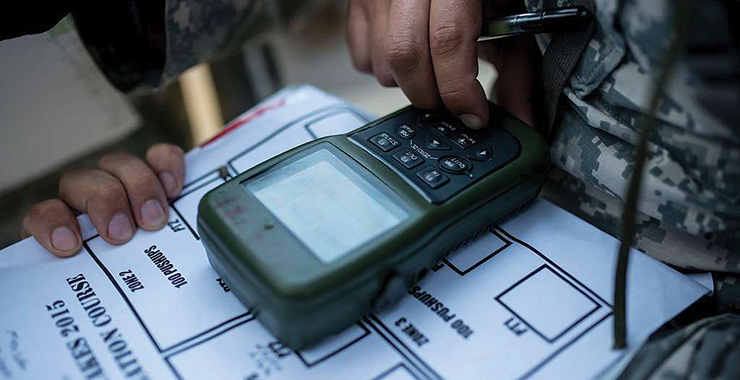
Pamela Savage-Knepshield, PhD, a psychologist who was part of the HRL working group, had been incorporating human readiness concepts into her work with the U.S. Army for years. When the Army developed a new handheld Global Positioning System (GPS) receiver to help soldiers track the location of enemy forces, she identified a life-threatening risk. During a usability study with 16 soldiers, she asked the soldiers to practice sighting the enemy and estimating coordinates for the enemy’s location. The soldiers were told that the batteries in their receivers failed at this point, and they had to replace them. Once the GPS rebooted, they sent the coordinates for an airstrike on the enemy.

“Without realizing it, nearly half of the soldiers called for an airstrike on their own position, and they would have been killed,” Savage-Knepshield said. They had not realized the rebooted GPS showed their own coordinates—not the enemy’s location—or that they had thus sent their own coordinates as the target. “As humans, our perceptual system is weak at detecting unexpected visual changes, which is known as change blindness,” she said.

Although Savage-Knepshield identified this issue before the new GPS receiver was distributed for wartime use, she had not been consulted until the final stages of the device’s development. “Early use of the HRL scale would have caught this problem sooner,” she said. The developers could have designed a “present position” screen that looked completely different from the “fire support” screen. But it was too late to make such a change, so the developer added a pop-up warning alerting soldiers that the coordinates showed their present position. This was suboptimal because pop-up messages are frequent and soldiers do not always read them, Savage-Knepshield explained.

Workload, or the cognitive demand on an operator, is also important to consider when designing systems that will be used by humans. “If the users feel exhausted and drained at the end of the day, then we have not designed something that works for them,” said psychologist Joan Dodson, PhD, a user experience researcher at Northrop Grumman, a global aerospace, defense, and security company. Dodson’s expertise in workload was needed when military personnel operating a camera on an airplane reported being exhausted after flights. To collect the terrain data, they were expected to align images from 25 screens. “If the images did not line up exactly right, the camera would malfunction,” said Dodson. “They were terrified that they would jeopardize the mission.” Based on Dodson’s recommendations, the developer reduced the number of screens to two and simplified the process of aligning the image data.

Dodson is optimistic that the HRL scale will create a universal language to communicate the importance of human factors. “It is easier to justify what [human factors experts] are asking for if we have a scale that can quantitatively prove that we can increase the chances of operational success,” she said.

Making cars safer

The self-driving car industry is another field that could benefit from the HRL scale, said Kelly Steelman, PhD, an associate professor in the Department of Psychology and Human Factors at Michigan Technological University. This was evident when four people burned to death in a Tesla because, in the emergency, they could not understand quickly how to override the electronic door lock system and manually open the doors.

Human factors experts are trained to evaluate how automation affects situation awareness, or the ability to perceive and respond to one’s surroundings. “When people are driving with automation, they lose awareness of what is happening around them, and they are usually delayed if they need to step in to take control again,” said Endsley. In a recent study of Tesla drivers, 46% believed the AI autopilot improved their situation awareness. Yet 45% reported complacency and 15% reported mind wandering and fatigued driving when using the autopilot (Nordhoff, S., et al., Frontiers in Psychology, Vol. 14, 2023opens in new window).

“The HRL scale can help make autonomous vehicles safer as early as the first three levels of the scale,” said See. At these levels, human systems experts can clarify the capabilities and limitations of the intended user population and create scenarios that represent how people will interact with the vehicle. These scenarios facilitate user testing to verify the safety and effectiveness of prototype designs before they are manufactured, explained See.

When Steelman was a science policy fellow with the Human Factors and Ergonomics Society, she met with legislators in Washington, D.C., to increase awareness about the field of human factors and how its experts could benefit constituents in Michigan and Wisconsin. She explained how human factors experts could increase the safety of autonomous vehicles and help automakers design charging stations and apps that people can use intuitively.

Clarifying the limitations of AI

As AI revolutionizes finance, health care, transportation, education, and other aspects of society, human factors experts are also eager to see the HRL scale incorporated into the design of related products. The biases and limitations of AI are often not evident to users. For example, chatbots deliver answers in “a confident and unnuanced way that removes critical cues (such as the source of the information) that might allow users to calibrate the accuracy or reliability of its answers,” wrote Endsley in a recent paper detailing the risks of AI (Ergonomics, Vol. 66, No. 11, 2023opens in new window). The HRL scale will help developers identify critical requirements for AI systems, such as the source and reliability of information and how to provide this information to users. The scale also clarifies what type of product testing is needed to ensure an AI tool supports human decision-making.

With AI applications proliferating, Holly Handley, PhD, a professor of engineering management and systems engineering at Old Dominion University in Norfolk, Virginia, is exploring whether the HRL scale may need to be modified to accommodate developments in AI. Researchers at the university are using AI tools that identify tumors on X-ray results and investigating how doctors determine if the results are accurate. “For example, it may be necessary to add evaluation questions that address characteristics of AI, such as transparency,” said Handley, to clarify what data were used to train a machine learning model and how the model makes predictions.

Although the HRL scale has not yet been adopted on a widespread level, advocates of the tool are optimistic that the FAA and NDAA legislation will generate momentum for it in the private sector, especially among companies that work on government contracts. Psychologists acknowledge that it may take time to change long-standing patterns of doing business, however, despite the potential financial and safety benefits of incorporating HRLs into systems. “In some industries, there is still a mindset that we can solve the world’s problems with more and more technology,” said Steelman. “The danger is that technologies designed without humans in mind are likely to lead to new problems.”

Looking ahead, Steelman also hopes to see the HRL scale improve access to health care, especially for underserved populations. “How can we lower the barriers so people without experience can pull up a Medicare or Medicaid website for the first time and navigate it?” she said. “What if we designed these tools from the beginning thinking about folks who have the biggest learning curves?”

Further reading

Recommended Reading

Speaking of Psychology

Subscribe to APA’s audio podcast series highlighting some of the most important and relevant psychological research being conducted today.

Subscribe to Speaking of Psychology and download via:

Appleopens in new window
Apple podcast logo

Spotifyopens in new window
Spotify logo

You may also like