
As an organization, we believe that scientific excellence benefits our entire field and is critical for the public good. In an era of widespread misinformation and growing skepticism toward science, the pursuit of scientific excellence is more important than ever.
Here are some ways APA is supporting this work.
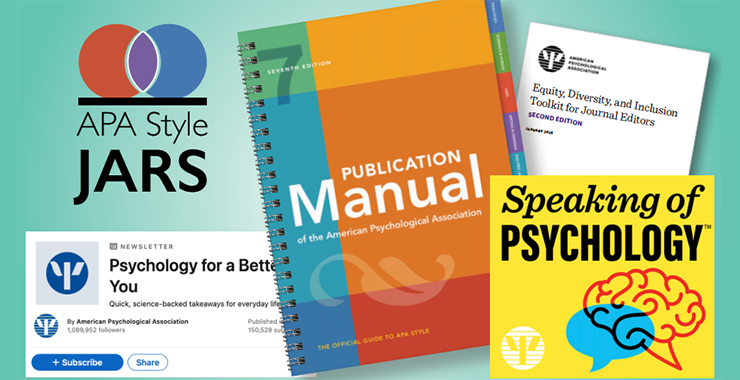
Advancing methodological innovation. We continuously work to improve standards and procedures for conducting and reporting research. For instance, APA’s Science Training Sessions cover a range of tools and techniques that support cutting edge psychological research, from advanced data analysis to media trainings for scientists. APA’s Journal Article Reporting Standards (JARS) offer guidance to authors, reviewers, and editors about information to include in different types of manuscripts. In 2024, 95% of articles accepted by APA journals adhered to JARS, helping to enhance scientific rigor, reproducibility, and methodological integrity.
Incorporating diverse perspectives. We promote greater demographic and viewpoint diversity in psychological research because we see it as integral to our field’s scientific rigor and relevance. APA’s EDI Toolkit for Journal Editors offers nearly 50 actionable recommendations to promote equity and inclusion in their journals. Simple steps like requiring author contribution statements and encouraging student co-reviewers can help broaden author representation and reduce bias.
Increasing access to psychological science. Sharing research through scholarly journals is important but often fails to reach those outside our field. Scientific excellence cannot be achieved if our research does not reach those who need it. APA routinely issues press releases on research from our 90 peer-reviewed journals to engage reporters across a broad range of topics. APA’s amicus brief program supplies state and federal courts with science-based briefs on critical topics such as the reliability of eyewitness testimony. APA also publishes Psychology for a Better Youopens in new window and Six Things Psychologists are Talking About , e-newsletters sharing quick, science-backed takeaways and insights for everyday life in accessible, jargon-free language. The public hunger for this information is clear: More than 100,000 people subscribed to Psychology for a Better You on its launch day. And APA’s Speaking of Psychology podcast has more than 20 million downloads, primarily by members of the public.
As psychologists, we know that the quality of our science impacts our ability to improve lives. This is our moment to lead by example, to show how rigorous research illuminates paths forward, and to reinforce psychology's essential role in creating a better world.