skip to main content
News

Taking a stand against book bans

How psychologists are fighting censorship to keep culturally diverse books available to everyone
APA Style leaf logo Cite This Article in APA Style
Brooks, R. (2025, July 1). Taking a stand against book bans. Monitor on Psychology, 56(5). https://www.apa.org/monitor/2025/07-08/fighting-book-bans-censorship

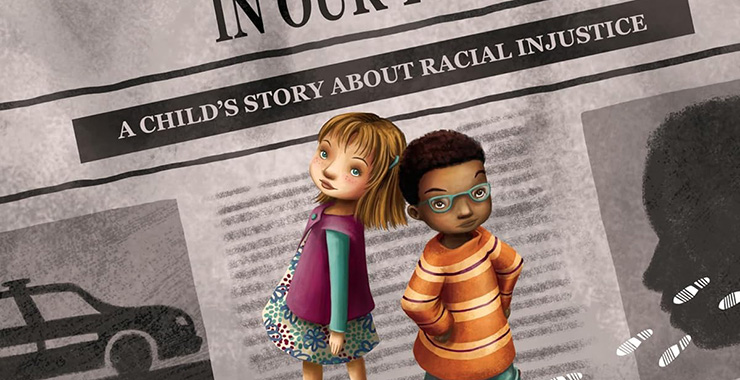
graphic of two children standing in front of a newspaper

Key points

  • Book bans are surging. Books about nontraditional family structures, LGBTQ+ topics, and people of diverse racial-ethnic backgrounds are being removed at much higher rates than other material.
  • Research shows that diverse books can increase children’s reading time and reading levels and reduce in-group favoritism.
  • Psychologists able to help are advocating locally and at the national level, writing to their representatives, contributing to research gaps, and collaborating with other stakeholders.

The pace and scope of book bans have increased dramatically since the White House push to end equity, diversity, and inclusion (EDI) initiatives across universities, cultural institutions, and science. And federal policy is now laying the groundwork to make it easier to ban books. On January 24, 2025, the U.S. Department of Education said it would stop investigating schools that banned books from their libraries, dismissing pending allegations and rescinding previous department guidance that said these bans could violate civil rights laws. And on April 4, the U.S. Naval Academy removed 381 books from its Nimitz Library (PDF, 280KB)opens in new window under an order by Defense Secretary Pete Hegseth’s office. Topics on the pull list include the Holocaust, environmental racism, and gender studies, as well as books like Maya Angelou’s 1969 autobiography, I Know Why the Caged Bird Sings, long celebrated for its powerful insights on racism during the Jim Crow era and its innovative memoir style.

According to PEN America, a nonprofit dedicated to protecting free expression worldwide, most U.S. censorship targets books featuring characters of color or other marginalized identities. The organization counted 10,046 book bans in public schools during the 2023–24 school year alone, with Florida (4,561) and Iowa (3,671) leading the nation (Meehan, K., et al., PEN America, Nov. 1, 2024opens in new window). That statistic includes books that address issues of race and racism, gender, and ethnic diversity—topics that can improve children’s motivation to read and reading proficiency (The Impact of a Diverse Classroom Library, First Book, 2023opens in new window) as well as reduce social divides, according to research (Cameron, L., et al., Child Development, Vol. 77, No. 5, 2006opens in new window; Kim, S. J., et al., Early Education and Development, Vol. 27, No. 3, 2016opens in new window).

“Making sure that children see themselves represented in the books that they read gives them a sense of belonging that empowers them to engage in school,” said Terry Stancin, PhD, emerita professor of pediatrics at Case Western Reserve University in Cleveland.

Unrestricted access to books exposes people, including children, to critical material about history and human behavior—and prepares future psychologists to be culturally competent. “It’s valuable, not just for students planning to go into the psychology field or related fields,” but simply “to know as a human being how you and other people work,” said Jacqueline Toner, PhD, a clinical psychologist and author of children’s books published by APA’s Magination Press.

As book bans continue to materialize, psychologists are working hard on the front lines of censorship, raising awareness, informing and advising education policymakers, and partnering with literacy organizations, such as the American Library Association (ALA) and We Need Diverse Books, to keep books with culturally diverse content available. Efforts by APA aim to advocate for open access to literature, support authors of banned books through its publishing house, and share strategies for how psychologists can champion access in their local communities.

“We have to acknowledge that we don’t know everything, but we have extensive research that supports the positive influence of inclusion on children who are marginalized and on academic success,” Stancin said. She encourages psychologists to focus on the psychological science on these issues. “That’s the basis of how we should be functioning.”
The landscape of banning

Proponents of bans often argue that they protect children from harm, namely, exposure to sexually explicit or violent material, mental illness, or other content deemed age-inappropriate. According to the ALA’s Office for Intellectual Freedom, 72% of bans in 2024 were pushed by a vocal minority (organized groups and government entities), affecting books in classrooms, libraries, and school curricula. Frequently banned books this year include children’s picture books depicting gender and sexual diversity or racial injustice topics, as well as novels like Toni Morrison’s The Bluest Eye, for its depictions of slavery, racism, and sexual violence, and Margaret Atwood’s The Handmaid’s Tale, for its political and social messaging and sexual content.

But according to Christopher Ferguson, PhD, a professor of psychology at Stetson University in DeLand, Florida, most of these challenges emanate from a psychology of fear—the “assumption that kids’ behavior is highly malleable and that simply reading a book or series of books is going to have a strong impact on their behavior.” However, in a study of 282 adolescents, he found little evidence that reading such books (a list of 30 titles frequently challenged from 2003 to 2013) was related to negative behavior in terms of civic involvement, mental health, school grade point average, or crime. In fact, in some cases, this reading was associated with positive outcomes like better civic and volunteering behavior (Psychology of Aesthetics, Creativity, and the Arts , Vol. 8, No. 3, 2014).

What is more, sometimes resistance to certain books is based on assumptions made by people who have not read them. In 2018, psychologists Ann Hazzard, PhD, Marianne Celano, PhD, and Marietta Collins, PhD, coauthored Something Happened in Our Town (Magination Press), a picture book about a police shooting that draws on their experiences working with an underserved population in Atlanta, Georgia. The book—both a New York Times bestseller and the sixth-most banned book of 2020—includes an appendix for parents and caregivers, with guidance for discussing racial bias and injustice with children.

In 2021, MacArthur Elementary School in Binghamton, New York, featured Something Happened in Our Town on its website as the book of the month, inciting local controversy. The Binghamton Police Benevolent Association released a statement that the book promotes “antipolice” views with language that “works to undermine public safety” (the book’s appendix clarifies that it does not do that). When discussing the book in a webinar with Collins and Celano, many parents, school board members, and police officers in a local school district said they had not read the story despite their opposition to its messaging.

“Once we urged them to read the book, and especially the materials at the back of the book, they were a lot more open to having it included in their curriculum,” Collins said.

[Related: Researchers sharpen their strategies for publishing on LGBTQ+ topics]

Psychologists involved in this topic also believe that issues raised in books considered to be controversial can lead to beneficial dialogues between children and mentors.

In urban or well-resourced communities, where adolescents can visit different libraries or search the internet, “banning books sets up a dichotomy that is never successful, where I might sneak around and get the books you tell me not to, and then I have no guidance to help me understand what I’m reading,” said Sharon Berry, PhD, a clinical psychologist in Minneapolis who incorporates novels and self-help books into her practice.

Pediatrician and children’s book author Sayantani DasGupta, MD, MPH, who is on the faculty of the master’s program in narrative medicine at Columbia University, added that books can be an antidote to digital overload. Children’s books, including those that are banned, are thoughtfully created by authors, editors, and publishers and then selected by teachers and librarians, while the online world is largely unregulated, she said. “Books invite the reader to interact critically and actively, not to passively consume information in the way the internet often encourages,” said DasGupta, who is also a founding member of the national coalition Authors Against Book Bans. In a study of more than 10,000 U.S. adolescents, early childhood reading for pleasure was associated with better cognitive performance, lower scores for psychopathological problems, and larger total brain cortical areas and volumes in adolescence (Sun, Y. J., et al., Psychological Medicine, Vol. 54, No. 2, 2024opens in new window).

If parents worry about the content of a book their child wants to read, they might consult a third party to help them navigate, or read it together, Berry added. However, a single group of parents should not be trying to enforce their preferences on others, Berry said.

The importance of diverse reading material

Research shows that stories featuring marginalized characters have positive effects. For example, Hazzard and Celano’s work in Supporting Students’ Intellectual Freedom in Schools: The Right to Read (Sachdeva, D. E., et al. [Eds.], IGI Global, 2024opens in new window) highlights how picture books can foster positive ethnic-racial identities, influencing debates on book challenges.

For instance, reading about diverse populations can improve educational outcomes and challenge favoritism toward ingroup members, such as those who share the same ethnicity, background, or values, according to Natalia Kucirkova, PhD, a professor at the University of Stavanger, Norway, and The Open University, United Kingdom, who has applied developmental psychology and literary theory to her studies of early childhood literacy.

“Well-crafted stories that feature protagonists who are different from the reader—and that encourage readers to empathize with these characters—can help reduce bias and promote empathy toward outgroup members,” she said (see Frontiers in Psychology, Vol. 10, 2019opens in new window).

Interventions in school settings support the theory that diverse books can weaken ingroup favoritism and encourage cross-race friendships. In a 2017 study, U.K. researchers found that 4- to 6-year-olds tended to self-select lunch seats near race-like peers (McKeown, S., et al., Journal of Community & Applied Social Psychology, Vol. 27, No. 5, 2017opens in new window). Although the effect was short-lived (48 hours), after a teacher read aloud a book about valuing diversity, the students abandoned racially segregated behavior.

Other work shows that restricting access to diverse perspectives “could hinder children’s readiness to engage in a pluralistic and interconnected world,” Kucirkova said, pointing to the developmental assets of books that highlight diverse backgrounds or stories about immigrants and refugees, people with disabilities, or religious minorities (see Reading Psychology, Vol. 46, No. 2, 2025opens in new window). “Through narrative storybooks, children mentally simulate social situations and imagine themselves in the place of the characters,” she said. Books presenting unfamiliar perspectives are “essential for fostering vicarious experiences—that is, children’s ability to imagine lives very different from their own.”

Advocacy and action

Psychologists are finding ways beyond academic work to leverage their training in these efforts. Allison Bashe, PhD, a clinical psychologist in Pennsylvania who specializes in treatment for adolescents and adults, addressed her local school board when 13 books—the majority of which were written by or about people with a marginalized identity—were challenged unsuccessfully in 2023. Bashe argued that books are “not a substitute for therapy or group therapy,” but that it can be comforting for children to understand they are not alone in an experience.

The definition of systemic racism in the publishing process also entered Bashe’s remarks. Even as the school library retained the 13 challenged books, it proposed that titles published earlier than two generations ago would be designated as “classic” and protected from bans. Yet some authors from ethnic minorities and Indigenous groups may have experienced barriers to getting published several decades ago, said Bashe, who holds a BA in both English and psychology. Books that are being published today also have merit, she said.

Other psychologists are sharing their thoughts and expertise in letters to their governors and state representatives.

Celano and Collins’ efforts have catapulted psychology into arguments against book censorship. Their advocacy has included interviews with journalists, media, and nonprofit organizations fighting censorship; presentations to parents, educators, and behavioral health professionals about their banned book; a state policy campaign in Georgia; and readings at schools and libraries across the country.

APA Publishing, meanwhile, remains committed to its “Freedom of scientific inquiry and publication” policy, adopted in 2000 (Monitor on Psychology, July/August, 2001). The policy affirms that a healthy science requires freedom of inquiry and expression and that editors must be free to publish controversial findings without risk of censorship as long as they align with standard ethical and scientific principles.

“It’s important for us as a society publisher to be able to publish research that is broadly applicable to the discipline,” including to the diverse populations that psychologists serve, said Rose Sokol, PhD, APA’s journals and books publisher. That extends to books in APA’s children’s book imprint, Magination Press. Children need to be able to learn how to evaluate and consume information when it matches their lives and when it does not, and books that shed light on various communities can help them do that, Sokol said.

“Despite the increase in book banning and censorship challenges, Magination Press remains unchanged. We are committed to APA’s mission, and we will continue to publish books that champion inclusion and belonging for all children and teens,” said Kristine Enderle, editorial director of Magination Press. “Kids need to see themselves, their experiences, their communities, and their families in books and feel welcomed and respected in our world.” Also important is for psychologists to team up with others in relevant disciplines, such as physicians, educators, librarians, and advocacy groups, in both civic and private settings, according to DasGupta. She strongly believes that “our combined expertise has the weight of collective social force.” The narrative medicine program that she cofounded at Columbia, for example, brings together social workers, physicians, psychologists, artists, and academics to improve health care from an equity and patient-centered perspective.

Increasingly, health professionals are engaging in advocacy across their varied life roles: as community members, parents, library patrons, and voters. Psychologists can emphasize that a full range of books teaches students to be critical interpreters of their world, a skill essential for evidence-based practice in clinical and research careers—and for an educated and democratic society.

Resources: How psychologists can help

  • Read APA’s amicus brief on a case currently pending before the Supreme Court to better understand APA’s work to inform lawmakers.
  • Be aware of advocacy organizations’ actions to raise awareness: see the work of the American Library Association’s Office for Intellectual Freedom, PEN America, We Need Diverse Books, Brooklyn Public Library’s Books Unbanned, and the National Coalition Against Censorship.
  • Write to elected officials and state representatives; speak up at school board and council meetings (find details online).
  • Leverage psychological science to address the motivations behind book bans in a constructive way and engage with the media (e.g., consider writing an op-ed).
  • Close the literature gap: Psychological scientists might consider initiating studies on the short-term and long-term impact of book bans on children’s development of biases, academic interests, and awareness of social and cultural issues.
  • Developmental and child psychologists can consider using diverse picture books in their practices. Some titles from Magination Press that appear on diverse books lists: Lulu the One and Only by Lynnette Mawhinney, PhD; Marvelous Maravilloso: Me and My Beautiful Family by Carrie Lara, PsyD; This Day in June by Gayle Pitman, PhD; They’re So Flamboyant by Michael Genhart, PhD; Home by Tonya Lippert, PhD; Jacob’s Missing Book by Sarah and Ian Hoffman; Papa, Daddy, and Riley by Seamus Kirst; Rhythm by Jackie Azúa Kramer.

Further reading

9 picture books in Mahmoud v. Taylor SCOTUS caseopens in new window
Charlotte Sullivan Wild, author blog, 2025

Top 10 and frequently challenged books archiveopens in new window
American Library Association, Office for Intellectual Freedom

Who’s in and who’s out at the Naval Academy’s library?opens in new window
Ismay, J., The New York Times, April 11, 2025

Book bans harm kidsopens in new window
Scientific American, Nov. 19, 2024

Recommended Reading

Speaking of Psychology

Subscribe to APA’s audio podcast series highlighting some of the most important and relevant psychological research being conducted today.

Subscribe to Speaking of Psychology and download via:

Appleopens in new window
Apple podcast logo

Spotifyopens in new window
Spotify logo

Related and recent