Courage takes many forms, from Alexei Navalny’s fatal opposition to Russian corruption to everyday acts like confronting a friend who drinks too much.
Yet getting a handle on this virtue scientifically, empirically, and psychologically has not been easy.
“Because courage is so intricately tied to an action and that action has a specific context, it is very hard to measure it,” said Aakash A. Chowkase, PhD, an associate research scientist at Yale University who studies human virtues. A lot more work is also needed to understand it conceptually, he said.
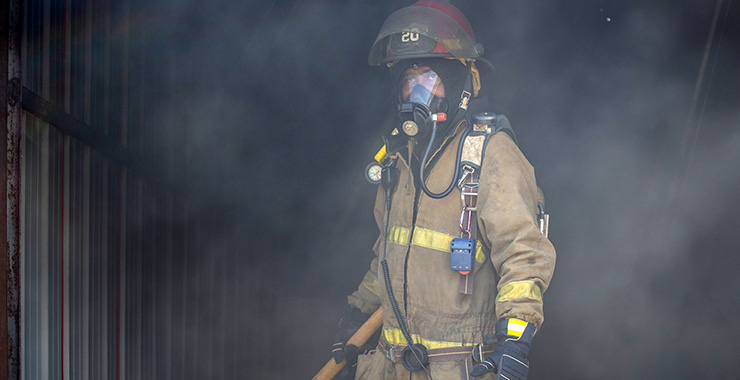
There are other reasons courage is not easy to study. It is a multifaceted concept with divergent faces: social, political, personal, psychological, moral, and more. Is courage a rare act of nobility committed largely by extraordinary individuals, or is it an action that any of us can take at any time? Are actions that take place without much forethought—running into a burning building to save someone, for instance—courageous even though they are driven by impulse? Or is courage always the product of deliberate reflection and difficult decision-making that ultimately results in acts of heroism?
Answering those questions could not come at a more pivotal time, according to Robert J. Sternberg, PhD, a professor of human development at Cornell University and a main researcher in positive psychology, which includes virtues like courage.
“The world has plenty of people with high IQs,” Sternberg said. “What the world lacks, and desperately needs, are more people with the courage to do the right thing at a time when so many leaders, including those of high IQ, are scrambling to do the opposite.”
[Related: Building the courage muscle]