Walking therapy, like virtual therapy, was used as a safety measure during the COVID-19 pandemic and then gained traction because of its benefits for patients and practitioners alike. While most research to date has separately examined talk therapy, physical activity, and time in nature, early studies point to the benefits of combining the three.
Feasibility studies have found walking therapy to be acceptable for several patient groups and to offer benefits for anxiety, depression, and post-traumatic stress symptoms (Dickmeyer, A., et al., Clinical Psychology & Psychotherapy, Vol. 32, No. 1, 2025opens in new window; Koziel, N., et al.,The Canadian Journal of Psychiatry, Vol. 67, No. 2, 2021opens in new window). In a small qualitative study, participants reported feeling improved self-awareness, self-acceptance, and freedom of expression after walk-and-talk sessions (Prince-Llewellyn, H., & McCarthy, P., Counseling & Psychotherapy Research, Vol. 25, No. 2, 2025opens in new window). A 2020 meta-synthesis of outdoor therapies found benefits including more mutuality between therapist and patient and more interconnectedness between the mind, body, and natural world (Cooley, S. J., et al., Clinical Psychology Review, Vol. 77, 2020opens in new window).
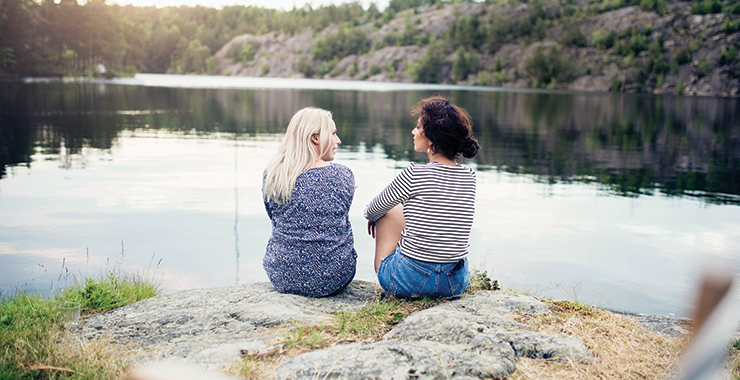
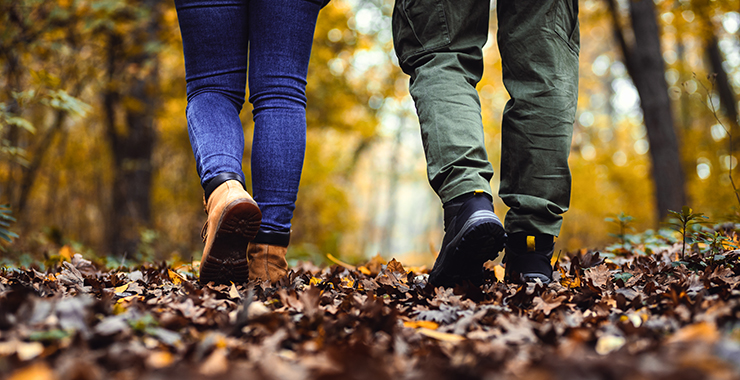
Outdoor spaces can simply provide a backdrop for a session where psychotherapy happens while walking, hiking, or pausing to sit, depending on patient needs and preferences. Other providers consider the connection with nature to be central to their practice.
“In my practice, the natural environment plays an active role in the therapeutic process—it promotes reflection, cultivates connection, and helps clients feel a deeper sense of belonging,” said Salvia Artman, PhD, who offers outdoor therapy in Hawaii.
For some therapists, that means starting with a land acknowledgment, including how the area has been shaped by colonization and development. Other practitioners begin each session with a mindfulness exercise, inviting patients to use their senses to ground themselves and connect with their surroundings.
Throughout the session, nature-informed interventions can continue to foster that relationship. Aimee Frazier, a counselor with a hiking therapy practice in Portland, Oregon, asks her patients to draw parallels between the surroundings and their internal world, such as a fallen tree that represents divorce or a sapling standing for resilience.
For some patients, walking therapy can reach a spiritual level, Doherty said, helping them ponder their mortality, find a sense of purpose, or grieve a loss. Practitioners may also close with a moment of gratitude to the natural world or incorporate elements from other cultures that draw on nature therapeutically, such as Green Care (a nature-based approach to health and social care) in Finland or shinrin-yoku (forest bathing) in Japan.
The power of walk-and-talk therapy rests partly in its ability to help regulate the nervous system, said Heidi Schreiber-Pan, PhD, founder and executive director of the Center for Nature Informed Therapyopens in new window in Towson, Maryland, a nonprofit that offers training, education, and retreats. Moving the body offers a somatic pathway for processing and releasing emotional energy.
“Natural elements such as sunlight, breeze, and bird songs can also gently support the nervous system to shift from a stress response to a more grounded and regulated state,” Artman said.
Research has linked time in nature to enhanced awe, prosocial behavior, and sense of purpose; reduced depression, anxiety, and negative affect; and physical health benefits such as improvements in heart rate variability, blood pressure levels, and cortisol response (Monroy, M., & Keltner, D., Perspectives on Psychological Science, Vol. 18, No. 2, 2022opens in new window; Capaldi, C. A., et al., International Journal of Wellbeing, Vol. 5, No. 4, 2015opens in new window; Coventry, P. A., et al., SSM - Population Health, Vol. 16, 2021opens in new window; Yao, W., et al., Urban Forestry & Urban Greening, Vol. 57, 2021opens in new window).
Walking together outdoors, rather than sitting face-to-face, can also promote a positive shift in the therapeutic alliance, Nazarian said.
“This format softens the hierarchy in the therapeutic relationship because we’re walking side by side, sharing a common space,” she said. “It feels a lot more collaborative.”
That can be tricky at times, Frazier said, because the outdoor environment comes with surprises—like a blocked trail or a splinter in the foot—that both therapist and patient must adapt to in the moment. She sees these disruptions not as setbacks but as opportunities.
“We have to be flexible sometimes, but cocreating the experience together can be incredibly empowering for the client,” Frazier said. “They get to decide where they go physically—and also psychologically—as we navigate their challenges together.”
Moving therapy outdoors can offer similar physical and mental health boosts for providers, Nazarian said, which may reduce the risk of burnout.
“My work now is very different from what I did in the office,” she said. “I feel like a different therapist when I’m on the beach, because it’s my own happy place.”