skip to main content
News

Psychologists help prepare team USA for the Deaflympics

A first-of-its-kind collaboration improves sport and performance psychology services for Deaf and hard-of-hearing athletes

APA Style leaf logo Cite This Article in APA Style
Andoh, E. (2025, November 1). Psychologists help prepare team USA for the Deaflympics. Monitor on Psychology, 56(8). https://www.apa.org/monitor/2025/11-12/team-usa-deaflympics-psychologists

runners competing on an outdoor track

Key points

  • Deaf and hard-of-hearing athletes (DHH) face unique barriers, including communication gaps, financial obstacles, and exclusion from mainstream competition.
  • In a historic first, the University of Western States and USA Deaf Sports Federation are partnering to provide mental performance consultation to Team USA for this year’s Deaflympics.
  • Psychologists working with DHH athletes can facilitate communication, adapt interventions, and help them to self-advocate.

When Becky Clark, PhD, first attended the Deaflympics in 1981 in what was then West Germany, she was a 21-year-old athlete. Surrounded by thousands of Deaf and hard-of-hearing (DHH) athletes for the first time, as part of Team USA, she took home the silver medal. In a full circle moment, Clark will return to the Deaflympics in Tokyo this November. This time, instead of competing she’ll be leading a first-of-its-kind initiative. Clark leads a dedicated team of sport and performance consultants that is providing support to the approximately 350 U.S. athletes that make up Team USA.

The Deaflympics—celebrating its centennial this year—is the second oldest international sports competition in the world after the Olympics. Despite the vital role sport and performance psychology plays in the success of Olympic athletes such as Simone Biles and Michael Phelps, Deaflympic athletes have not received comparable support. Jointly funded by the USA Deaf Sports Federation (USADSF) and the University of Western States (UWS) in Portland, Oregon, Clark and her team are taking steps to close this long-standing gap.

“We hope to make this an ongoing collaboration, as the partnership effort essentially quadruples the number of mental performance consultants with experience working in this unique population,” said Sarah Castillo, PhD, who is the program director of sport and performance psychology programs at UWS.

The psychology of sport for DHH athletes

Although research on DHH athletes in sport and performance psychology has been limited, there is emerging research on how professionals in this field can tailor their work to better support these athletes’ needs. Alon Markov-Glazer, PhD, a postdoctoral researcher in the developmental psychology program at the Friedrich Schiller University Jena in Germany, has conducted a number of studies with Deaflympic athletes, in particular.

He coauthored a study on 84 German Deaflympic athletes as part of a research project led by his dissertation supervisor, Rainer Schliermann, PhD. They found that only 9.5% had received sport psychology compared with approximately half of Paralympic athletes who had (International Journal of Sport and Exercise Psychologyopens in new window, Vol. 22, No. 8, 2024opens in new window). Both groups used psychological skills like goal setting, imagery, self-talk, and regulating arousal at similar rates. However, Deaflympic athletes were less likely to use relaxation techniques, which often rely on auditory cues. Markov-Glazer and his colleagues suggested that sport and performance consultants could adapt such strategies to bridge the gap. For example, progressive muscle relaxation—a stress and anxiety reduction technique that involves briefly tensing and then relaxing muscle groups—can be guided using sign language and supported with touch or visual stimuli.

In a follow-up qualitative study, the researchers interviewed 23 German Deaflympic athletes and four coaches to learn how mental training skills could be adapted for their needs (Markov-Glazer, A., et al., Frontiers in Sports and Active Living, Vol. 7, 2025opens in new window). For example, traditional visualization or imagery training often relies on spoken instructions or auditory cues. One coach adapted this technique to be more inclusive by making such cues visual or tactile. First, he instructed his team to imagine standing together in a circle holding a trophy after a win. He then asked them to close their eyes for about 10 seconds. To signal the end of the visualization exercise, he clapped or knocked on the floor.

Psychologists and mental performance consultants have a unique role to play in addressing the mental health, training, and communications needs of DHH athletes. By adapting interventions or skills training appropriately, they can ensure the athletes are fully supported and primed for success in a variety of sports environments.

DHH athletes face systemic challenges

Clark’s work in this space exemplifies such an approach. As a licensed clinical social worker and kinesiologist specializing in sport and exercise psychology, Clark’s personal journey drives her dedication to this work. She experienced hearing loss in her early teens and learned American Sign Language (ASL) to communicate. She continued to pursue athletics through her adolescence and college career, eventually winning one gold and two silver medals in volleyball across three Deaflympics in the 1980s.

However, like many elite athletes, Clark faced intense pressure to perform and internalized the belief that admitting to mental health struggles was a sign of weakness. A lack of open dialogue about emotional well-being in sports only made things harder. “I needed help with mental health to process stress, loss, and grief that’s normal in and of itself,” she said. “But as an athlete, I didn’t want to be labeled. I didn’t want someone saying, ‘You’re seeing a psychiatrist? What’s wrong with you?’ So, I became a therapist myself, specializing in athletes. It was my way of normalizing the conversation.”

Many DHH athletes grapple with the fact that deafness, often an invisible condition, has historically led to DHH individuals being misdiagnosed with psychiatric conditions or labeled as intellectually disabled. This fuels reluctance to seek mental health support as many fear misunderstanding or judgment. Frustrated by the lack of culturally competent services for DHH athletes, Clark has spent decades advocating for change across universities and sports organizations.
mountain biker

The DHH community is a heterogenous group, with a wide range of communication styles and preferences, cultural identities, and degrees of hearing loss (Padden, C., & Humphries, T., Deaf in America: Voices from a Culture, Harvard University Press, 1988opens in new window). For example, some, especially those with complete hearing loss, communicate through sign language, have only (or mostly) DHH friends and acquaintances, and capitalize the word “Deaf” to reflect their status as part of this cultural and linguistic minority. Others may view their hearing loss as a medical condition or disability rather than an identity. They may employ assistive technologies such as hearing aids or cochlear implants as well as speech reading, a combination of lip reading and interpreting facial expressions and gestures.

DHH athletes must navigate hurdles that don’t exist for their hearing counterparts. For example, they often encounter communication barriers, such as limited access to qualified interpreters. These challenges can result in them missing vital information such as training plans or instructions and reduced opportunities to connect with coaches, training staff, and their hearing teammates. These factors not only hamper inclusion but may impact performance.

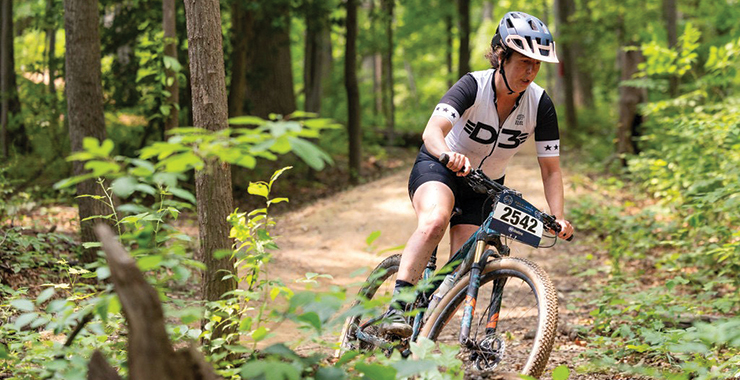
Danielle Previ, PhD, a pediatric psychologist at Gallaudet University in Washington, D.C., is competing in the Deaflympics for the first time as a mountain biker for Team USA. “The last local race that I did, the organizer was making announcements with a microphone,” said Previ, who identifies as profoundly deaf. “I was completely lost as to what was going on.” Previ asked a hearing cyclist for information, but she was also unable to hear the announcer properly because of background noise and the mic’s feedback. To Previ, it demonstrated the importance of conveying crucial information in accessible ways that benefit every competitor’s performance and safety, regardless of hearing ability. “I know sound is important for many people, but there are several different ways. For example, in other races, there’s a board with different categories written down that conveys what time each race starts, and that is definitely more accessible.”

Jeffrey Mansfield, USADSF president and a three-time Deaflympian, brings personal insight to how communication barriers can undercut both performance and the mental well-being of DHH athletes. As an NCAA Division 1 college hockey player, Mansfield often didn’t have equal communication access to essential team moments such as pregame speeches or strategy sessions because of a lack of integrated interpreting services. That had significant consequences when he failed an exam on the team’s system. “I was seeing certain things and words for the very first time, and I was completely at a loss. My failure was interpreted as a failure of commitment, as a lack of attentiveness and focus,” said Mansfield. “These microaggressions happen to [DHH] athletes at all levels. We need to educate our coaches and our sports organizations, and sports psychologists play a key role in this effort.”

When sport and performance consultants and psychologists take the time to recognize and respond to the unique communication needs of the DHH athletes, they can help deepen engagement and support in their training and competition. This includes appropriate and thoughtful modifications such as using visual tools including PowerPoint slides, text messages, video, or white boards to ensure DHH athletes have full access to the information they require (Hanrahan, S. J., Australian Psychologist, Vol. 50, No. 2, 2015opens in new window).


Supporting Team USA

As team director for the mental performance consultants and mental health clinicians working with Team USA, Clark is working alongside three faculty members from UWS’s sport and performance psychology program: Castillo, Gily Meir, PhD, an assistant professor, and Skip Flanagan, EdD, a former professional baseball player, cofounder of the National Deaf Athlete Center and visiting assistant professor at Rochester Institute of Technology. The team also includes five doctoral students who received specialized training in DHH culture and ASL. In addition, all team members were trained and certified in Mental Health First Aid by the U.S. Olympic and Paralympic Committee (USOPC) Psychological Services team. Their work with Team USA represents a major step toward greater accessibility and inclusion in sport and performance psychology while celebrating Deaf sport on the global stage.

“For most of these Deaflympians, this is the first time they have had access to mental performance and mental health support services with full communication accessibility,” Clark said. “The response has been overwhelmingly positive, and athletes and coaches are actively utilizing these resources.”

The USA performance psychology team is deploying a variety of strategies tailored to the specific needs of each athlete on Team USA. For example, they developed performance routines where the Deaflympians set clear and measurable goals for themselves. They also use skills such as visualization and methods to boost motivation and confidence. “We don’t offer a package where we go and say, ‘OK, here are the six things that we’re going to talk about today.’ These are elite athletes,” said Castillo. “We make sure that we’re delivering the types of skills and services that they’re most interested in and that they think will make the biggest impact in their performance.”

They also helped the teams for each sport build rapport, as some only had the opportunity to meet in person for two or three training camp sessions before the games. Building team cohesion has involved facilitating communication gaps, often with the use of written communication on tablets, as the athletes on Team USA have a range of degrees of hearing loss and fluency in ASL. “Every athlete has completely different needs. Every team has different team dynamics. It’s fun to see how we can develop our tool kit to better serve those individuals,” Flanagan said.

This partnership also marks the first time that sport and performance consultation sessions will be free for Deaflympic athletes, with most funding provided by UWS and the USADSF. “The affordability of having someone work on mental performance challenges is an expense that often can’t be overcome,” said Clark. “So, us being able to offer that as part of their process as members of the 2025 team, I think is really exciting.”

Deaflympic athletes encounter significant financial barriers to fulfilling their goals. While the USOPC offers a range of financial resources to Olympic and Paralympic athletes—including support for sport performance services through the Team USA Fundopens in new window—Deaflympic athletes are not included in those systems. In addition, the USOPC’s control over the term “Olympics” and its derivatives limit the Deaflympics’ ability to seek private sponsorship and funding from companies that already have partnerships with the USOPC, according to Mansfield.

As a result, Deaflympic athletes often have to self-fund their journey toward the games to cover the costs of intense training, equipment, uniforms, travel, accommodations, and incidentals for training camps, world championships, and the Deaflympics (Mesch, J., & Clark, B., Routledge Sport Studies, Dec. 3, 2023opens in new window). Clark estimates that the cost for each athlete to attend the games in Japan this year could range from $7,000 to $8,500.

A strengths-based approach to DHH athlete care

Jennifer Reesman, PhD, a clinical neuropsychologist at The Chesapeake Center in Bethesda, MD, has provided concussion care tailored for DHH athletes. She highlighted the importance of accessible communication and culturally competent assessment tools in these scenarios. “We really need to get back to our roots of understanding. What is this task? Is this accessible to the population that I’m trying to use this with?” Reesman said. Psychologists can find practical information and resources to guide their work in the APA Guidelines for Assessment and Intervention With Persons With Disabilitiesopens in new window.

Previ has witnessed how medical mistrust and a lack of cultural competence can compromise care. She recalled a DHH patient coming in for a possible concussion at her previous hospital, but communication during the concussion screening broke down even with an interpreter present. “They were doing screening in the concussion clinic with the interpreter, and it did not go well at all because of poor communication. They didn’t fully understand anything about the Deaf community,” she said. “The patient didn’t feel comfortable and didn’t trust the assessment or the psychologist. So, they were referred to us. I ended up doing the concussion screening and was able to appropriately diagnose that individual.”

Experts stress that a strength-based perspective is crucial to reframing how psychologists think about deafness. For example, reconceptualizing hearing loss as “deaf gain” is a way to highlight the unique strengths that DHH people bring by virtue of the bodies they walk in. For example, Deaf culture has a rich history of contributing innovations that benefit people of all sensory abilities. In sports alone, such advances include the creation of the football huddleopens in new window at Gallaudet in 1894 and, more recently, a 5G-enabled football helmetopens in new window that projects visual play signals.

That strength-based approach is central to Clark’s team and marks an encouraging shift in sport and performance psychology toward equitable support for DHH athletes. “We don’t want pity or to merely be inspiration. We want visibility, advocacy, funding, and culturally competent support,” Clark said.

Recommended Reading

Speaking of Psychology

Subscribe to APA’s audio podcast series highlighting some of the most important and relevant psychological research being conducted today.

Subscribe to Speaking of Psychology and download via:

Appleopens in new window
Apple podcast logo

Spotifyopens in new window
Spotify logo

Related and recent