skip to main content
News

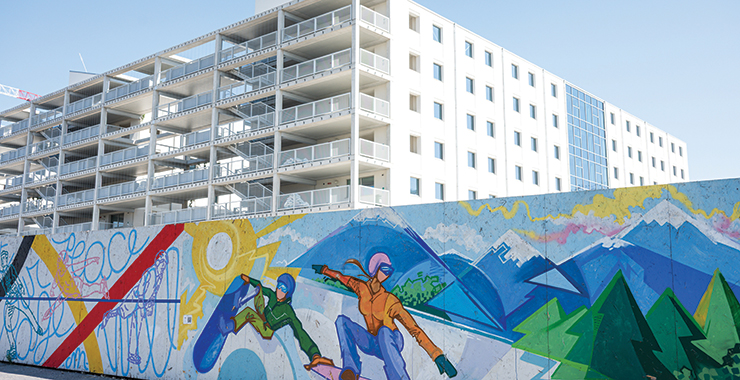
How sport psychologists are helping Olympians in Italy

Psychologists address mental health issues and train athletes to strengthen their mind like a muscle alongside the body

APA Style leaf logo Cite This Article in APA Style
Abrams, Z. (2026, January 1). How sport psychologists are helping Olympians in Italy. Monitor on Psychology, 57(1). https://www.apa.org/monitor/2026/01-02/sports-psychologists-olympians

""

Key points

  • In February’s games in Milan-Cortina, psychologists are supporting more Olympic and Paralympic athletes than ever, with a focus on boosting mental health and optimizing performance.
  • New initiatives target common stressors for athletes and coaches, including navigating social media and getting enough sleep.
  • Psychologists are using cognitive behavioral techniques to support performance enhancement, helping these elite athletes perform their best.

The Olympic and Paralympic Games have always provided a spectacular display of physical prowess, but now the event’s organizers and participants are also increasingly shining a light on mental well-being.

Olympians, including Simone Biles and Michael Phelps, have spoken publicly about how therapy sessions boosted their well-being and performance. Now, more athletes than ever are seeking support in facing the pressures of competition, handling attention on social media, and balancing sport with other areas of life.

But sport psychologists do more than address Olympic and Paralympic athletes’ mental health—they also train them to manage distractions and reframe challenges. This builds a strategic edge, strengthening their mind like a muscle alongside the body.

The United States Olympic & Paralympic Committee (USOPC) now employs 18 dedicated psychologists, its largest team yet. Those providers serve close to 6,000 athletes. At the 2024 Paris Games, they conducted more than 1,200 one-on-one sessions, more than at any previous competition.

All 18 psychologists are licensed mental health professionals in addition to certified mental performance consultants, also known as CMPCs. This means they are equipped to address both clinical mental health concerns and performance-related mental skills. This dual credentialing ensures that athletes receive comprehensive psychological support, whether they’re dealing with anxiety or performance optimization. “All our providers are licensed in mental health and credentialed in mental performance, which means that no door is the wrong door. Whatever an athlete needs, our providers can help,” said Jessica Bartley, PsyD, who leads USOPC’s psychological services team.

That combined focus on mental well-being and performance allows psychologists to address the full spectrum of athletes’ needs. The holistic approach also includes regular mental health screenings, which are now embedded within annual or quarterly medical checkups, as well as a growing menu of support tools such as digital mental health, a 24/7 confidential support line, coaching-focused services, and REST USA, a program focused on improving sleep.

“These athletes train their entire lives for this, so it’s incredibly rewarding to become a consistent part of their journey and support them from lots of different angles—mental health, performance, sleep, and more,” Bartley said.

[Related: Psychologists help prepare Team USA for the Deaflympics]

A growing focus on mental health

Elite athletes face challenges that often require special support—from injuries, team dynamics, and competition pressure to disappointing performances and retirement. Other common concerns include eating disorders, substance use, and sport-life balance.

“I honestly don’t know how you could do it without a sport psychologist,” said Lily Williams, a cyclist who competed at the Paris Games with the USA Olympic team pursuit squad. “Our job is basically to go hurt ourselves as much as possible day in and day out, and it’s really helpful to have somebody help you disassociate that kind of work from feelings of negativity.”

In Paris, more than half of Team USA athletes screened positive for at least one concern on the Sport Mental Health Assessment Toolopens in new window, which was developed by the International Olympic Committee to detect mental health risks.

Among Olympic athletes on Team USA, roughly 19% reported “athlete psychological strain,” or distress connected to sport, and 18% struggled with sleep, 13% with alcohol use, and 32% with disordered eating. Paralympic athletes faced similar challenges, with more than 58% meeting the criteria for at least one concern.

For some athletes, these issues are serious enough to require ongoing care. USOPC psychologists provide treatment for conditions such as depression and anxiety, as well as intensive support for unforeseen circumstances, such as a family emergency, that may force an athlete to withdraw from the games.

Athletes often ask for help balancing competition with external pressures, including social media. Many athletes choose to disconnect from social media in the days or weeks before the games, said Karen Cogan, PhD, a senior psychological services provider with USOPC.

“Others see it as a great opportunity to promote their personal brand, but we talk about how to balance that, because social media can also draw focus away from training and competition,” she said.

USOPC now monitors social media and online chatter, alerting the psychological services team if an athlete is targeted with abusive or negative content. On request, Bartley and her colleagues help athletes navigate online harassment and unwanted attention from fans.

Another new challenge: The legalization of sports betting across much of the United States means many athletes face increased pressure to throw games, plays, or even points. Psychologists are working with athletes to navigate manipulation attempts, as well as the emotional toll of harassment from fans when outcomes don’t go their way.

When retirement approaches, Cogan helps athletes explore how they can maximize their last Olympic experience. For many, that requires balancing peak performance, enjoying the end of their competitive career, and taking advantage of networking opportunities. For example, attending a sponsorship dinner can help Olympians make connections, but it can also sap energy the night before a competition.

“Those are really hard decisions for athletes, because they want to do it all,” Cogan said.

Bartley also uses acceptance and commitment therapy to help athletes identify values, such as discipline and teamwork, that they can take with them into their postcompetition life.

“The narrow focus on one sport is typically what makes someone an incredible competitor, but it can be tough for athletes to form a new identity when their career ends,” she said.

Boosting athletic performance

Sport psychologists have long collaborated with athletes to boost performance, from helping them manage precompetition nerves to reflecting on their performance afterward.

“Our job is to help athletes perform their best in spite of all the pressures and distractions that go along with the Olympics,” Cogan said.

One strategy Cogan uses is walking athletes through what-if scenarios to prepare for the unexpected: What do you do if your equipment malfunctions or a delay throws off your warm-up routine? If you receive difficult personal news just before competing, how will you handle it? If you learn about negative comments on social media, how will you respond?

Cogan also coaches Olympians in mental skills designed to help them manage distractions that may happen before, during, or after competition. She teaches individual athletes techniques such as breathing exercises and mindfulness while fostering communication and cohesion among team members who compete together.

The world’s top-ranked archer, Casey Kaufhold, joined Team USA at the Tokyo Games in 2020 while still in high school. Since then, she has collaborated with a sports psychologist to navigate the pressures of competition.

“I’ve been able to manage the pressure a little bit better, and I think I’ll just apply a lot of what I learned... trusting myself, my training, and my process,” Kaufhold told Olympics.com.

Jamie Shapiro, PhD, a professor of sport and performance psychology at the University of Denver, has worked with athletes at several Paralympic Games to build a personalized precompetition routine and identify cue words (such as “ready” or “power,” or instructional cues such as “push forward”) that allow them to stay focused on the task at hand.

“Thinking about medals can be a big distraction for athletes, so we have them practice directing their attention to the process of performing their sport,” said Shapiro, who is a certified mental performance consultant and national certified counselor.

Paralympic athletes may have a disability—such as visual impairment, a neuromuscular disability, or a spinal cord injury—that can make navigating the games logistically challenging. Shapiro works with athletes to familiarize themselves with the facilities ahead of time, which also supports imagery work that can help boost performance.

“We do visual, sound, and kinesthetic work,” she said. “I help them feel their body move through the positions they’ll use in competition, building the neuromuscular connections that make those movements become automatic under pressure.”

Shapiro also uses cognitive behavioral techniques, such as managing self-talk and reframing, to help Paralympic athletes navigate doubts and unhelpful beliefs. “There are challenges, yes—but how cool is it to be a part of history?” she said.

Tailored support for Team USA

To assist the large segment of Team USA that struggles with sleep, Bartley and her team launched the REST USA initiative ahead of the Milan-Cortina Games. The program uses an adapted version of brief behavioral therapy for insomnia (BBTI), a cognitive behavioral therapy intervention that has proven effective with NFL players.

REST USA aims to debunk the myth that poor sleep doesn’t affect performance, among other misconceptions. It also teaches basic sleep hygiene and gives advice on overcoming jet lag when traveling to Europe. USOPC psychologists are integrating the new program into sports within Team USA, starting with speedskating, and using data from wearable devices to track its effectiveness.

In addition to supporting athletes’ psychological needs, USOPC is building a stand-alone program for coaches. Similar to the athlete support program, it will include education and care components, as well as a triage system and detailed plan for referring coaches to appropriate external resources.

“The role of head coach of a team can be very lonely and stressful, as they are supposed to have all the answers,” said Sean McCann, PhD, a senior psychological services provider at USOPC who is building the new coaching program. “Having a confidential resource that they can use as a sounding board is something many coaches appreciate.”

Coaches do not see the same providers as athletes, which helps to preserve clear boundaries and confidentiality. Some coaches feel isolated in their challenges, but talking to a psychologist like McCann, who has advised Team USA coaches for more than 30 years, can reassure them that others have overcome similar situations.

USOPC’s psychologists have also developed an emergency action plan with guidance for handling any mental health crises that may occur during competitions, including removal from play, medical withdrawals, disordered eating, psychosis, domestic violence, and other incidents.

Supporting Olympians in Milan-Cortina

On the ground in Milan-Cortina, psychologists will help athletes adjust their routines to the unique pressures of the Olympic and Paralympic Games. That often means making quick transitions across a wide variety of settings. At previous games, Cogan has moved between sports throughout the day, meeting with individual athletes, leading team sessions before competitions, and guiding group mindfulness exercises.

Even amid the spectacle and excitement of the games, both athletes and psychologists work to stay grounded, approaching every event with the same focus they would any other competition, said Mackenzie Brown, an Olympic archer who has competed for Team USA.

“The Olympics can be pretty overwhelming when it comes to the magnitude, the village, and the other athletes,” she said. “Sport psychologists can help us bring all the emotions and reactions back into control, because for us to perform at our best, we have to treat it like any other day.”

Recommended Reading

Speaking of Psychology

Subscribe to APA’s audio podcast series highlighting some of the most important and relevant psychological research being conducted today.

Subscribe to Speaking of Psychology and download via:

Appleopens in new window
Apple podcast logo

Spotifyopens in new window
Spotify logo

Related and recent