At issue
Does the practice of excluding prospective jurors based on Black Lives Matter support threaten jury representativeness and impartiality?


Trial exclusion based on BLM support can lead to racial discrimination and biased decision-making
Does the practice of excluding prospective jurors based on Black Lives Matter support threaten jury representativeness and impartiality?
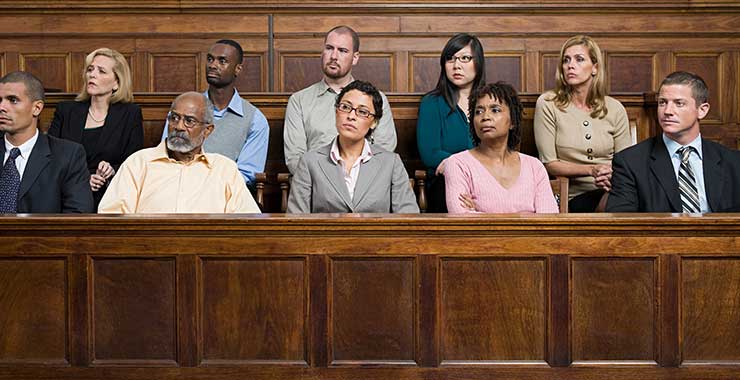
Before criminal jury trials in the United States, attorneys question potential jurors during voir dire, the question period during which attorneys can exclude individuals who may be biased (and those whom they believe may not favor their position) from trial participation. In recent years, especially when police officers are charged with crimes, this process has increasingly involved asking potential jurors about their attitudes toward the Black Lives Matter (BLM) movement. However, this practice may reduce jury representativeness and facilitate biased verdicts—important issues that can be informed by psychological science.
The first concern is representativeness. National polling shows that attitudes toward BLM vary by race and ethnicity, with more non-White individuals than White individuals expressing support for the movement. Consistent with this, two recent studies found that undergraduates and online community members who identified as Black or another historically marginalized race or ethnicity were at higher risk of BLM-based exclusion (Najdowski, C. J., & Stevenson, M. C., Society of Experimental Social Psychology Conference, 2025). Thus, attorneys who dismiss potential jurors based on BLM support are likely to disproportionately exclude people of color. Reducing jury diversity in this way could undermine community representativeness and the perceived legitimacy of jury verdicts—patterns well documented in psychological research. While some courts have recognized the racist implications of challenging Black jurors because of their BLM attitudes (e.g., People v. Silas et al., 2021), others have dodged answering whether BLM questioning is a pretext for unconstitutional racial discrimination (e.g., State v. Booker, 2023). Perplexingly, still other courts have opined that questions posed to Black jurors about BLM are “race-neutral” and thus legal (State v. Gresham, 2016, p. 9).
The second concern pertains to impartiality because, irrespective of juror race, BLM attitudes relate to beliefs about racial equality, police legitimacy, and social order. Research also finds that participants with less (versus more) favorable attitudes toward BLM reported higher anti-Black bias, stronger belief in police legitimacy, and greater endorsement of hierarchical social structures (Najdowski, C. J., & Stevenson, M. C., Society of Experimental Social Psychology Conference, 2025). In mock trial research using a case involving a police officer defendant who fatally shot a Black woman, very favorable BLM attitudes did not predict verdicts, but less favorable BLM attitudes were significantly related to pro-police defendant/anti-Black victim verdicts. Moreover, controlling for their race, mock jurors who were less favorable toward BLM were more likely to acquit the police officer because they endorsed more anti-Black implicit bias and legal authoritarianism.
These issues underscore the need for psychological science–informed trial procedures. Expert testimony may help courts understand how social attitudes and ideology impact decision-making. Researchers can continue to examine these relations, test reforms that reduce discrimination and bias, and submit amicus briefs in appellate cases to inform courts about the science on these issues. Ultimately, ensuring that juries are representative and impartial requires an evidence-based approach to voir dire that integrates psychological insights with a commitment to justice and equity.