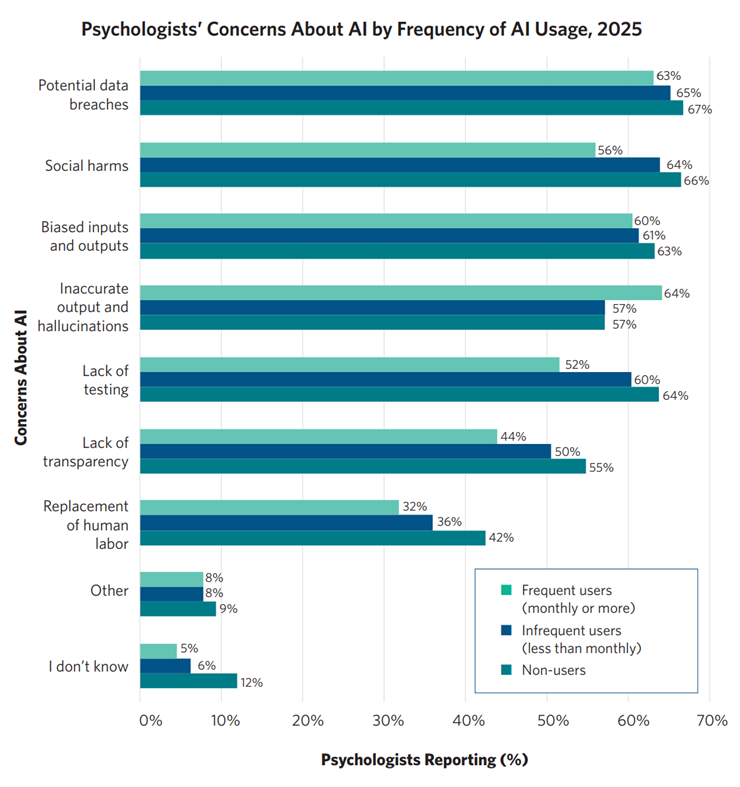
As psychologists begin exploring AI more broadly in their practices, they are also becoming increasingly concerned about AI. The proportion of psychologists using AI frequently (at least monthly) rose from 11% in 2024 to 29% in 2025, while those using AI infrequently (less than monthly) rose from 18% in 2024 to 28% in 2025. Those never using AI fell from 71% in 2024 to 44% in 2025.
Psychologists’ concerns about AI grew by about 10 percentage points during this time period. But where frequent AI users were more concerned about inaccurate outputs and hallucinations, those who infrequently or never used AI were more concerned about unanticipated social harms, lack of transparency in how AI works, and lack of testing and validation to mitigate risks. Concerns about replacement of human labor were higher for psychologists who infrequently or never used AI than for those who frequently used AI. Given the differences in concerns between frequent and infrequent users, all psychologists should undertake training in various AI tools to be able to understand the tools’ strengths as well as their limitations.