skip to main content
News

How psychologists are shaping the high-pressure world of esports

Researchers and clinicians are working to prevent burnout, optimize performance, and safeguard the mental health of players

APA Style leaf logo Cite This Article in APA Style
Andoh, E. (2026, April 1). How psychologists are shaping the high-pressure world of esports. Monitor on Psychology, 57(3). https://www.apa.org/monitor/2026/04-05/psychologists-shaping-esports

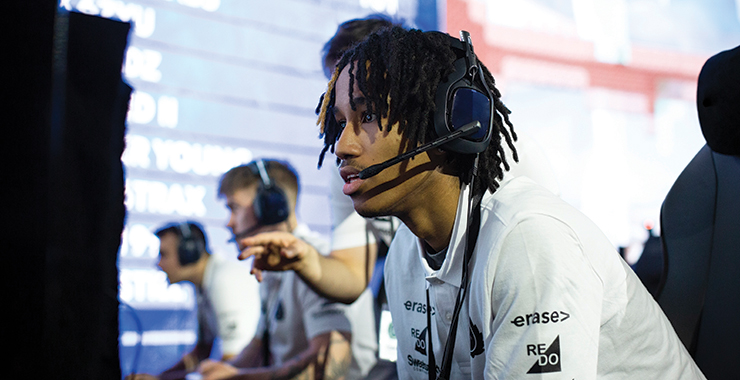
person playing esport

Key points

  • Esports are a fast-evolving multibillion-dollar industry that draws hundreds of millions of competitive video game players worldwide.
  • Esports psychologists come from many different subdisciplines and are working to bring evidence-based approaches to performance, mental health, and player development.
  • Psychology researchers and applied professionals are partnering with teams, organizations, and schools to build stronger support systems for esports athletes.

Organized competitive video gaming—known as “esports”—has ballooned into a global phenomenon. Some analysts value worldwide esports at $1.6 billion, with more than 220 million players participating,opens in new window according to Esports Insider. Others estimate that the industry’s true market value is $24.9 billion, with game publishers controlling 64% of esports revenue (Ahn, J., et al., International Journal of Esports, Vol. 1, No. 1, 2020opens in new window). The rise of livestreaming platforms like Twitch, Discord, and YouTube—and the charismatic personalities of some of the athletes leveraging these platforms—has fueled this growth. The first Olympic Esports Games are set for Riyadh, Saudi Arabia’s capital, in 2027.

Esports differ from casual video gaming because they constitute organized, higher-stakes competitions with formal ranking systems rather than a casual hobby. Players often compete as teams on digital platforms through systems run by amateur, semiprofessional, or professional leagues (Gisbert-Pérez, J., et al., Current Psychology, Vol. 43, 2024opens in new window). Popular genres of esports include fighting games (e.g., Mortal Kombat), shooting games (Counter-Strike), role-playing games (Dungeons & Dragons), and multiplayer online battle arena games (e.g., League of Legends).

There is growing demand for psychological support, especially for athletes at the highest levels of esports competition; however, there is a dearth of appropriate evidence-based practices and ethical and professional standards (Horne, G., et al., Journal of Electronic Gaming and Esports, Vol. 2, No. 1, 2024opens in new window). Many professional players face intense performance stressors that contribute to burnout and psychological distress. While there are more sports psychologists and certified performance coaches entering the esports space, there is still a significant shortfall of qualified professionals who understand the psychological factors that shape cognitive skills and performance in esports (Pedraza-Ramirez, I., et al., International Review of Sport and Exercise Psychology, Vol. 13, No. 1, 2020opens in new window).

Esports psychology is growing alongside esports, but professional pathways into the space are somewhat informal. Professionals who have appropriate training in psychology are not limited to licensed health service psychologists. They come from many parts of psychology, including clinical, cognitive, sport, and performance psychology. Some—such as performance consultants or mental skills coaches—may not legally use the title “psychologist” but still offer valuable, evidence-informed support grounded in sport science and behavioral principles. The Certified Mental Performance Consultant (CMPC) credential has emerged as a pathway into the field for master’s-level clinicians. Esports is one of the few performance environments where multiple psychological subdisciplines naturally converge, allowing experts with different training to approach challenges from multiple angles.

Many esports players begin competing professionally in adolescence, facing intense pressure, unstable schedules, and public scrutiny while still developing emotionally and socially. Esports psychologists are stepping into this space to help players enhance performance, manage stress, and build sustainable careers rather than burn out early.

Ryan Terao, PsyD, an esports and licensed clinical psychologist and owner of PsychSensei, LLC, in Tempe, Arizona, likened the power of esports and gaming to fire: “It’s beautiful. It’s useful. It helps you cook your food and heat your house,” he said. “At the same time, if left unsupervised, it can burn you and your house down. It can be very destructive. How can we make sure kids are learning to use fire properly? How can we put safeguards in place so they can use it to their benefit without getting burned?”


A high-pressure arena

Unlike traditional sports that rely much more on physical prowess, esports competition draws more heavily on players’ cognitive and psychological skills. Their execution depends on rapid decision-making, emotion regulation, and the ability to process complex visual information under time pressure. Players must maintain precise motor control, manage attention across multiple game elements, and adapt strategy in real time, often in front of large online audiences.

Emerging research suggests that the way players think about stress can shape their performance. In one study of Counter-Strike players, researchers found that getting players to reconceptualize stress as being beneficial and a challenge to overcome rather than a debilitating threat improved shooting accuracy, attentional control, and cognitive effort during high-pressure performance. In addition, a mindset-reappraisal intervention that encouraged players to view stress as beneficial lowered players’ anxiety and led to faster completion times (Sharpe, B. T., et al., Applied Psychology, Vol. 73, No. 4, 2024opens in new window).

Researchers are also examining tilt—strong negative emotions that lead to suboptimal decisions during games. Tilt can lead players to perform reckless and self-destructive actions, such as hurtling their character, unprotected, at an enemy. This would be akin to a player committing a flagrant foul in basketball or rushing the mound in baseball.

In a surprising finding from a study of 95 high school League of Legends players, players were tilted most often by their own teammates (36%) or other collaborative players (22%) rather than their opponents (2%) (Wu, M., et al., Proceedings of the 2021 CHI Conference on Human Factors in Computing Systems, 2021opens in new window). Players experiencing tilt also tended to direct the harshest reactions toward themselves. However, mindset and self-efficacy are key. Players who believed they could change how easily they got tilted were more likely to use constructive coping strategies, while those who saw tilt as a fixed trait within themselves were more likely to employ abusive or negative strategies toward others.

Much remains to be understood about the contributors to improved performance among esports athletes. In one cross-sectional study, researchers looked at 480 high-level players across seven popular games. They found that traditional sport psychology measures, like mental toughness and resilience, do not significantly predict competitive achievement in esports. Digital gaming may create unique cognitive and tactical demands that traditional tools do not capture. This highlights the need for more research into psychological constructs that are specific to esports (Young, M. G., et al., Psychology of Sport and Exercise, Vol. 82, 2026opens in new window).

Grappling with ‘grind’ culture

Research shows that elite esports players often experience poor mental health outcomes. In one recent study of professional Counter-Strike players, about 1 in 4 reported moderately severe or severe symptoms of depression. More than half (54.9%) reported experiencing psychological distress, and nearly three quarters (72.5%) reported low levels of mental well-being. Despite these challenges, almost 70% said they lacked access to mental health support (Birch, P. D. J., et al., Journal of Electronic Gaming and Esports, Vol. 2, No. 1, 2024opens in new window).

The ultracompetitive “grind culture” of esports may contribute to these outcomes. Players often practice for long stretches with minimal physical movement and irregular sleep schedules. One study found that professional gamers spend more than 22 hours per week on gameplay (Palanichamy, T., et al., Industrial Psychiatry Journal, Vol. 29, No. 2, 2020opens in new window). Long hours of practice do not automatically translate to success. A study with Counter-Strike: Global Offensive and League of Legends players found that deliberate practice did not meaningfully predict long-term rank. Instead, younger age was a stable predictor of success across both titles, while visual attention was a key predictor specifically for Counter-Strike (Martončik, M., et al., Collabra: Psychology, Vol. 10, No. 1, 2024opens in new window).

Research shows that esports athletes may face similar levels of psychological pressure as traditional athletes do. In one study, researchers found 51 stressors, such as communication problems and pressures of competing before live audiences, resembled those affecting professional athletes in traditional sports (Smith, M. J., et al., International Journal of Gaming and Computer-Mediated Simulations, Vol. 11, No. 2, 2019opens in new window).

Benjamin Sharpe, PhD, a senior lecturer in cognitive psychology and director of the Human Attention Laboratory at the University of Chichester in the United Kingdom, expressed concern about the high rates of stress, burnout, sleep disruption, and performance-related distress reported among esports players. “Players describe how mental health difficulties degrade their strategic thinking and reduce motivation, creating a cyclical pattern where performance decline further exacerbates stress and emotional distress,” Sharpe said. He also pointed to inequities in access to support: “While elite players within formal organizational structures often have access to professional psychological services, non-elite players must rely on inconsistent online resources or navigate support systems on their own.”

“The evidence base is expanding rapidly, but it lacks the rigor necessary for evidence-based practice,” Sharpe added. “What troubles me is that we’re developing support frameworks and interventions without the longitudinal data to understand long-term outcomes or the intervention research to know what actually works.”

Toward global guidance

A major effort is underway to develop international mental health guidelines tailored to esports. In 2024, the global men’s health charity Movember recruited esports psychology researcher Dylan Poulus, PhD, a senior lecturer in sport and performance psychology at Southern Cross University in Lismore, Australia, to lead development of the first standards of this kind. Last year, Poulus, Sharpe, and collaborators conducted a scoping review of 89 studies, convened expert workshops, and held focus groups with players as young as 16. Many participants said they understood that high-volume gaming could have negative effects on their psychological well-being, but reported that when they sought professional help, clinicians often recommended quitting gaming altogether, overlooking the social connection and sense of belonging that esports provide.

While research shows that professional gamers suffer higher rates of gaming disorder than nonprofessional gamers (Maldonado-Murciano, L., et al., Addictive Behaviors, Vol. 132, 2022opens in new window), Poulus noted that clinicians sometimes rely too heavily on internet gaming disorderopens in new window as a diagnosis when they learn of the long hours of gaming among esports competitors. However, a more nuanced approach is necessary when esports competitors often require those hours to train and remain competitive. Rather than an all-or-nothing approach, Poulus advocated for clinicians to adopt a deeper understanding of the benefits of competing in esports and encourage players to create a safer relationship with a core component of their lives, rather than pull away from it totally.

In November 2025, Poulus and colleagues convened game publishers, tournament organizers, International Olympic Committee representatives, and mental health experts to finalize nine pillars of mental health support for amateur, semiprofessional, and professional players worldwide. The forthcoming guidelines, expected this spring, aim to set evidence-based standards in a largely unregulated industry, with input from both stakeholders and players.

Demonstrating esports psychology’s value

Professionals within esports psychology perform roles that combine high-performance coaching, clinical or counseling skills, and deep game literacy. Many of them compete with unregulated performance coaches or self-described mental-skills gurus with little formal training. This is often because teams and esports organizations often view esports psychologists’ services as optional or expensive. As a result, psychology professionals must frequently demonstrate their value by showing detailed knowledge of specific games and competitive structures as well as their expertise in sport and performance psychology.

“My first hurdle is convincing somebody that I have something to offer them as a doctor,” Terao said. “I often tell them that the time they’ve been spending in the game, I’ve been spending outside of the game to learn all these skills and merge them with my passion for the game.” Through his YouTube channel, Terao translates research on anxiety, cognitive load, communication, and teamwork into accessible content for players and teams.

In his consulting work, Terao helps players and teams shift from chasing instant gains in online rank to building systems for performance and self-regulation that are sustainable for the long term. “We don’t just try to fix. We try to create processes and systems for our clients to get consistent results.” He often prepares clients to expect a temporary dip in performance as they reconstruct habits around sleep, practice structure, and postgame review. During video-on-demand (VOD) sessions where players watch recordings of their games, he helps players and teams analyze their communication patterns, identify how conflicts emerge, and spot the emotional cues that may signal tilt or disengagement.

Callum Abbott, a chartered sport and exercise psychologist based in Suffolk, England, describes the esports landscape as “almost kind of the Wild West. People are still trying to find the systems that work best and are most efficient.” Serving primarily as an external consultant, he works either as a team’s main sport psychologist or as part of broader performance units alongside coaches, analysts, and physical trainers. Much of his work centers on psychological well-being and burnout prevention, including helping players manage sedentary routines, build offline relationships, and develop sources of meaning outside their gaming identity.

Abbott still feels more research is needed on effective coaching practices, pathways to burnout, and optimal practice volume: “I would love to see research asking the question, Where does quantity tip into diminishing returns? Where does quality become more important?”

Whole-player development

Some esports psychology professionals have worked to build systems that develop esports athletes as whole people, not just performers. Doug Gardner, EdD, founder of ThinkSport Consulting Services, an applied sport psychology firm with locations in California, began working in esports in 2016 after decades as a sport psychology consultant with Major League Baseball and the National Football League. In 2018, he built what he describes as the first player development department in North American professional esports for the Immortals organization.

“Esports is a sport without a childhood pipeline. Many pros go straight from an anonymous position on a ladder to a contract, with no Little League, no college team, and no off-ramp when it ends,” Gardner said. The end can often come too soon, with the average professional esports career only lasting 3 years and most players finishing before age 21, according to Gardner. Gardner and his team prioritized exercise, sleep routines, and intrinsic motivation, helping the Immortals players build healthier daily structures supporting performance and long-term well-being. They also incorporated transition planning, encouraging players to apply to college or complete a GED.

Esports on campus

There are more than 300 esports programs at higher education institutions in the United States, according to the National Association of Collegiate Esports. Many programs are working to develop structures that balance high-level competition with student well-being and academic progress. At Michigan Technological University, cognitive scientist and human factors engineer Kaitlyn Roose launched the first varsity esports program at a public university in Michigan in 2020.

Roose intentionally housed the program within the athletics department and adopted the NCAA’s 20-hour rule for sanctioned activities, limiting weekly gameplay to create space for academics and recovery. Students gained access to an athletics-based sport psychologist, nutrition programming, and twice-weekly morning workouts aimed at normalizing physical conditioning and protecting against over-competition and burnout. Previously sedentary students reported that their in-game performance improved as their fitness increased. Teams were also encouraged to develop their own norms around culture, accountability, and conflict management, fostering self-sufficiency and leadership skills. Although Roose left Michigan Tech in 2023 for a human factors engineer role elsewhere, the varsity esports program has continued.

In K–12 settings, psychologists and educators are leveraging esports to promote social-emotional learning and broaden access to extracurricular opportunities. In New Jersey, school and sport psychologist Matthew Strobel, PsyD, and colleagues at Garden State Esports developed the Esports Personal and Performance Improvement Curriculum (EPPIC), which embeds social-emotional learning, sport psychology, and wellness content into school-based esports practice. Designed for educators and coaches as well as mental health specialists, EPPIC addresses communication, teamwork, leadership, health and wellness, and navigating online toxicity and hate speech. The curriculum has been adopted by more than 60% of New Jersey school districts, reaching over 400 schools and roughly 12,000 students.

Strobel views esports as widening accessibility for students who may be marginalized in traditional sports, including neurodivergent youth. “Esports has really opened up a lot of opportunities for those individuals who weren’t always so available through a more traditional sport model,” Strobel said. As a result, neurodivergent youth in esports get “to be the captain of the team” versus the “helper” role they are often relegated to in traditional sports. Strobel believes the systems-level approach Garden State Esports is taking will magnify its impact. “I very much like to take a systems-level approach to my work,” Strobel said. “If I can work one-on-one with someone, that’s great, but if I can teach a coach to do some of this and they have access to a team of 20 players, that’s even better.”

Esports psychology is still a young field, but researchers and psychologists from a variety of backgrounds are rapidly building a foundation for evidence-based support across all levels of competition. New studies on stress, tilt, practice demands, and attention will sharpen understanding of what drives performance in the digital game environment. At the same time, large-scale initiatives like the Movember Project and EPPIC are setting encouraging standards across esports organizations, schools, and university programs. “There’s so much potential for the next generation of psychologists coming through to build on a foundation of what is being created here,” Abbott said.

Research

Bringing a longitudinal lens to esports

Although esports research is growing, most studies offer only a snapshot in time. In the scoping review of 89 studies that Dylan Poulus, PhD, and his team conducted for the Movember project, 94% were published within the past 5 years, and 56% used cross-sectional designs. Only 7% were longitudinal, and 5% were intervention studies. To fill this gap in the evidence base, Poulus and colleagues have launched a longitudinal study that will track young esports players over time to determine how gaming affects them as they develop. The “Goldilocks Study” is designed to identify the amount of gaming that maximizes benefits while minimizing risk for young players. “What we really need to do is track young people over their development to understand when [gaming] is good and when it is bad, and then how to mitigate the bad and maximize the good,” Poulus said.

Further reading

The psychology of esports: Trends, challenges, and future directionsopens in new window
Pedraza-Ramirez, I., et al., Psychology of Sport and Exercise, 2025

Leveling up: Using the tracer method to address training needs for esports playersopens in new window
Roose, K. M., & Veinott, E. S., Proceedings of the Human Factors and Ergonomics Society Annual Meeting, 2021

Psychology of esports special issue: A catalyst for changeopens in new window
Sharpe, B. T., & Birch, P. D. J., Journal of Electronic Gaming and Esports, 2024

Taxonomy of toxic behaviors in multiplayer gaming environments: An extension of the context of peer aggressionopens in new window
Zsila, Á., & Demetrovics, Z., Journal of Behavioral Addictions, 2025

Recommended Reading

Speaking of Psychology

Subscribe to APA’s audio podcast series highlighting some of the most important and relevant psychological research being conducted today.

Subscribe to Speaking of Psychology and download via:

Appleopens in new window
Apple podcast logo

Spotifyopens in new window
Spotify logo

Related and recent