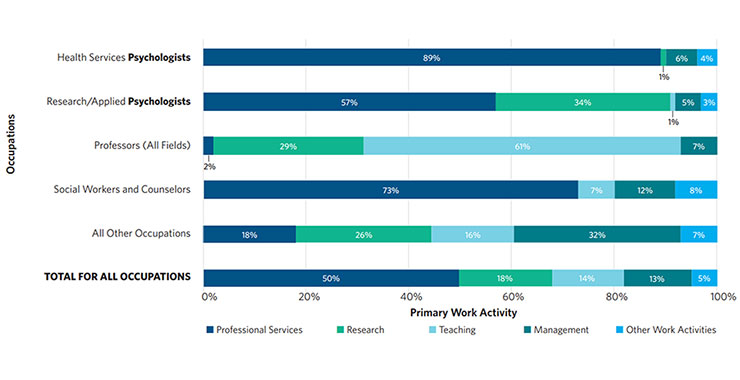
Individuals with doctoral degrees in psychology engage in varied occupations and diverse work activities. In 2023, psychology doctorate holders were employed in 52 of 129 occupational categories. About 36% worked as health services psychologists, 17% were research/applied psychologists, 15% were professors in any field, and 4% were social workers or counselors. An additional 27% worked in a set of 38 other occupations, including special education teacher, statistician, and multiple leadership positions.
Across all occupations, the most common primary work activities were professional services, including health care (50%), followed by research (18%), teaching (14%), management (13%), and other work activities (5%). For many roles, these work activities aligned closely with major career pathways (i.e., health services psychologists, social workers, counselors primarily engaged in professional services, and professors primarily engaged in teaching). Demonstrating how psychology training extends beyond traditional roles, management (32%) was the most common primary work activity for the “all other occupations” category.
These findings show the breadth of job possibilities associated with doctoral training in psychology and can help job seekers, students, educators, individuals in career transitions, and employers to be more informed about the many careers that people with advanced training in psychology bring to the workforce. These findings also underscore psychology’s value in contributing to direct services, research, leadership, management, and applied problem-solving across sectors.