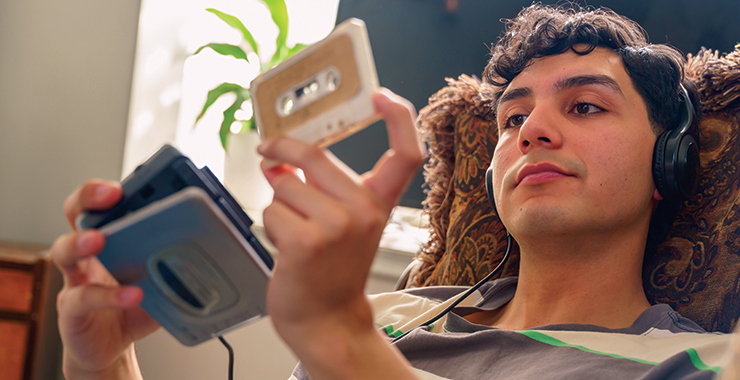
From Y2K style and vinyl records to analog cameras and flip phones, Generation Z has embraced the fashions, music, and technologyopens in new window of decades past—despite being too young to have experienced them firsthand.
New survey data give substance to that consumer trend: About 7 in 10 U.S. adults feel nostalgic for eras before their lifetime and are drawn to products, media, and styles from those eras, particularly Gen Z and millennials. Two-thirds of Gen Z adults say this historical nostalgia—or sentimental longing for periods before they were born—helps them manage anxiety about the future. The findings come from a nationally representative survey of 2,085 U.S. adults conducted by The Harris Poll and the Human Flourishing Lab, a research initiative of the nonprofit Archbridge Institute led by psychologist Clay Routledge, PhD (Historical Nostalgia in Modern America: Exploring Its Prevalence, Appeal, and Psychological Utility, Human Flourishing Lab, 2025opens in new window).
After coming of age surrounded by climate concerns, rising social strife, and pressure to be “always online,” Gen Z is really “craving a simpler, more present time, and they are looking to some of these earlier technologies and ways of living to find it,” said Lauren Cook, PhD, a clinical psychologist in private practice in Pasadena, California, and author of Generation Anxiety: A Millennial and Gen Z Guide to Staying Afloat in an Uncertain World (Abrams Image, 2023). Examples include thrift shopping, scheduling phone-free hangouts, and curating collections of physical media such as CDs and DVDs.
“We find that young adults are not just seeking these things out as novelties or entertainment, but that they are mining the past for ways to enhance their lives,” said Andrew Abeyta, PhD, an associate professor of psychology at Rutgers University and a research fellow at the Human Flourishing Lab who studies nostalgia.
While historical nostalgia is not unique to Gen Z, social media has given today’s young adults unprecedented access to the music, technology, and aesthetics of eras they never lived through.
Nostalgia for one’s own experiences, known as personal nostalgia, has known psychological benefits. It can boost feelings of social connectedness, help manage worries about the future, and strengthen identity and sense of self (Sedikides, C., & Wildschut, T., Review of General Psychology, Vol. 22, No. 1, 2018). Growing evidence suggests that historical nostalgia may serve some of the same functions.
“There’s a tendency to frame Gen Z’s interest in the past negatively—as another symptom of depression, anxiety, or loneliness,” said Routledge, a leader in historical nostalgia research. “But there’s a strong theoretical and empirical case to be made that young people are agentic—and that they are turning to the past to solve their problems and improve their lives.”