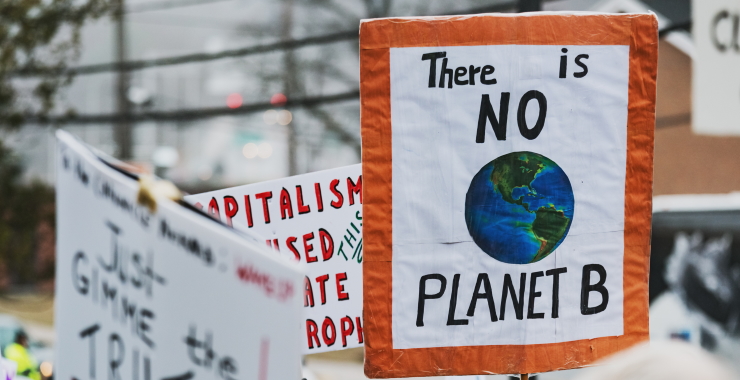
Leaders of psychological associations from 40-plus nations on five continents came together in Lisbon, Portugal, on Nov. 14-16, 2019, to explore ways of developing a model for collaboration for organized psychology across the world to address global issues and applying psychological science to the global problem of climate change. APA co-convened the first-ever International Summit on Psychology and Global Health: A Leader in Climate Action with the Ordem dos Psicólogos Portugueses.
“This is a landmark for psychology around the world as we commit our discipline for the first time to act collectively and individually to use our science to help solve one of the greatest challenges of our era,” said Arthur C. Evans Jr., PhD, APA’s chief executive officer. “Climate change is a problem created largely by human behavior, so it is fitting that we apply the science of human behavior to mitigating its impacts.”
Representatives from 43 national and international psychological organizations kicked off the event by issuing a proclamation on collaboration. The proclamation commits the organizations to ongoing collaboration on key global issues, including the United Nations Sustainable Development Goals (SDGs). Their initial efforts focus on SDG 13: Take Urgent Action to Combat Climate Change and its Impacts.
Marcelo Rebelo de Sousa, president of Portugal, told summit attendees they had chosen the right subject to tackle first because of the global nature of climate change. “We must have a global response to it,” he said. “There is not a single country, not even a superpower, that can address alone this issue.”
The summit featured several strong presentations by psychologists. APA member Janet Swim, PhD, of Penn State University provided a comprehensive overviewopens in new window of the contributions that psychological science has made to understanding the causes and responses to climate change and identified areas in which further work is needed. Other psychologists described the impact of climate change in their countries. Jeanyung Chey, PhD, secretary of external affairs for the Korean Psychological Association, described how “microdust” is engulfing the country and noted evidence suggesting a connection between dementia and prolonged exposure to the fine particles. Ava Thompson, PhD, past president of the Bahamas Psychological Association, noted the increasing frequency and power of hurricanes in the Caribbean. And Brian Dixon, director of scientific issues for the New Zealand Psychological Society, described how flooding is devastating his city and surrounding areas.
But so far, psychologists have not been actively involved enough in combating climate change, lamented Sarb Bajwa, chief executive officer of the British Psychological Society. The natural sciences have conducted the research showing that climate change exists, he said. Now psychology must bridge “the impasse between the evidence and why we are not changing our behaviors,” he said.
Even Evans acknowledged in his keynote address that he was initially skeptical about what psychologists had to offer in the way of addressing the climate crisis. “When I came to APA and saw the report on climate change by APA, my initial reaction was, ‘This is a stretch,’” he said, referring to Psychology and Global Climate Change: Addressing a Multi-faceted Phenomenon and Set of Challenges (PDF, 10.94MB)opens in new window, the 2010 report of APA’s Task Force on the Interface between Psychology and Global Climate Change. “However, as I delved into the issue, I realized that, to the contrary, it is critical to ensure that psychological science and expertise are a part of efforts to address climate change.” Psychologists have three main contributions to make, he said: first, to help change human behavior; second, to address the psychological impact of climate change, including both anticipatory fear and the aftermath of climate-related disasters; and third, to help create messages that move policymakers to act.
A working meeting
APA has already begun to take action, said Evans in a report out from psychology association leaders. He described APA’s comprehensive plan for addressing climate change, which includes helping the public understand how personal behavior affects climate change and addressing anticipatory fear related to climate change that can lead to substance use, depression, post-traumatic stress disorder and other problems. The plan includes influencing decision-makers in the government and corporate world. And it directs attention to social justice issues related to climate change, such as the plight of rural residents, people of color, older adults and people with disabilities.
Throughout the meeting, participants came together in small groups to come up with even more ideas for action in various realms.
A research group, for example, recommended a systematic review of existing research and called for new cross-cultural research and increased funding from government and philanthropic sources along with interdisciplinary workshops, conferences and an academic research panel. A toolkit group suggested holding sessions on climate change at each association’s annual conference, devoting special journal issues to the topic, sponsoring public education campaigns, and training psychologists about how to change behavior and help people cope with climate change and climate disasters. An education group emphasized the need to raise psychologists’ awareness of the risks and consequences of climate change.
On the meeting’s final day, representatives from each association signed a resolution committing themselves to:
- Advocating for and supporting international and cross-disciplinary collaboration.
- Informing association members and the public about climate change and the urgent need for action.
- Encouraging members and other mental health leaders to be advocates for preparation for and adaptation to climate change.
- Increasing the availability of services to minimize climate change-related harm and increase resilience.
- Advocating for the rights of those most susceptible to climate change’s mental health impacts.
- Developing a public awareness campaign about preparing for and recovering from climate change and climate-related disasters.
- Encouraging governmental, educational, health and corporate leaders to immediately adopt norms, values and policies to promote sustainable preventive and corrective behaviors.
In an exercise coordinated by consulting psychologists Terri Morrissey and Richard Plenty, PhD, of the organization and leadership development practice This Is, each association also made individual pledges for action to put in place once they returned to their own countries.
The Jordanian Clinical Psychologists Association, for instance, plans to train psychologists to do public education on climate change, then send them out to schools, clubs and other venues. The Uganda Council of Psychologists will convene a meeting of psychologists along with relevant players in government, the nonprofit sector and industry. The New Zealand Psychological Society plans to lobby the Ministry for the Environment and other agencies for funding, support and resources for climate psychology as the nation implements the “zero carbon” law it passed in 2019, which sets a goal of almost complete carbon neutrality by 2050. The Colombian College of Psychologists is going to assign its communications team to design and implement a media campaign.
As for APA, it plans to hold a climate change-related event at APA 2020 in Washington, D.C., review its 2010 task force report and develop an advisory committee for the Board of Directors, among other goals.
To keep the momentum going, APA and the Ordem dos Psicólogos Portugueses agreed to continue providing support. Amanda Clinton, PhD, senior director of APA’s Office of International Affairs, said she and her team would continue to provide administrative leadership.
Kim Mills, APA senior communications advisor, contributed to this report.