

2019: APA’s Most Popular Podcasts
Our top 10 podcasts for 2019 cover a variety of psychology topics.
Speaking of Psychology: How masculinity can hurt mental health
 Episode 38
: The availability and quality of health care is often substandard when it comes to serving low-income boys and men in ethnic/minority communities. As a result, they have some of the worst health outcomes in the country. In this episode, psychologist Wizdom Powell, PhD, MPH, talks about how racism, discrimination and gender stereotyping can contribute to a decline in men’s health over time.
 Episode 31
: Racial bias is everywhere but we may not always see it. However, understanding the way people feel about and behave toward those outside their own group can help communities heal after a tragedy, as well as prevent future ones, according to Yale University psychologist John Dovidio, PhD.
 Episode 37
: Narcissism is not just something attributed to people who post selfies and list all their favorite meals on Facebook. It’s a diagnosable personality disorder that causes people to have a delusional sense of self-worth and lack of empathy. In this episode, psychologist Ramani Durvasula, PhD, talks about how people can recognize a narcissist and what to do if you’re in a relationship with one.
 Episode 44
: Are terrorists flooding into our country? Are we facing an epidemic of mass shootings and violence? Whatever your thoughts are on gun control or terrorism, psychologists who study human behavior, specifically thrill-seeking and risk taking behaviors, have a lot to contribute to the discussion. In this episode, Frank Farley, PhD, talks about why mental health experts need to be on the front lines of violence prevention efforts.
 Episode 2 : When a school year begins, students are dealing with new classes, sports and other school-related activities. Most students will also face the challenges of peer pressure. Psychologist Brett Laursen, PhD, talks about the science behind peer pressure and what parents can do to help their kids.
 Episode 49 : It defies intuition to think innocent people would confess to a crime they did not commit. But, research has shown that everyone has a breaking point. In this episode, Saul Kassin, PhD, talks about the psychology behind false confessions and how law enforcement officials and legislators can take steps to prevent them.
 Episode 11 : Can music make us healthier or even smarter? Can it change how we experience pain? In this episode, former rock musician and studio producer Daniel Levitin, PhD, talks about how music changes our brain’s chemistry and affects our health.
 Episode 34 : If you think reading people is not a science, think again. Understanding expressions that only appear on someone’s face for tenths of a second can mean a lot to those who know what to look for. In this episode, psychologist and nonverbal communication expert David Matsumoto, PhD, talks about why nonverbal communication is so important in everything from police investigations to intercultural exchanges.
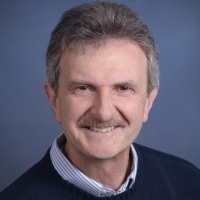 Episode 96
: Experiencing positive transformation after trauma is known as post-traumatic growth. People who experience it may develop a new appreciation of life, newfound personal strength, see an improvement in their relationships, see new possibilities in life and undergo spiritual changes. Why do some people experience such profound positive changes after enduring something terrible and others don’t? Our guest for this episode is Richard Tedeschi, PhD, who developed the academic theory of post-traumatic growth with Lawrence Calhoun, PhD. Tedeschi is the distinguished chair at the Boulder Crest Institute for Posttraumatic Growth, a nonprofit organization focused on military members, veterans and their families.
 Episode 16 : Teenagers and young adults who use marijuana regularly are at risk of significantly altering the structure of their brains, according to research by neuropsychologist Krista Lisdahl, PhD. In this episode, she discusses what this means for parents, youths and policymakers considering legalizing recreational and medicinal marijuana .
Date created: 2019