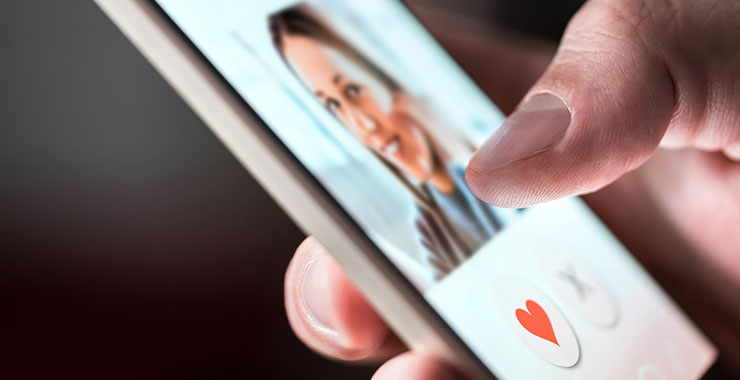
Nearly 70% of clinical, counseling and school psychology graduate students and working psychologists use online dating services, but only 15% have received guidance on navigating the ethical dilemmas of such platforms, according to a survey of 246 students and alumni conducted by Katherine E. O’Neil, a counseling psychology graduate student at Auburn University in Alabama.
O’Neil, who launched the survey as part of a practitioner-ethics class, also found that of those using dating websites or smartphone apps, 8.5% had viewed a patient’s online profile and 2.4% had matched with a patient. The lack of ethical guidance and the generational gap between trainees and supervisors means that young professionals are often struggling to navigate issues such as patient confidentiality, informed consent and possible impacts on the clinical relationship on their own, says Rebecca Schwartz-Mette, PhD, an assistant professor of clinical psychology at the University of Maine and a member of APA’s Ethics Committee.
“This is yet another example of how we as professionals have to navigate intersections between our personal and professional functioning,” she says. “It’s also where the majority of ethical missteps arise, because you’ve got two sets of interests that can — at times — be in conflict.”
So, what should psychologists consider before signing up to swipe left or right on dating apps? Here’s advice from clinical psychologists and ethics experts on how to navigate online dating as a mental health professional.
Weigh the risks
Before creating an online dating profile, psychologists should consider factors such as their geographic location, clinical population and preference for a partner. Those living in a rural or sparsely populated area, for instance, might be more likely to encounter a current or potential patient on such sites. The same can be true for clinicians who seek partners from a specific group that they also treat, such as the LGBTQ+ community.
Providers should also consider whether their clinical population has access to online dating services. For example, psychologists who work in jail, inpatient or school settings may be unlikely to cross paths online with someone they treat. On the other hand, psychologists with patients who have easier access to search for personal information about their clinician online should exercise more caution.
Create a social media policy
When Keely Kolmes, PsyD, a clinical psychologist and digital ethics consultant based in San Francisco, launched their private practice, they developed a social media policyopens in new window around APA’s Ethics Code and their own active online social life, which included online dating. The policy — which is now used as a teaching tool by clinical supervisors and professional organizations — is a type of informed consent intended to protect patient privacy and preserve the professional nature of the therapeutic relationship. It states, for instance, that Kolmes will not accept contact requests or interact with patients on social networking websites.
“Having a social media policy helps address and normalize the fact that [patients] may find personal information about their therapist online,” Kolmes says.
De-identify your profile as much as possible
Of the trainees and professionals O’Neil surveyed, 27% said they had content on their online dating profiles they wouldn’t want a patient to see. But Schwartz-Mette says psychologists have a professional obligation to take responsibility for the information they share online and assume that any patient could see it.
“All the things we see as important in matching us with potential partners could also have a professional impact,” she says. “And like everything on social media, you’re putting your information out there and you don’t know where it’s going.”
Dating profiles often include details about gender identity, sexual orientation, sexual preferences, personal beliefs and values, and political and religious affiliations. Though there’s no hard line on what to share versus omit, Kolmes recommends considering how each patient — including your most distressed patients — might react to such information if discovered. Another helpful strategy is to seek a colleague’s opinion about what details are appropriate to share.
Clinicians may choose not to post a photo or to use a photo that doesn’t show their face. Other ways to de-identify a dating profile include sharing limited information publicly and waiting to disclose one’s profession or personal preferences until communicating directly with another user. Some dating services offer “incognito mode,” which allows users to remain invisible except to those they choose to message. Providers can also adjust their city or ZIP code to avoid connecting with local patients, then explain the discrepancy when contacting potential partners.
“My recommendation is not for psychologists to hide their profiles, but to consider various approaches that fit how they work and who they work with, along with personal comfort,” says Kolmes.
Be cautious
Whenever possible, clinicians should seek information about potential partners before meeting them in person, says Jennifer Schwartz, PhD, director of the Psychological Services Center at Drexel University in Philadelphia, another member of APA’s Ethics Committee. Aside from connecting with patients, it’s possible to unknowingly match with patients’ partners, ex-partners or family members, as well as former professional contacts such as supervisors or trainees. Schwartz recommends asking about the identity of family and friends and cross-referencing with other social networking services when possible.
“When we move to an electronic medium of meeting people, we lose the understanding of a person’s real-life social networks,” she says.
Be prepared to discuss your online behavior with patients
In their research, Kolmes has found that only about a quarter of patients who sought personal information about their psychotherapist online disclosed that fact in therapy (Kolmes, K. & Taube, D.O., Professional Psychology: Research and Practiceopens in new window, Vol. 47, No. 2, 2016). So, clinicians should be ready to initiate professional, boundaried conversations about their online presence during a session — either preemptively or if they have reason to believe a patient has viewed their dating profile. These discussions might include how a patient felt about the experience and any anticipated effects on the therapeutic relationship.
Psychologists agree that more training and guidance is needed on the ethics of online dating as well as the use of social media in general. To that end, the APA Ethics Code Task Force Force aims to include guidance in the updated Ethics Code on how psychologists can navigate ethical dilemmas that may arise online. The Committee on Professional Practice and Standards is also developing guidelines on the use of social media in psychology practice. Meanwhile, Schwartz-Mette says it’s important to include early career psychologists in the process.
“Our young professionals and trainees are an untapped resource in this conversation,” she says. “Let’s involve the users who understand the ins and outs of these services, then support them using the principles and standards that have guided our profession for decades.”