Kim Mills: Millions of people in the U.S. are caregivers for their family members or other loved ones. Each year, spouses, adult children, and even grandchildren provide billions of dollars’ worth of unpaid care to loved ones with dementia, cancer, or other long-term illnesses. And as the U.S. population ages, the number of people who need care is likely to increase.
Caregiving is often portrayed as a difficult and thankless task that’s so stressful that it can harm the caregiver’s own physical and mental health and even make them die sooner. But some researchers argue that portrayal misses an important fact—that caregiving can be a source of strength and not just stress.
So how many caregivers are there in the U.S. and who are they? What are the mental and physical health effects of caregiving? What circumstances make caregiving more stressful? And what interventions can help buffer caregivers against stress? Finally, what changes could employers, institutions, and policymakers implement to help give caregivers the support they need?
Welcome to Speaking of Psychology, the flagship podcast of the American Psychological Association that examines the links between psychological science and everyday life. I’m Kim Mills.
My guest today is Dr. William Haley, a clinical psychologist and professor in the school of aging studies at the University of South Florida. Dr. Haley’s work focuses on understanding and helping family caregivers of older adults with chronic illness and disability, including Alzheimer’s and other dementias, stroke, cancer, and terminal illness. He studies how caregiving affects people’s mental and physical health and works to develop interventions that help caregivers cope. He’s an APA fellow and has authored more than 170 scientific papers.
Dr. Haley, thank you for joining me today.
William Haley, PhD: Thanks so much, Kim. I am really excited to be here. I’m a fan of the podcast and eager to share what we’ve learned about this.
Mills: All right, well then let’s start by putting into context how big this issue is. I just mentioned that millions of people in the U.S. are caregivers to loved ones. Can you give us a little more detail? How many millions are we talking about and who are they?
Haley: Well, as in any area, there’s disagreements about which are the best figures, but I’m going to give you a range of figures. The AARP surveys every year, the number of people in the United States who are caregivers, and the latest figure that they have is that 38 million Americans have provided caregiving assistance to a family member or friend without pay over the prior year.
Now, some people who study this field think we ought to tone that down a little because those numbers will include people who are doing very short bursts of caregiving and are not really doing long-term caregiving. But the numbers who are doing extensive caregiving are also extensive. So for example, there was a 2016 report from the National Academies of Sciences that showed that 17 million, 17.7 million actually, are caring for people who have problems with mobility, self-care or activities of daily living. So that’s a pretty good chunk of that. And also as part of that 17.7 million, there are 8.5 million who are doing very heavy caregiving. So they’re caring for people with Alzheimer’s, other dementias, and people with other conditions who have two or more limits in activities of daily living. It’s a big number. You mentioned the economic issues, something like 60% of people who are caregivers are also in the labor force. So they’re trying to juggle providing care for mom or grandmother or a spouse and also the workplace. And that can be really challenging.
Mills: Now, there’s a common portrayal in the media that caregiving is stressful and thankless and that it’s so stressful that caregivers die sooner than noncaregivers. But you have argued for a much more nuanced view of caregiving. What have you found and how does caregiving affect people’s mental and physical health?
Haley: So first of all, it is clearly the case that caregiving can be extremely stressful and that it can be very challenging, it can be very isolating, and that it does lead to increases in depression and anxiety and many people feel burdened from it. But the part that I think where we’ve kind of missed the boat in terms of public portrayals of caregiving, there were some very good early studies that found some very negative effects, but they were relatively small samples and followed people either not at all or over very limited periods of time. So a 1999 study published in the Journal of American Medical Association reported that for spouses who were caring for a disabled husband or wife, that if they reported any strain in doing caregiving, they had 63% higher mortality rates over a four year period than spouses who were not doing any caregiving.
That study has been very widely reported. It was the best research to date on the topic, but now there have been over a dozen studies of caregiving and mortality. And in fact, what they have found, and our group has been one that has contributed to this, somewhere in the range of 16% to 18% lower mortality among people who are caregivers. So the early finding there was just inaccurate and it was an outlier.
A similar story is the case when we look at biomarkers that may be affected by stress and some early work that used samples of dementia caregivers from the community who had sought help, they found that those caregivers, compared to noncaregivers, had elevations in various indices of inflammation and they had immune system dysfunction. Another group found shortened telomere length in people who had been caregiving for a long time. That again, was done with a small sample.
And we’ve done a systematic review and meta-analysis of all the research in this area. We have found there are only very small effects of caregiving on inflammation. They’re not of a magnitude to affect health. And we found no changes over a nine year period in a group of caregivers who had not previously been caregivers. They show no telomere shortening and no increases in inflammation compared to a noncaregiving group. So I think we can pretty well reassure people that the physical health impact of caregiving is not as bad as they once though. But we still have to be concerned about psychological distress.
Mills: And you mentioned shortened telomeres. I just want to make sure our listeners understand that’s a genetic factor, right? And what might that mean?
Haley: Well, the idea is that with stress and with aging, there’s a shortening of telomeres and that shorter telomeres generally are associated with lower life expectancy. So that was a very alarming early study, but it was done with a small sample and the people were not tracked over time to see whether their telomeres actually shortened. And as again, as I mentioned in our work, we worked with a big population-based study, the REGARDS study, where we were able to track people that had blood assays repeatedly over a period of years, and we did not see that.
Mills: So why is it so important to change this doomsday narrative around caregiving?
Haley: Well, first of all, I think it’s important because so many Americans now are becoming caregivers. And so many Americans now may be fearful of the health consequences of care. And my good colleague David Roth, who has worked closely with me on most of these papers, he has drawn an analogy that basically caregiving is not smoking cigarettes. It’s not a risk factor of that magnitude.
Now that said, we are not doing a good job as a society of supporting our caregivers. We found, for example, the average person who is a dementia caregiver puts in about 60 hours a week providing care for a person at home. And that is just astonishing. It’s a full-time job. And some people do that while in fact they are employed, and we are not providing them—as many other countries do—with the free supports of, people come in and bathe and dress their relative, of assisted living that is paid for not out of pocket, paid for by say Medicare. Medicare does not pay for these kinds of home care duties, which is viewed as custodial and not rehabilitative. So we have big gaps in what we’re doing to help people who are caregivers.
Mills: And you mentioned Medicare, and I’m just wondering what should the role of insurers be, whether they’re public or private?
Haley: So our Medicare system is set up strictly to manage medical conditions—and so we run into this—and not to cover long-term care. It won’t pay for nursing home care over an extended period of time. It won’t pay for somebody to come in and bathe and dress mom. It might pay for physical therapy if the person was able to show benefit from that over a short period of time. What that means is that you have these absurdities that where, for example, a person with dementia could have a very expensive heart transplant or they could have hip replacement or knee replacement surgery. That would be very expensive, but yet Medicare will not cover having someone to come in and bathe and manage the toileting of a parent while the caregiver works. So we’ve just got a mismatch of Medicare, not really seeing it as its mission to cover long-term care when long-term care is now the thing that caregivers end up doing and having to pay for out of pocket.
Mills: So let me ask you a question about the circumstances that do make caregiving more stressful. What are some of those factors?
Haley: Well, first of all, a lot of this research has been done with people who are caregivers for Alzheimer’s disease and other dementias. And we know that in that circumstance, families do a lot of things to help that person. They take over managing finances, they’ll take over bathing and dressing of a relative, they’ll take over management of incontinence. So they’re changing diapers or doing bowel and bladder care. But the things that dementia caregivers tell us are most stressful are behavioral problems. And we’ve shown this in many studies as have other colleagues. The person with dementia will begin to wander. They’ll get agitated, they’ll become depressed and cry. They may wander out and get lost. They may say embarrassing things in public. And so for a person who’s a dementia caregiver, they face this challenge of a person who was once very rational to them and a peer and who was fully cognitively able now behaving in strange ways that are stressful.
And so one of the things we have to do, and there are very good counseling interventions that psychologists and others can implement, we can teach caregivers how to communicate with a person with dementia. Some key issues in that you don’t argue with a person with dementia. They’ve lost their higher abilities of reasoning. And so explaining to them carefully why they want to go to the doctor or why they need to go to the doctor when they don’t want to, or explaining to them that they’ve just misplaced their keys, that nobody has taken them, those are not going to work very well. So we can’t explain, we can’t argue. And very key is that people with dementia in a sense, they lose the words, but they get the music if you think of it that way. So they’ll see your nonverbal behaviors, even if you’re learning to talk calmly, if you’re enraged and your facial expression shows it, your arms show that you’re distressed your body posture.
So we have to help caregivers to learn how to communicate in a way where they are not showing their distress. And we can teach the caregivers some—in a way I think of it as a jujitsu move. We’re using their memory loss against them. If we can distract a person with dementia, I had one caregiver found that it worked. She carried around some candies and if she put a candy in her husband’s mouth, he suddenly forgot what he was arguing about. Or if the caregiver can go outside for a few minutes and just disengage from the stressful circumstance, now you got to make sure the person is safe.
Mills: If I’m a caregiver, where do I go to learn these skills? Obviously it’s not taught in school or any place else where you might pick up this kind of information.
Haley: The first place I would urge people to go would be to see a clinical geropsychologist, and the APA now I’m very pleased actually has board-certified people in geropsychology. Unfortunately, only 3% of APA members identify geropsychology as their specialty. So we have to do a lot better job of increasing the cadre of people there. But all psychologists are going to see more older adults and more caregivers. If you’re treating middle-aged people, you’re going to be having caregiving as a major stressful experience. So a variety of psychotherapists and counselors can be helpful social workers. A key place is for people to go is the Alzheimer’s Association. The Alzheimer’s Association offers support groups, educational programs. I’ll also mention the Alzheimer’s Foundation of America. They do a lot of webinars that can help caregivers learn caregiving skills. There’s also great information, for example, on the Alzheimer’s Association and the National Institute on Aging Websites.
And the NIA—National Institute on Aging in particular—has fact sheets that tell people about Alzheimer’s or other forms of dementia. They look for places where people can get assistance, they provide advice about communication. One last place I want to mention, or really two—one of those is area agencies on aging. So the area agencies on aging are federally funded and they are sources, they know the local resources, they know where to send people. And a final kind of related resource is there’s now a group of professionals who have used the term geriatric care management, but they’re now tending to call themselves life care managers. And these are sort of hyperlocal care managers, very popular in Florida. If mom has moved to Florida and you’re in Massachusetts, you probably don’t want to have to commute frequently to come check on mom and make sure she gets the physical therapy. And so these geriatric care managers, they know the local resources, they know what funding might be available, they know about transportation, they know about meal programs. So there are a lot of great resources.
And I want to mention we also have a large evidence base now that there are a variety of effective psychological interventions that improve the wellbeing of caregivers. And these include cognitive behavioral therapy, mindfulness therapy, really a variety of psychoeducational approaches. And let me mention that in some studies that I’ve been a part of where we track people long after they have had counseling, we find that rates of nursing home placement can be diminished by people having caregiving counseling. And that’s because if you build people in with the skills and the social supports to be able to manage dementia, even if you only treat them, in this case we did a study working with colleagues at New York University, they only gave six sessions of family and individual counseling. But years later, those sessions were enough to help prevent and delay nursing home placement.
Mills: I want to talk for a minute about the multiple roles that caregivers may play. I’m thinking when my mother became terminally ill, my father became her caregiver and he was very resistant to having others come into the home to help her, even though he himself was in his mid-eighties and it was really hard to handle all of her needs alone. And I don’t think that’s uncommon where these roles get commingled to the point where the partner isn’t doing a good job either as a spouse or a caregiver. What kind of advice do you have for spouses who end up as caregivers for their partners, or even for other family members who are trying to navigate that kind of a situation?
Haley: One key thing that we see is oftentimes people who are caregivers are very used to helping others, but they’re not used to asking others to give them help. And so one strategy I’ve used in a counseling work has been to have them reflect on how good they felt when they helped other people. So perhaps giving, if you have nearby family who can help, giving them a chance to be of some assistance. Now, one thing, people will often fear that family isn’t willing to come and sit with dad all day. But even if you can get brief breaks, if you can get a two hour respite so that you can go out and maybe even just go shopping or sit in the park, taking breaks from caregiving is important.
Or some families have found ways—you mentioned the multiple roles. Somebody has to take over the finances, somebody has to figure out how to handle health insurance claims. Some people have to figure out how to get medications filled, transportation, managing bowel and bladder, the personal care. And so some of those things can be farmed out a little better without having people necessarily in the home.
But you’re exactly right. A lot of caregivers, I’m afraid they’ll say, well, I’ll do it when I need it, when I really need it. Unfortunately, their definition is they don’t really need it until they’re in crisis, until they fall and break a hip or they develop a medical condition that makes them unable to provide care. So yeah, we’ve got to do a better job of that. And part of the problem is though that we largely had to pay out of pocket for these kind of services, like someone coming into the home. So having better support from federal government and state and local governments or even groups like our churches would be a way that we could make that easier and more palatable for people.
Mills: Have you looked much at this whole movement toward what they used to call, where I live, the village—so that people who were still well and able to take care of themselves would join in and help and take older people shopping or help people so that they could basically age in place? Is that catching on?
Haley: There’s a broader movement that’s called age-friendly communities. And here in Florida we have a number of places that have been designated as age-friendly communities. My colleague, Dr. Kathy Black who’s at University of South Florida, Sarasota, has been a leader in that movement. And there the idea is to educate the whole community, to make the whole community aging friendly, like having sidewalks and benches and things.
But there’s a further movement called dementia-friendly communities, and that’s a beautiful thing. The idea is sure, you could teach high school students and grade school children about what to do if they see a person who’s cognitively impaired. You can teach people in stores, police restaurants, all to do things that if they spot a with cognitive impairment that they could do something helpful. There’s also been related to that a beautiful movement for dementia cafes where what they do is have an afternoon a week where they welcome people with dementia and their family caregivers into a coffee house type environment. And they play gentle music. And the people with dementia typically love music. They may respond to music in ways they don’t to other communication and the caregivers have a chance to be together. So there’s tons of innovations that we can do and that we need to be doing much more of.
Mills: Now you’ve been studying caregiving for decades. How did you first get interested in this field?
Haley: This was actually, I can date it to 1981. So I had just finished my psychology internship at the University of Washington Seattle, and I started a postdoctoral fellowship in geriatric clinical psychology. And I’ll confess the reason that I started that postdoctoral fellowship was not out of a deep love and interest of geriatrics, but I went on the academic job market and applied for 22 jobs and didn’t get one. So I needed to make a fresh start. And so my first clinic assignment was in a unit called an outpatient clinic called the Geriatric and Family Services Clinic. And it was one of the first dementia clinics in the United States. This was at the University of Washington Seattle. And my primary job was to go and do psychological testing. Psychologists play a key role in assessing memory, intelligence, visual-spatial skills, et cetera. And that was my main job. And they’re still mainstays.
But I found I was fascinated by the people who brought the person with dementia in—the caregivers. And at this time, 1981, there was no functioning Alzheimer’s Association. There were no self-help groups, there were no books. But I found as a psychologist, I could teach people the ABCs, the antecedents of the behavior problems their relatives had, understanding the behavior, how to respond differently to it, how to communicate. And I found I had some of the most grateful clients I had ever worked with, these regular folks who had a spouse or a parent develop dementia, and they were bewildered and I found I could readily help them. So I made it my sort of mission in my career to go on with this.
And I subsequently learned, not only was it great working with these families to help them and the most gratifying work I’ve ever done, you see amazing examples of people providing care under very difficult circumstances, wonderful people. But I also really realized that it was a great way to study psychological stress. So that’s led us into studying stress process models and how those can predict wellbeing, how they might predict physical changes that people experience with caregiving, how we can use that to design interventions. So I’ve got to say, it’s been a great adventure. And then beyond that, I began to realize the enormity of this issue of people with stroke, with cancer, with end of life issues, and they all face their unique problems. So it’s a gratifying area, and I really believe every psychologist needs to know something about helping caregivers because we’re all going to see it in our practice.
Mills: How does the United States compare to other countries regarding caregiving? Are there any nations that have done an exemplary job figuring out how to give family caregivers the support that they need?
Haley: So I’m not an expert on the international caregiving issues, but I can tell you, I know that Western Europe and in England, far more resources are provided ranging from transportation to in-home caregiver work to models where employers are required to give people time off to provide care, which we largely don’t do in the United States. And so yes, we can look to some of those, particularly the ones I know about are in Western Europe and in the UK where the government is much more generous about providing these services.
Now they’re going to be expensive. But on the other hand, we’ve got a mentality that, gee, that’s a family problem. It’s up to the family to take care of it. Maybe that worked okay in 1900 when it was rare that people lived to late life. Now people are largely living into their eighties, and so we can expect to have many people with dementia and severe impairments as a matter of fact.
So we’ve got to get much better at this. I will mention that there was federal legislation passed in 2018 in the United States called the RAISE Family Caregiver Act. It’s R-A-I-S-E. And so that legislation basically led to the establishment of some committees that have been working very hard to develop specific policy proposals, and they released those in 2022. And so if you’re interested or if any of your listeners are interested, I’d be glad to refer them or they can look up the RAISE Caregiver act. So we’ve made a start, but boy, we got a long way to go.
Mills: And that brings me to the question of how to be ready for this because we baby boomers are getting older and could become quite a burden on our families, on society, unless we prepare. And I’m just wondering, most of us who are not caregivers right now, we might become caregivers in the future. What should we be doing to prepare for this?
Haley: One thing we all ought to be doing is managing our legal and financial affairs. So for example, Medicare will not pay for long-term nursing home care, but Medicaid will. But you only qualify for Medicaid if you have low amounts of income and resources. So one thing that people can do, and that’s perfectly legal, is to meet with an elder law or family attorney and place the older family members, while they’re competent to do this, they may place their funds in a trust. And so if you have the right kind of trust set up, then when you’re at a point where if you need care, your family members can provide it with these resources. But if you’re at a point where you’re going to go into a nursing home, which could cost you a $100,000 a year, that will wipe out a family very quickly, most families.
But if you had that money in trust, you might be eligible for Medicaid, which would largely cover your nursing home expenses. We can also get long-term care insurance. Unfortunately, very few Americans have that, and it’s very expensive to get when you’re older, but if you get it when you’re younger, that’s an opportunity. But one thing I think is actually very encouraging. We’re seeing more younger people involved in caregiving. I teach a class in the psychology of aging at my university, and in fact, we teach a lot of courses that reach undergraduates. We reach over 4,000 a year in general education courses about aging. But those students are all learning something about caregiving and about communicating with people with dementia. We could do a much better job of teaching people say at a college level about this.
The other thing I’ll mention is that families need to have conversations about these things, not just wait till mom or dad is with advanced dementia to have discussions about caregiving. So these are things we could do a much better job about, and I hope that we will.
Mills: I want to talk for a minute about some of the demographic and cultural differences in caregiving. I was reading about how Black families, for example, tend to be more likely to handle caregiving at home as opposed to in institutions. And I’m wondering, have you found that this is the case and if so, is it a cultural thing or is it financial?
Haley: So I’ve actually started doing much of my caregiving research when I was at the University of Alabama at Birmingham. And in Birmingham, 50% of the local population is Black. And in the state of Alabama, 25%. I was seeing patients at the time, and I was very struck by the cultural differences in how families approach dementia in the Black community, very common for family members to minimize how impaired their family member is, to have told us that they’ve had early life discussions about how caregiving is a part of their culture and a part of what they can expect to do. And so it’s not really taken as a surprise.
And the wonderful sociologist at University of North Carolina Chapel Hill, Peggye Dilworth-Anderson, who is Black and who has studied these cultural issues, and she calls it cultural justifications for caregiving, so that in Black families, it’s viewed as part of a normal family role. It’s not viewed as something where you’re giving something up. It’s viewed as something that’s expected and is talked about from early ages. And it is true that Black families are less likely to place relatives in nursing homes. Some of those reasons are financial. Some of those reasons are due to racial discrimination. All too commonly, white nursing home staff may be racist and that’s problematic, but there’s also just a very strong preference to keep people at home.
I’ll also note that spouses have a much greater likelihood of keeping a person at home than do adult children. Spouses will tend to fight to the very bitter end to keep a person at home.
Mills: So let me ask you then, Dr. Haley, what are the benefits? We’ve talked a little bit about the fact that it’s not all negative. I mean, there are some very positive things to be derived from caregiving. What are they?
Haley: Well, first of all, if you survey Americans, when you survey Americans who have had experiences a caregiving as a caregiver, over 80% will say that it was a positive experience for them. And somewhere around 40- to 50% will say it was also a stressful experience. So the two things can coexist, but in our surveys even of dementia caregivers, we’ll find over 80% say that it has helped them to grow as a person, that it has helped them be more connected to other people. They feel they’re more likely to have meaning in life and to think that they’re doing something meaningful. And I’ll mention as well beyond the experiences that people have while they’re a caregiver, seeing the smile on mom’s face when they are able to cook her favorite meal or take her out in nature, whatever they may do, we talk to families, and I’ve seen it in my own families once they’ve been through caregiving, they’re so grateful that they did it.
They’re so grateful that they were there for mom who was always there for them, or they were there for their spouse who took care of them the prior times. So we don’t want to paint this as a rose colored glasses thing. Caregiving can be very stressful, but it’s accompanied by these psychological benefits. And in my early years of research, I never thought to ask about this. I never thought when working with clients to ask about it, there’s great research done by a psychologist, Dr. Sheung-Tak Cheng at University of Hong Kong. He’s shown that if you add to standard psychoeducational intervention for caregivers, if you add a benefit finding intervention, meaning that you teach the caregiver to notice the pleasures that their care recipient is having, if you get them to think about how their efforts are keeping mom out of a nursing home, that their efforts are helping their mom to be in a familiar place like their home. So you can actually add that as part of the counseling, not that you’re trying to ram people, having rose-colored glasses is, but caregivers will, if you ask about it, tell you about these. And we can promote that as a way of successful coping.
Mills: So my last question, which will be highly unscientific, if you could wave a magic wand and make a change to our society right now that would basically put caregiving in a better place, what would that be?
Haley: Well, I would say we need to value the caregiving role as something that is just as important and as productive as any other role like employment. So for example, one statistic that the AARP often offers is that the estimated economic value of caregiving is 600 billion a year. And the way they come to that figure is if you had to pay nurses’ aides to do the jobs that are done by caregiving, that would be 38 million caregivers averaging 18 hours a week, that’s $600 billion. But we don’t value that. We don’t see that as part of our gross domestic value. If you take off of work and you’re providing that savings, which is ultimately savings to the community, you don’t get any compensation for it. So I think we had to value the role as a productive role, and that may include paying caregivers, which for example, in the Veterans Administration, they offer payments to people who are caregivers. And there’s other limited programs that do that. If we made it such that employers had to give people a certain amount of paid break time so that they can stay in the labor market or the ability to take leave without being fired from their jobs, we’ve got to make caregiving a valued priority. And this is something that is really requires a major change in our ways of thinking, but we really need to do it.
Mills: Dr. Haley, I want to thank you for joining me today. I think the work that you’re doing is critically important. Thank you.
Haley: Thanks so much, and it was great to have a chance to talk with you today.
Mills: You can find previous episodes of Speaking of Psychology on our website at speakingofpsychology.org or on Apple, Spotify, YouTube, or wherever you get your podcasts. If you have comments or ideas for future podcasts, you can email us at speakingofpsychology@apa.org. Speaking of Psychology is produced by Lea Winerman. Our sound editor is Chris Condayan.
Thank you for listening for the American Psychological Association, I’m Kim Mills.


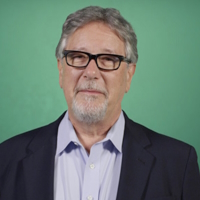 William Haley, PhD, is a clinical psychologist and professor in the school of aging studies at the University of South Florida. His work focuses on understanding and helping family caregivers of older adults with chronic illness and disability, including Alzheimer’s and other dementias, stroke, cancer, and terminal illness. He studies how caregiving affects people's mental and physical health and works to develop interventions that help caregivers cope.

