Kim Mills: Over the past several years, climate change has moved from an abstract idea to a reality in many of our lives–a reality that has a lot of us increasingly worried. An APA survey in February 2020 found that two-thirds of American adults said that they felt at least a little eco-anxiety, which is defined as worry or concern about climate change and its effects. And nearly half of those under age 34 said that stress about climate change affects their daily lives.
Since then, hurricanes in the south, wildfires in the west, and an unprecedented ice storm in Texas have kept climate change in our thoughts this year, even as COVID-19 has dominated the headlines. So what are the mental health effects of climate change? Who is most at risk of suffering eco-anxiety? What is ecological grief? And what can we do to cope and build resilience in ourselves when prospects for the future of the planet seem so bleak?
Welcome to Speaking of Psychology, the flagship podcast of the American Psychological Association that examines the links between psychological science and everyday life. I'm Kim Mills.
We have two guests today. First is Dr. Thomas Doherty, a clinical and environmental psychologist in Portland, Oregon who studies nature-based therapies, that is, the restorative effects of outdoor experience and the mental health impacts of climate change. His 2011 paper, The Psychological Impacts of Global Climate Change, has been cited by other researchers more than 500 times. He's a fellow of APA, a contributor to the association's 2017 report Mental Health and Our Changing Climate, and a founding editor of the journal Ecopsychology.
Also with us is Dr. Ashlee Cunsolo, founding dean of the School of Arctic and Subarctic Studies at the Labrador Institute of Memorial University in Newfoundland, Canada. Dr. Cunsolo is a public health researcher who has spent more than a decade studying how climate change and environmental losses are affecting the mental health of the indigenous Inuit community in Canada, as well as developing programs to help the community deal with those losses. With other researchers, she coined the term “ecological grief” to describe the grief people feel at environmental loss, including loss caused by climate change.
Thank you both for joining us today. Welcome.
Thomas Doherty. PsyD: Thank you, Kim.
Ashlee Cunsolo, PhD: It's great to be here, Kim.
Mills: Dr. Doherty, let's start with you. Those numbers I cited in the introduction from APA's survey last year were very high, more than two-thirds of Americans said that they feel some eco-anxiety. And a number I didn't mention is that more than half of respondents said they felt that climate change was the biggest issue facing society today. As a clinician and practicing psychologist, does this ring true for you? Is this something that you're seeing in your practice?
Doherty: Yes, it does, Kim. It does ring true. I mean, those numbers are kind of sobering, but I'm really not surprised. I've known of Ashlee's work and we've been in contact for many years, maybe as much as a decade, and things were different when we first started corresponding in terms of the distance of climate change and the abstract nature of it. But that really has changed. We knew that was going to change, that was what the predictions of atmospheric scientists were, but it has changed. So people do have direct experience of climate change. I do think when we're talking about issues like eco-anxiety or eco-grief, we're talking about at least two things. One is more of a sociological cultural-wide reckoning with this issue of climate change, much like we reckoned with, say, nuclear war in the 1950s and '60s.
And it was a big cultural debate and it was a very troubling, politicized issue. And same with climate change. It is normal to be anxious about climate change. And then also as a clinician, I start to think about people's functioning, and then we get into the realm of disorders and anxiety disorders, depression disorders, and there's a spectrum from healthy adjustments to stressors, to adjustment disorders and then the diagnosable issue. So I think when we get into this topic, it's helpful to make sure that we realize there's a number of ways to think about eco-anxiety.
Mills: Dr. Cunsolo, you're not a practitioner, but are you experiencing the same kinds of reactions from the people you work with?
Cunsolo: Yeah, certainly. I think in the research that I'm doing and with people who are on the ground, and particularly people living in Northern Canada who are at the front lines of a rapidly changing climate, this is something that people are experiencing directly. It's something they've been living with and adapting to for decades. It's something that has been a mental health stressor, both directly in creating new stressors, but also magnifying other underlying mental health conditions or mental health challenges.
And it's something that you're really seeing that research is focusing on it more and more. I'm getting contacted more and more by interested grad students, which is really exciting. People see the importance of this and want to go into this field now, which as Thomas mentioned, when we first started corresponding 10 years ago, it wasn't–it was a new area, it was something new people were considering. And now we're seeing it as an emergence of a very important, pressing field that more and more research is going into, more and more research funding, and more and more interest. And I think also in the public conversation and dialogue and debate, we're seeing a lot of discussion in the media and a lot of focus around eco-anxiety, eco-grief, how people are experiencing this and choosing to narrate their own self-reported experiences. So as Thomas said, those numbers from the APA survey are sobering, but not surprising. And I think it's great that we're starting to get a broader understanding of the prevalence and the distribution of how many people are actually being affected to various degrees by climate change on their mental health.
Mills: In a 2017 report, APA and the climate nonprofit group ecoAmerica actually came up with the term, "eco-anxiety," and defined it as chronic fear of environmental doom. And while the term has caught on, it's not a clinical diagnosis, but how do psychologists think about defining and recognizing and ultimately treating eco-anxiety? It's a real thing, right?
Doherty: Yeah. As I said, again, psychology is a broad field. I have colleagues and Ashley and other folks that we know, we're studying this on a cultural level. People's basic identity, their values, their sense of themself. I use the term, “environmental identity," a lot, and that's an important construct here. People have a sense of their identity in relation to nature and the natural world, much like their cultural identity or their gender identity or their ethnic identity. Their consciousness is being raised about their environmental identity with issues like climate change. Obviously First Nations, people in the Arctic and indigenous people have a very well-developed sense of environmental identity based on their culture and their values and their spirituality, but people in sort of the regular world also have various kinds of environmental identities. And so it's a healthy way to start talking about this concept or this topic of environmental anxiety. We get anxious or we have grief because we have things that we value are threatened, either personally or things that we value threatened or we witness this, and then it causes us to have these emotions.
Mills: Dr. Cunsolo, in your work you do talk a lot about ecological grief. How does that relate to eco-anxiety and where do the two terms overlap and how are they different?
Cunsolo: I think they overlap in a great way. The anxiety that people feel, as Thomas just said, is related to the things that they're worried about losing. So whether it's their environmental identity, or their cultural or their social identity or things that are important to them in their lives, or in the case of very acute things like wildfires or flooding where it's actual destruction and loss, there's anxiety related to that and related to future thinking around knowing what's to come. And then there's also the associated grief and for a lot of people, at least what I'm seeing in my own research and what people are identifying in, say, media reports or we're seeing documentaries and other forms of expression–anxiety and grief are starting to go hand in hand. So people are feeling anxious about the changes, and then they're grieving both the current changes that they might be experiencing or the future loss that might be coming.
So there's this current temporal experience of both anxiety and grief, and then there's also this future fear. And a lot of people talk about mourning what's to come. And I think this is a really fascinating piece that we need to grapple with when we're thinking about what type of stressors people are experiencing daily, because sometimes the biggest stresses are coming from the future and anticipating the future. So for me, the grief is the piece that's lost and the pain that's experienced when we know what's lost, because we only grieve what we love. And when we lose something that we love, there's that act of mourning and grief, and the anxiety is a part of that because you can have anxiety before the grief, during and after. So they're very interlinked and they're certainly something that people often articulate together. And I've found in my own research, people will talk about anxiety and then start to talk about how that anxiety points to future grief that they're afraid of. So they're kind of linking, even if they haven't hit the grief stage yet.
Mills: Can I suggest that there might be other terms out there that maybe haven't been coined yet? Although there's a lot of language that's growing up around this whole phenomenon, but I was thinking about eco-exhaustion or eco-resignation, kind of a feeling that people might get by hearing about yet another crisis about which you can't do anything. The devastating fires in Australia, the melting ice pack in Greenland, it seems that every day there's another story about some part of the globe that is being wracked by climate change. So do you sometimes feel, do you hear from people you work with, that hope is lost?
Doherty: Yeah. The term that I use in that case is what I call a climate hostage. We feel like we're kind of hostages to this larger process. And it is true because your average citizen doesn't have a lot of power to direct the government or corporations to address climate. So we do feel hostage to this. And I found part of the issue here is just validation. It's bearing witness to this issue, naming it, validating it. One of my little catchphrases in my practice with clients is, "Validate, elevate, create." So we validate these problems, whatever the problem happens to be in your life. And then we elevate it, we lift it up, we say, "This is important." We look at it from different angles and we get creative about it. "What are we going to do about this?" But yes, I think that exhaustion coupled with exhaustion about the economy, about COVID, about political polarization and things like that is very real for people.
Mills: Dr. Cunsolo, are you hearing the same thing? Especially with the Inuit communities where you work, can you talk concretely about what they're saying and how this is all affecting their everyday lives?
Cunsolo: Yeah. In Northern Labrador where I work in the Nunatsiavut land claim settlement region, which is in the region of Labrador, people have been experiencing climate change quite rapidly and quite aggressively for decades. So Labrador is one of the fastest warming places anywhere in the north. So Inuit have seen rapid decline of sea ice. So Inuit identify as people of the sea ice. So with this decline, not only is there a fundamental identity crisis, but there's also the inability to travel safely. So you're seeing more concern about people traveling on the ice during the winter, more injuries, more mortality. The inability to hunt as much, so to support and feed your family. So the sense of not only direct food security, but also the pride and strength that goes with those connections. The magnification of previous trauma, since we're talking about the hopeless sense, Inuit people have experienced various types of really awful colonial processes, including forced relocation and land dispossession.
And so now climate change is bringing up what philosopher Glenn Albrecht calls solastalgia, where people are in place and in their home community, but it no longer looks or feels like home. So there's a sense of homesickness without actually having to leave. So all of these overlap and interact, and that sense of hopelessness comes up a lot. And people would talk about feeling powerlessness, and a number of people that we spoke with in the communities, and I've heard this elsewhere in the north and in other indigenous populations, talked about it as another colonial process. Another piece where people from the outside are doing activities that are directly taking away people's indigenous rights and their livelihoods and lifestyles. So I think the hopelessness is there, but then people also talk about a hope that I always think about as gritty hope, it's hope that's earned.
So I love what Thomas said about this identify, the validate, the elevate, the create. And that's what people are doing. So they're identifying it. They're saying, "This is what we're experiencing. We've been at the front lines for decades. Here are the things that we need to do. Let's get creative about it." And there's a hope that comes from that that's gritty, that's earned, that's not this kind of Pollyanna hope of, "Oh, well, hopefully the government does something." It's something about communities coming together and saying, "This is really awful. What are we going to do about it? And let's have hope because we can do this, we can pull on the strength of our communities and our ancestors. And so I think that's what I try to hold on to is not the hope that gives over power to the governments or the corporations, but is a hope that's still there based on pain and kind of being forged through grief and loss and anxiety.
Mills: What are you both telling people in your day-to-day work to help them cope and become more resilient in the face of something that is as overwhelming and formidable as climate change?
Doherty: Yeah, that's a great question. I actually really loved the concept of gritty hope, I'll definitely use that in the future. Hope that is earned. I think we oscillate, and again to step back a little bit on this conversation, many, many psychologists have tools to bear in this issue. Many people, especially in the clinical and counseling world, I've worked with people dealing with grief or dealing with anxiety. And we do know a bit about the grief process, and we've dealt with it in our own personal lives in terms of losses and deaths and things. People tend to toggle between activities of grieving and mourning and disorganization and activities of growth and new beginnings, creativity. And this is a normal sort of oscillation. And so part of the more sophisticated way of working with clients and with the public is to really find people where they're at and where they are on that sort of oscillation curve.
For some people, they need time to go into their grief and their loss and be deep within that, because that is a process that we go through until we work through those losses so we can reinvest our energy into life. For some people they are wanting something upbeat, they are wanting a message of hope, or they may be characteristically upbeat or more positive thinking, more resilient thinking. And so they resonate with messages around gritty hope and creativity and innovation and interesting science.
There's a lot of really exciting, beautiful things about climate change in all the efforts all around the world that people are doing and have been doing around climate change. And particularly for the young people, they haven't been as jaded, perhaps, as someone who's been around this for many years. They're just coming into the world and they deserve a fresh start. And so we have to be able to put ourselves in other people's minds, both people that are grieving but also people that are fresh and are creative and want to make a difference. And so as an interventionist, we have to do our own work and we have to spread ourselves out and be able to inhabit these different places. But it can be a benefit for us.
Mills: Dr. Cunsolo, we certainly know a lot about how young people are feeling about climate change, as Dr. Doherty just said, and we know that they're suffering from eco-anxiety. Are they too young to feel ecological grief?
Cunsolo: I know in the work that I do a lot of people identify, in the research, on the grief spectrum. Absolutely. And again, this isn't clinical diagnosis work. This is people saying, "I am so sad. I'm in so much pain." But I think what I find really amazing is this validation piece that Thomas talks about. So when you ask, "What do I say to people?"–I'm a non-practitioner. I'm not a mental health counselor. And I often point them to people like Thomas to say, "Look," the validation piece is, "You're not alone." There's people who are ecopsychologists who are specifically looking at this. There's whole fields of study because there are people all over the world experiencing this.
And I find in the work that we're doing with youth, that's something youth, at least in my experience, are so much more open about talking about these things and they don't carry the same shame that adults seem to carry to say, "I'm sad about the environment." When we first started this work 10 years ago, a lot of adults didn't want to admit that they had these emotions because they were embarrassed and they thought, "Oh, how silly," you know? "I'm grieving the environment," or, "I'm grieving this," and they didn't want to talk about it. So they would say it privately, but so many people said, "I've never told anyone this. I've never told my family. I'm devastated, but I'm going to hide it because I'm so embarrassed." Whereas youth just have this amazing ability now, and I think it's also because coming online with more and more the decrease of stigma around mental health in general, and the mental health advocacy and activism that young people have, and then they're just coming forward.
And they're openly saying, "This is a normal response to losing things we love in this world." You know, "The planet is suffering and of course we're going to suffer and that's normal and healthy and we've got to be motivated by it." And that's what I find really amazing when you look at young people. And so I think they absolutely are sad and anxious and grieving, but they have a different capacity to express it without the other baggage that adults seem to have around shame or embarrassment or fear of exposing yourself like that. And it just seems a much more normal, healthy response for people to talk about.
Mills: Some of what I tend to hear from younger people, though, is anger. Like, "How could you older people have wrecked the world and then brought us into it?" I mean, how do we deal with that? I have a great feeling of guilt myself.
Doherty: Yeah, some of this is existential. I've taught at the college level and graduate level and again, we have to validate this. It is something legitimately to be angry about, even in myself and my education just recently, I've really become more aware of the many decades of misinformation and propaganda around climate and stifling of the science, and President Johnson was briefed on climate change in 1965 with very, very clear information that mirrors what happened in our lives. And so there is truly injustice, and so we have young people trying to work through legal, through the courts. So yeah, that is one angle here. There is climate injustice, there are people that have legitimately stymied healthy action on climate change. We've been able to take action on things like chlorofluorocarbons or removing lead from gasoline and many other really difficult processes have been able to happen, but climate change has been politicized and stymied.
So that anger that people feel is legitimate, but it's just one of many emotions. And so one of the many images I use with people is the idea of a compass. And a compass will point, the needle will point north as you walk around and it'll move freely. So we want to have our emotions to be able to move freely. I will feel anger, but I also can feel hope. I can also feel happiness. I can feel calmness. And so some of this, again, is emotional intelligence, basic psychology stuff. How do we feel a range of emotions? How can we be in the present moment? How do we do our own mental hygiene? And young people do well with mentoring about this kind of thing.
So there's a lot of ways that we can prevent more, we can help to direct the anger in a healthy, growthful way versus into a way of despair, jadedness, self-hate. The world may be a problem, but doesn't mean you are a problem. So again, there's that blame. There's a blame issue that we have to be careful about here, that people somehow think that, "Climate change is my fault." And part of that has been the misinformation that this has been put on individual people versus systems of power and corporations. So there's a whole political critical piece here.
Mills: Dr. Cunsolo, you're in Canada, I'm just wondering, do you have the same sense of anti-science and climate change denial that we have in the U.S.? What is it like there?
Cunsolo: I don't think it's to the extent that we've certainly seen come out of the U.S., particularly over the last four years, but we definitely do have it. And I don't think that Canada by any means is a place that has clean hands in the climate misinformation. We've gone through a number of things where governments have had different policies and haven't supported climate initiatives. And I think this is something that is a global political reckoning. I absolutely agree with Thomas. This is something people have known about for decades, and the science has been clear for decades, but there hasn't been a will to globally act for a whole variety of reasons. So I do think it's something that anger is legitimate about. I know that I go through bouts where I feel angry, but then for me, speaking personally, the anger is exhausting and it's not sustainable for me, so I have to find those other places to go to.
And I love that imagery of the compass, Thomas. I think that's just great. Because how do you hold the anger but move to the other things that are more productive, more positive? For me, personally, anger often debilitates. So I have to find ways to move into the other pieces. And I think I hear a lot of young people–I know my own 16-year-old will sometimes say, "Your generation and grandparents' generation, you really left us in a crisis." And it's true, and generations before, and we have a lot of reckoning, and I think it's something we can't leave to young people. And I think there's sometimes a sense that we're just going to leave it to the next generation. I think it's something that all generations need to work together, but I think anger is something we need to support. And that's where people like Thomas and other mental health professionals come in to provide that mentoring support so people can work through and understand their experiences are legitimate, but how do they express them in positive, productive, healthy ways that won't harm themselves in the future?
Mills: What kinds of changes are you both seeing in psychological science with respect to climate change, as it's becoming much more of an accepted area of research and scholarship?
Cunsolo: I think from a research and scholarship perspective, we're seeing a lot. There's just so much more coming online. People are really starting to look at it from multiple perspectives, which is really exciting to see. We're seeing the longitudinal studies, we're seeing case studies, we're seeing mixed methods, we're seeing population level. We're seeing the very clinical, the very social-cultural piece. It's a very diverse field right now, but in many ways it's still quite new. And I think that people's lived experiences with the mental health impacts of climate change really outstrip what we actually know. And I think that that's one of the huge challenges. And often, sometimes the failings of our field is we're not keeping up with what people are actually experiencing. And so there's so many unanswered questions, but people are already suffering around the globe. So how we act quickly without needing to do more research, but also having the research to back up the actions, is the real dilemma we're facing.
Doherty: Yeah. I think there's a consilience here in the sense that people that have been working on disaster intervention, that traditionally would work on fires and floods, that is now wrapping in more into the larger climate change world. And then especially recently, social justice issues. Most climate activism groups think of themselves as environmental justice groups. So we have a blending of the disaster work and the more office-based clinical work dealing with the stress and the anxiety from a distance, and the social justice work. And many people are self motivated. Again, they're getting ahead of the academy, as Ashley's saying, and practitioners are starting to work on this. And my goal is to try to knit this together in a really comprehensive way. So we don't have to reinvent the wheel. That's the thing I've noticed, people come into this field and they don't realize that people have been working on this for many, many years. And I think that's the challenge for psychology, is how to get all the stories together so we're not in separate silos.
Mills: What are the questions that we still need to answer about the mental health effects of climate change? What are you both studying now?
Cunsolo: There's so much, and we can't individually study it all, but there's so much we don't know. I'm particularly interested right now, I'm working with a team in Canada to look at a study on the prevalence and distribution at the population level for Canada of eco-anxiety and eco-grief and other mental health outcomes, because we don't have a population-level study in Canada. And what we're running up against is when we talk to policy makers and decision makers, they'll say, "Well, it's great that there's all this research from other places, or you have these case studies, but what are we actually looking at?" So something in the way that the APA did where you can say, "Okay, two-thirds of people living in Canada express this." So that's something that I think is key, particularly, from our country perspective. But I'm also particularly interested in those intersections that Thomas highlighted like the, the social and climate justice, the mental health pieces, what we already know and looking at some of the key projections.
So there's very little research right now that looks at putting meteorological projections together with climate mental health outcomes. So being able to start to think about, if we see this amount of warming by 2050, what does that mean for depression? What does it mean for anxiety? What does it mean for violence and aggression? We have a little bit of research around suicide rates and temperature increase, but not for many other mental health outcomes. And then also looking at multi-country partnerships and initiatives. I think that's really key too, so we can start to get a bigger picture, but look at the place-based nuances that actually exist around the world.
Mills: I'm interested, you mentioned suicide rates. Are they higher when it's hot or higher when it's cold?
Cunsolo: Yeah, higher when it's hot. so there's been work looking at U.S. rates and Mexico rates, and with every half degree temperature increase, there is an increasing in numbers of suicides. And more people are starting to do that. There was one that did sort of a global, I forget, I think it was 14 different countries and the information is all coming out the same. So as temperature rises, so do suicide rates. And then we've seen this before with heat-related aggression and violence as well. So that type of research is starting to come where we're actually connecting, "Okay, with this amount of climate change projected in this region, it's likely we'll see this many more of these mental health outcomes."
And I think that's really essential because it starts to make it real to people. It gives decision-makers something to look at. It really brings it home when you start to think about loss of human lives or loss of quality of life. So I think we need more of that, which means bringing mental health professionals together with policy makers together with climate scientists and meteorological specialists, and really working across disciplines and removing the silos, as Thomas mentioned.
Doherty: Yeah. And this is a great teachable moment, because climate is the aggregate temperature over time, versus the weather. And so what we find now is climate is changing our baseline. So in a community, there might be a baseline of suicidality in general, but with climate change, it's not about specific heat waves per se. It's just overall, our community levels will start to rise on some of these issues like suicidality. And this is what we need to understand about climate change. It's raising levels broadly in society and changing our society in some ways. And so this distinction between climate and weather is a really interesting one to think about.
For myself, there's two things that I'm really focused on. One is training other providers and trying to, as efficiently as possible, bring people up to speed on being what we would call a climate-conscious counselor or doing ecotherapy. And so that's sort of helping them to develop, understand their own environmental identity, their own backgrounds, their own strengths and weaknesses and competencies regarding nature or the natural world, outdoors, things like that. And then what skills do they already possess clinically in the sense of their techniques and their background, and then how can they apply that unique background, behavioral psychology or psychoanalytic psychology or whatever, to their clients. So there's a kind of a three-step process there with clinicians, and trying to make this a little more streamlined. Because it's urgent, this is an urgent thing.
And trying to dispel this idea that you cannot diagnose, there's no diagnosis of eco-anxiety. Yes, we can diagnose if necessary depression or anxiety regarding climate. There doesn't need to be an environmental identity or environmental anxiety named diagnosis, because that's not how the diagnosis system works. And so the goal is to not over-diagnose and pathologize people that are normal, but we also don't want to underserve people that are suffering. And so we have to set aside the politicization a bit and just look at the person and what do they need. And I would like to keep people in the healthy sphere to deal with adjustments and try to avoid the more deeper anxiety or depression diagnosis, if possible. But that's, I think a really important thing to be working on right now.
Mills: So it seems that there are some reasons to be hopeful, that we're doing some good science, that there are opportunities. I just don't want to leave everybody on a down note here. If there's something that you want to add that maybe will help people with their coping and resilience, or if they happen to be feeling a little bit of eco-anxiety themselves.
Cunsolo: Well, I'll let Thomas have the last word on that one because he's the clinical counseling specialist on this. But for me personally, I've never felt more hopeful about this area than I do right now because of the way people are coming together, and because of the focus on it. And because of the way you start talking about it, because of the way society is talking about it and we're grappling with it now. We're identifying it, we're acknowledging it, we're acting on it. So that, that for me, I've never felt more hopeful than I do now.
Doherty: Yes. I really love, you know, Ashley talked about strength of ancestors. And so again, certain people really need that message of strength. They need a message of hope. They need a message of creativity. And so again, meeting whoever's listening to this, whatever you're feeling is normal. And if you do have hope and as you like to get excited about ideas, that's great. And, there is a despair and empowerment curve that we all navigate, where we get excited about ideas and we try things and we learn and then we make mistakes, and then we get tired and fatigued, "What am I saying?". Despair is fatigue in disguise. And so we get tired, we get fatigued, we get into a trough, we get hopeless. But then, again, life goes on and so over time in this kind of work, we learn to navigate the waves. And I think that's a longer-term process that's helpful for people to know.
Mills: Thank you both for joining us today. This has been a really interesting and edifying discussion. I really appreciate your taking the time and the work that you both are doing is very, very important. Thank you.
Doherty: Thank you, Kim.
Cunsolo: Thanks so much, Kim.
Mills: You can learn more about psychologists' work on eco-anxiety, climate change and mental health in the March issue of APA's magazine, Monitor on Psychology. Visit the show notes on our website for a link. You can also find previous episodes of Speaking of Psychology on our website at speakingofpsychology.org, or on Apple, Stitcher or wherever you get your podcasts. If you have comments or ideas for future podcasts, email us at speakingofpsychology@apa.org. That's speakingofpsychology, all one word, at apa.org. Speaking of Psychology is produced by Lea Winerman. Our sound editor is Chris Condayan.
Thank you for listening. For the American Psychological Association, I'm Kim Mills.


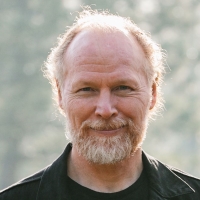 Thomas J. Doherty, PsyD, is a psychologist from Portland, Oregon, who specializes in applying an environmental perspective to mental health and well-being. He provides individual and couples therapy and coaching through his business Sustainable Self, and also consults about climate change, health and performance to groups and organizations. Doherty is an APA fellow and past president of the Society for Environmental, Population and Conservation Psychology. He was founding editor of the peer-reviewed interdisciplinary academic journal Ecopsychology. He was also an adjunct professor at the Lewis & Clark Graduate School of Education and Counseling in Portland, where he founded one of the first environmentally-focused certificate programs for mental health counselors and therapists.
 Ashlee Cunsolo, PhD, is a health geographer and the founding dean of the School of Arctic and Subarctic Studies in the Labrador Institute of Memorial University of Newfoundland in Canada. She is a community engaged social science and health researcher with a particular interest in the climatic, social, environmental and cultural determinants of Indigenous health. She is a leading voice nationally and internationally on climate change and mental health, ecological grief, and intangible losses and damages that arise from climate change.