Kim Mills: May 25 is the one year anniversary of the murder of George Floyd by Minneapolis police officer Derek Chauvin. A shocking crime captured on video that horrified America. It also sparked months of protests and brought new urgency to longstanding anger over police violence against Black men and women in the United States. In April, Chauvin was convicted of two counts of murder and one count of manslaughter. He faces sentencing in June. While the verdict brought some sense of justice and relief for many, it did not change the dynamics of racial bias that was a factor in Floyd's death. Police reform remains a top priority for many Americans. President Biden has urged Congress to pass The George Floyd Justice in Policing Act, which would make it easier for people to sue law enforcement officers in civil court. It would also ban choke holds, direct police departments to use body and dashboard cameras, and require police officers to learn and use de-escalation techniques.
But are these changes enough? If not, what else do we need? What would effective police reform look like? And what can be done to restore the trust between police departments and the communities that they serve? Especially people of color communities. Psychological research has contributed insights into these questions, which we will discuss today. Welcome to Speaking of Psychology, the flagship podcast of the American Psychological Association that examines the links between psychological science and everyday life. I'm Kim Mills.
Our guest today is Dr. Cedric Alexander, a psychologist with decades of experience in both mental health and law enforcement. He began his career as a police officer and detective in Florida in the 1970s and '80s. After more than a decade in law enforcement, he earned a doctorate in clinical psychology and worked as a mental health practitioner and an assistant professor of psychology at the University of Rochester.
In 2002, he returned to policing as deputy chief of police in Rochester, New York. He later served as Rochester's police chief, deputy commissioner of the New York State Division of Criminal Justice Services, federal security director at the Dallas-Fort worth International Airport, and director of public safety for DeKalb County, Georgia. He is also a past president of the National Organization of Black Law Enforcement Executives. In 2015, he was a member of President Obama's Task Force on 21st Century Policing, which issued a report and recommendations that we'll also talk about today.
Thank you for joining us today, Dr. Alexander.
Cedric Alexander, PsyD: Thank you for having me. Thank you very much.
Mills: So let's start by talking about President Obama's Task Force on 21st Century Policing. It convened in 2015 after the shooting of Michael Brown in Ferguson, Missouri. What were the major recommendations of the task force, and now six years later, have any of its recommendations been implemented?
Alexander: Well, there were six pillars to that document that we were directed by President Obama at that time to come up with as a roadmap to help develop relationships between police and community, which was at another moment of one of those very historic all-time lows. So myself and 10 other individuals, who are noted in the law enforcement community, civil rights community, and academia, you name it. We were brought together by the White House and was given that charge by President Obama at that time. And we had 60 days to come up with some recommendations, which we delivered to him on March 2nd. I believe it was 2015.
But six pillars, we established, we had a number of listening sessions across this country. Listening to people from all walks of life, from education, human rights, civil rights, unions, you name it. Everyone in this nation had an opportunity to come before us, either in person or via social media, or they could write in, call in, and leave their thoughts, ideas, and suggestions to how to move this country forward and create a relationship. Or begin to create a relationship between police and community that would have some influence in terms of changing many of the attitudes of people in our community and the long history of abuse, which people have experienced in the disconnect between police and community that has been long standing. Particularly communities of color. So the document employed, and one particular, was trusted and legitimacy, which is pillar one. And probably one of the most important pillars of that document because without a police department being seen as being legitimate, you cannot have trust, and if you cannot have trust, then you cannot have good public safety in any community.
And then there was other pieces in that document as well, that talked about officer wellness and officers being mentally and physically and psychologically capable of carrying out their functions and making sure, as a community, we provided them, police officers, with support that they need to do often times what is a very difficult job. So a lot of information grew out of that. One in particular was body cameras, body cameras became popularized as result of the 21st Century Task Force report. Body cameras was a way, really, to help build that trust and really so the public could see as much as they could as to what occurred, based on the statements that were made by officers or witnesses or persons who might've been involved in that event all together. And body cameras, that technology, is very evident today. Many departments across the country employ body cameras. There are still a few who don't, but many do, particularly in your larger metropolitan communities.
But they can be expensive, not just for the camera itself, but the storage of the information over time. But I think many municipalities and cities and states and counties are beginning to understand the importance of having this technology available. Other things that came out of that, of course, was agencies that evolved in officer-involved shootings. It became important that those agencies did not investigate themselves and their own personnel, but there was opportunities for other law enforcement agencies, preferably an agency that was above that agency in terms of government. So if a city police department was involved in a shooting, it was always encouraged that the state law enforcement agency would be an investigative body. So that you can maintain a sense of independence and transparency in that investigation, which allowed the public to feel a sense of fairness in doing those investigations.
And that that agency that was involved in the shooting was being open and transparent and favoritism was not being given, whether it was real or perceived. So there was just numerous recommendations that were made. In fact, that document is still up online. If you just Google "21st Century Task Force, final report," it will still pop up and you will see a great deal of work that went into that document that provided police agencies with a lot of ideas. And some things they already knew, and some things that were new, to help guide them along the way. And of course, after Obama administration, when the next administration came in, they had a very different approach. Quite different. But many police departments across the country still utilize that document, have utilized it since it was published in 2015, and it certainly can serve as a guide and a roadmap to help us building trust and legitimacy with our communities and with our police agencies across the country.
Mills: One of the pillars in that report was to build trust and support by police departments, as you've said, by being open and transparent. What does that mean in real life and are police departments willing to go along with that recommendation?
Alexander: Well, if you want to have successful public safety–and since the beginning and the father of law enforcement or public safety or policing, Sir Robert Peel, who was a home secretary at London at the time, created the first police department. And his premise was very simple, the community is the police and the police is the community. And you fast forward that now over 150 years later, and what you will find is that no community is safe unless you have community and police working together. If they're separate from each other, if they are conflict with each other, police are not capable of doing their jobs in order to protect and to serve the community at large. And communities will not be safe without trained professionals who are there to take bad people off the road, and more importantly, to prevent crime even before it gets to that place. So if you don't have trust between the public and the community, police departments become de-legitimized.
And I can give a police officer all authority in the world to carry a weapon, to take someone's freedom, to even take their life if it's justifiable, but what I cannot give you as a police officer is legitimacy. That comes from the community. They have to give you legitimacy. That means that they have to feel they can trust you. They have to feel that they can be heard and listened to. They have to feel a sense of connectedness with their local law enforcement agency. And they have to feel they have a department that is open and transparent. And they work together as a team. Police departments can no longer work as this clandestine operation that is apart from the community. You have to be very much a part of community and this is what community is demanding.
And to be perfectly honest with you, this is what we should have been doing from the beginning, but we lost our way in this, but we're in a very, very different time in the history of this nation that is very diverse. Not in terms of just race and gender, but diverse in terms of how we think and see and feel and cognitively, I should say, experience this world. And everyone sees it very differently. And for anyone that's a city leader or police leader in that community, you really have to be an individual who understands the dynamics of diversity and be respectful of it at all levels if you're going to be a strong leader, a good leader, a credible leader, a legitimate leader to the people in which you serve.
Mills: So you've just given pretty much the definition of community policing, and I know you're a strong advocate of that as a practice, are there some communities you could name that have been successful in this respect? Can you give us some examples of who's doing it right at this point?
Alexander: Well, it's not a matter so much of naming any particular community. I think all communities struggle with it. If you have Mayberry RFD and you got an Andy Griffin and you got a Barney Fife and everybody knows everybody in that small little half-a-square-mile, a quarter-square-mile community, that's a beautiful thing. That would be great. But unfortunately, often times it does not work that way in many of our communities across this country. Now that does say that that does not exist, but in most cases, and certainly to communities that we come across, and those that are oftentimes troubled or run into these predicaments that create a great deal of angst across the nation. There is no one particular department that's doing it, right, everybody is in a trial and error place, everyone is struggling.
There are days we do it very well and then there are days that we struggle and there are days that community struggle. So it is an ongoing event. But there's no one agency that I can name that is doing a perfect job with it. It is an ongoing, everyday trust-building type of relationship. It's like a marriage, if you will, you got to work on it every day. Because police departments are there to serve the community and communities need to be there to be supportive of good policing. The operative word here, good policing, constitutional policing, honest policing, transparent policing. And at the same time, communities must make sure that they do their part in being supportive of the men and women who are out there working to keep all of us safe.
Mills: You have a unique background in clinical psychology and law enforcement. I mean, that's not something that you run into every day when you meet a police chief. How has your psychology training affected your approach to law enforcement?
Alexander: Well, actually it's been a real benefit to me. And my intent, I spent many years in law enforcement–I got out, Kim, with no intent of going back at all, when I got out in 1992. We never know what the road is to lead to, but I can tell you this, having that background experience, as a trained psychologist, really helped me to better understand large organizations in which I led. When I'm able to bring a group of people into a room, when I'm able to talk with, mentor, discipline, encourage, promote, inspire, people who worked under my command. Having that training as a psychologist really helped me tremendously to evaluate people's strengths, and their challenges or weaknesses, and helping them to be the very best employee that they can be.
Not to break people down, but to help build them up. Also helping people come to a determination that the work that they were doing was maybe not where their best talents were either. But that is something that we learn how to do as clinicians, is to listen and to evaluate and to help people get to the place where they're trying to get to. But as a manager, as an executive, as a leader of a large organization, the training was tremendously helpful, then, for me to help fix organizations often times I went into that were struggling or that were broken.
Mills: One of the major contributions of psychological research to our understanding of racial disparities in policing, and in communities in general, is knowledge about implicit bias. The biases that people have that are outside of their conscious awareness and maybe control. Some police departments have started to require implicit bias trainings to make officers aware of this phenomenon. I know you're a clinician and a law enforcement executive, and not a researcher, but speaking from that perspective, what role do you think implicit bias trainings should play in police departments?
Alexander: Well, I think it's clearly important. We need that training in every aspect of our American institutions. Even in the field of psychology itself, even among psychologists, even among journalists, among politicians, among every field of endeavor there is. Because we all have implicit biases and we're all born with these implicit biases and we all know that in the amygdala, which is one of the most primitive parts of the brain, is where fight and flight lives. And things that we're not familiar with we have a tendency to either stay and fight or to run. So we take that and we think about it in it's very basic and fundamental way, as we grow, as we come into life after birth, we're exposed to a number of different things in our environment. Things that we learned that our safe things, that we learned that are not safe. Things that we hear about people, places and things that could be a positive value, that could be a negative value. But it feeds into our own psyche.
And we can develop these implicit biases, these implicit biases can be reinforced by things we learn in our family of origin, our communities, churches, schools, et cetera. And I think the most important thing is, for those of us who deal with the public, whether we are clinicians or whether we're police officers or public safety officials. It is important for all of us to be aware of the fact, if we have these implicit, unconscious bias that are going on, it serves to benefit the people we're there to serve, and to benefit ourselves, if we're aware of those biases. But we have to come to terms with the fact that we all have some biases in some way. We like something over something else and we need to be able to know that and be able to acknowledge it, because it's always not in your face, but it's unconsciously.
We make decisions about people where our place is or things and our biases kick in and we may not be aware of it. I may make a statement to you as a woman coming from a man, but not being sensitive to the fact that I'm a Baby Boomer and I was raised to believe certain things that could be offensive to you. But unknowing to me. So the more that we are able to take a look at ourselves inwardly, and to make those assessments, and to familiarize ourselves with people, places, and things that may be very unfamiliar to us. We have a tendency to be a lot more conscious and lot more aware because none of us are perfect human beings. I teach implicit/explicit bias, even though all the data shows that, regardless of how much training you do, it really doesn't make a real difference.
So even in my training, I know this going in, but here's what I encourage people to do. In spite of what the literature says, and I think it's important to pay attention to the literature, but here's what I tend to do. Is for people to have their own–to go inside themselves and ask themselves those very tough questions. They have their own process. What I don't do in my class, Kim, is point out someone who may be White, part of the majority group, "Tell me what you did to that person." When you do that, people become defensive, people come already in being defensive. "Oh, I'm going to get hit over the head for being part of the majority group in this country." And when people cannot be comfortable, when people can not feel like they're going ... If people are going to feel like they're going to be attacked in one of these classes because of the ethnic group that they belong to, then people cannot learn.
And what I tend to do is use myself as someone, let me share my experiences around what I learned about myself in the biases, being a Baby Boomer, growing up in the 60s, that I became aware of. That I needed to work on. And that allows people sitting there in your class to have their own introspection, if you will. To look inside themselves. And as I'm sharing my experience, people are having their own personal experience around something maybe they could have done better, said better, or took a different attitude or approach about. But I think people get more value out of that, then as opposed to me pointing them out, or making them tell me something that you did you know was biased and it was unfair. And that's a process people have to have within themselves. And if they feel comfortable enough to share it on their own, great, but I don't push people into that. I just share my experience, which I think allow people the freedom to sit there and have their own conversation with themselves.
Mills: So you must feel, then, that there's some value to this. I mean, even if it doesn't completely eradicate implicit bias. I mean, you're obviously teaching these courses presumably to police officers. I mean, just the self-awareness, do you feel that that by itself is worth the effort?
Alexander: That by itself, yes. That by itself is huge. The fact that it brings a level of consciousness. It brings people up to a level of consciousness, of self-awareness that they themselves may be struggling, and maybe to talk to someone else they feel comfortable with. But not in a classroom of 20, 30 folks. But the whole idea is to make you aware. Here is my experience, here's what I had to learn about things that I was taught in the 60s about people, about places, about things. And I later learned, as a public servant, if I'm going to serve a diverse group of people in our society–and here, again, not just in diverse in terms of the obvious of Black and White, male to female, but understanding people think about things differently. People process things differently.
People come from different cultures, different backgrounds, different families, different orientations. We have generational differences, which is one that is often overlooked in biases that we may have. "Well, I'm a Baby Boomer, this is how we did it. This is the only right way to do it." Well, I just lost the attention of any Millennial, any generation X, Y, Z, or otherwise. Because their reality is not my reality and it's just important that we are aware and knowledgeable of the fact that our way is not always perceived that way by others, in terms of how we think and feel and look at the world.
Mills: Not long ago, you had an op-ed published in the Washington Post about the importance of selecting the right people to be police officers. What do you think needs to change in how we recruit and select officers?
Alexander: Well, I think the whole construct around policing needs to be challenged, to meet the needs of a 21st century society, diverse society, that we live in. We need to take a look at who it is that we are recruiting. We need to make sure that we recruit men and women who truly value differences and can embrace diversity. And even though none of us can be responsible what city, town, rural area, metropolitan area, we were born and raised in. We can't pick our families, we can't pick families that are going to teach us to be loving and kind, we can't pick families who are going to be bigoted. We can't pick those families. We're born into those families, wherever they may happen to be. Into those communities. But the day that we become adults, the day that we go into public service, we have to take on the responsibility of whatever did not happen for us and to us, it's now our responsibility once we become adults.
So I think it becomes important that we seek out men and women who value differences, who value diversity. And even if they grew up in rural Idaho, and they never saw anybody other than people who looked like themselves, who had the same social values as themselves, but they have a willingness and an openness and a desire to go beyond what they know. And to experience things that they may have not been able to experience, because none of us can help where we're born. But do you have an open heart? Do you have a willingness to serve all people? All kinds of people? Here, again, not the obvious, but all kinds of people. People who can embrace those differences.
That become hugely important. And not police officers who are going to show up at January 6th insurrection and be there as police officers standing next to someone who hate Jews or someone who hates other groups of people, that demonstrate that in the paraphernalia that they wear. And certainly that wasn't indicative of everybody there. But how would you think of me, Kim, if you saw me, as a police officer, show up on January 6th standing, embracing some guy with a Nazi t-shirt on? And then I'm supposed to come back into your community and you have a sense of trust in me. It ain't happening.
Mills: So how do you root that out, then, during the recruitment and selection?
Alexander: It means we have to, and I've written about this, we have to dig deeper. It means that we just don't look at their credit history or their driving record, we got to go beyond those basic things. We got to go deeper into who you are, and more about your history, more about who your affiliations, who you associated with. If you're on social media, we need to look deep into your social media profiles, see who you associate and align yourselves with. And look for things that could be telling. It's the same type of in-depth investigation that our federal law enforcement is able to do.
Mills: Right, sounds like a security clearance, right? Yeah.
Alexander: Yeah. Almost like a security clearance. Now that is expensive. And of course, federal law enforcement is much smaller than many of your municipal agencies that are much larger. But the fact of the matter is, that's the type of detail we need to start seeking out. But now, after we find individuals who meet the criteria, who understand and respect differences, and who are capable of going into any community and doing a good job. Now we have to train them. We have them go back and look at our training protocols, make sure that, certainly, we're training them to protect themselves and protect the public. But we're also training them that 80-90% of the calls that they're going to respond to is going to be community relations. They really are. And that's 80-90% of the work that police officers do. And once we have them train, now we got to make sure that we put them with good role models.
Good mentors, who can demonstrate everything that they've learned in an academy setting, they can demonstrate how to apply it out in the communities. On the streets in which they serve. And you have to have healthy police environments as well, so that when they become part of that larger culture, they know that inside that culture, there are expectations that we all will live by. And it's going to be to service this community and not for our own personal selves. So there are some things that have to be rewritten, redone, it's going to take time. But if we want to build trust and legitimacy in this country, it certainly is going to take us to doing a far better job than what we have in the past.
Mills: Another topic of discussion around police reform is how officers respond to people in mental health crisis. And when you were the Police Chief in Rochester, you implemented a mental health training program for officers. And other cities have begun to experiment with sending mental health specialists with police to respond on these kinds of calls. Is that the right way? Is that a good model for police departments to approach around the country?
Alexander: Well, I think if we're going to talk reform and re-imagining police, I think it would be an opportunity at this point to begin to think about redefining what the roles and calls for service we want police to respond to. And I think we need to narrow the scope of calls for service police. We need to stop sending them to homelessness and mental health and dog barking complaint calls. We need to narrow the scope of what it is that they do. And then we need to hire people who are also housed in those public safety facilities, who are able to respond to those calls. Now, if you respond to a mental health call and someone is a severe threat to themselves or someone else, yes, you need to send a police officer with that trained clinician. The key here would be, how do we address mental illness in our community so it does not run out of control. How do we get out ahead of this? How do we identify communities? How do we identify homelessness, where you're going to find 80, 90% of people who are homeless have some type of DSM-5 diagnosis.
So how do we try to get out ahead of some of that? Because all of the burden and the woes and the ills in this nation, whether it's around schools, lead poisoning, unemployment, poor housing, mental illness, homelessness, whatever, gets dumped into the laps of our police officers. Who are not trained to manage all of those different types of things. And we got to find a way to, when we think about re-imagining and reforming police, how do we do it in a way that people in those communities, whatever they are struggling with, get those to respond who are better trained. To give them the attention and the direction that they need to get help. "Defunding the police" is a terminology that came about right after Floyd. Let's take all the police money away. Well, you can't do that. We don't need to defund police, we need to take a look at policing and take a deep dive, look at to what is it that we really want our police department doing?
What is it we really want them responding to? But we need to fund them. We need to make sure that they are paid well, they have good benefits, they have a retirement that doesn't force them to stay there for 30 or 40 years. Because many of their stressors that are associated with the type of work that they do is very different, probably, than many other professions. And we need to make sure that they are well taken care of if we're going to ask them to do these jobs in which they have to make decisions in the moment. And we want to make sure we better train them, better prepare them, and that they go out and do what, really, we wanted police to do from the beginning. And that is prevention. How do we help prevent crime as opposed to always responding.
But every social ill in this country gets dumped on police as opposed to us beginning to, and what we have to begin to do, is think about what other professionals we bring into public safety. That's part of the overall public safety piece. Because public safety is just not about law enforcement, public safety is also lead free schools and housing. Public safety is also having adequate mental health facilities and supports available to people. Dealing with homelessness, dealing with all these things that are a public concern in our communities. They are public safety as well. And we have to begin to look at this in a very different way than what we have in the past.
Mills: Last question, just to wrap up, what do you think are the most important things that police departments need to do to regain the trust of their communities? Especially in those communities where the trust is so broken?
Alexander: Well, yeah, so every day–and I used to tell police officers, every call for service you go on, there are people out there that you're going to interface with, who have never interfaced with the police in their life. And whatever impression that we leave, it might be the only impression that they know. It's like doing public relations. Every day we go to work, we're building trusts. Every day that we go to work, we have to role model what we say we are. Professional, public safety servants. And we have to do everything that we can to build trust in those relationships. Because if you go back historically over time, with policing in this country and people of color, it has always been in this place of discontent. Because policing started out as slave patrols. It came up through Jim Crow, civil rights, keeping Black folks on certain sides of town as directed by elected officials.
And police have not always been there to serve communities of color, historically, the way that they have other communities. And even though we like to think that we have made significant gains over the years, and I truly believe that we have, we still got a tremendous amount of work to do. Because every time we have an incident in this country, that creates a great deal of attention and pause and concern, we have to try to manage each one of those cases in a way that people feel that fairness and justice for everybody involved. It's an ongoing relationship building. You never get to an end point. It's just something you're constantly building every day.
Mills: Well thank you for joining us today, Dr. Alexander, you certainly have given us a lot to think about and we have a lot of work yet in front of us. Thank you.
Alexander: Thank you. Thank you for having me.
Mills: You can find previous episodes of Speaking of Psychology at www.speakingofpsychology.org or on Apple, Stitcher, or wherever you get your podcasts. And please, if you can, leave us a review. If you have comments or ideas for future podcasts, you can email us at speakingofpsychology@apa.org. That's speaking of psychology, all one word, at apa.org. Speaking of Psychology is produced by Lea Winerman. Our sound editor is Chris Condayan.
Thank you for listening. For the American Psychological Association, I'm Kim Mills.


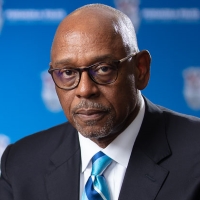 Cedric Alexander, PsyD, began his career as a police officer and detective in Florida in the 1970s and '80s. After more than a decade in law enforcement, he earned a doctorate in clinical psychology and worked as a mental health practitioner and faculty member at the University of Rochester. In 2002, he returned to policing as deputy chief of police in Rochester, New York. He later served as Rochester's police chief, deputy commissioner of the New York State division of criminal justice services, federal security director at the Dallas-Fort Worth International Airport, and director of public safety for DeKalb County, Georgia. He is also a past president of the National Organization of Black Law Enforcement Executives and was a member of President Obama's Task Force on 21st Century Policing.


