Kim Mills: Over the past few decades, the U.S. has become an increasingly less religious country. One recent Gallup poll found that since 1973, the percentage of Americans saying they have no religion has grown from 5% to 22%, while the percentage who identify with a Christian denomination dropped from 87% to 68%.
Hidden in these numbers are many stories of people who grew up with religion, but chose at some point in their lives to leave the faith they were raised with. In recent years, psychologists have become interested in understanding both the factors driving this exodus from religion and the experiences of the people who leave it.
So why is the U.S. becoming less religious? Why do people choose to leave religion and where do they go when they do? What spiritual, social and other challenges do formerly religious people face? And how can people make new meaning in their lives after leaving religion?
Welcome to Speaking of Psychology, the flagship podcast of the American Psychological Association that examines the links between psychological science and everyday life. I’m Kim Mills. My guest today is Dr. Daryl Von Tongeren, a professor of psychology at Hope College in Holland, Michigan. His research focuses on some of life’s biggest questions, including how people make meaning in life, the psychology of morality and virtue, the role of religion and why people leave religion. Dr. Van Tongeren’s research has been covered by many media outlets, including The New York Times, The Washington Post, the BBC, and The Atlantic. He’s authored more than 200 scientific publications and four books, including his newest, Done: How to Flourish After Leaving Religion, which was published by APA Books in July.
Dr. Van Tongeren, thank you for joining me today.
Daryl Van Tongeren, PhD: Thanks for having me, Kim. Happy to be here.
Mills: Let’s talk about how the religious landscape has changed in the U.S. over the past several years. I just mentioned a couple of statistics in the intro. Can you expand on them? How much less religious are Americans than we used to be?
Van Tongeren: Yeah, so some stats suggest that whereas 90% of people used to identify as religious, that’s dropped into the low sixties. Some predict that by 2070, Christianity will no longer be the majority religion in the U.S., and in fact, one in three people raised Christian will likely leave the faith by the time they turn 30. It’s an increasingly less religious landscape in the U.S. and among the religious “dones,” about three quarters of them are religious “nones,” so people who are walking away from their faith.
Mills: And when you say religious nones, that’s N-O-N-E, right? We’re not talking about N-U-N.
Van Tongeren: That’s right. That’s exactly right.
Mills: In your book, you described four main reasons that people leave religion, and you call them the four horsemen of religion’s apocalypse. Why don’t you tell us about those?
Van Tongeren: Sure. Now, these reasons why people are leaving religion is based on data and studies conducted by myself and other colleagues. So the first reason why people leave is what we call cultural stagnation. So people are becoming increasingly more progressive, but their religious institutions aren’t. So they might give intellectual reasons for leaving. They may say that they outgrew their faith. And a lot of times this shows up where ones’ personal values no longer coincide with ones’ religious institution’s values. So for example, people might leave because their church is not affirming of LGBTQ+ individuals, or their church has rather conservative or regressive views on gender or sexuality.
The second reason why people might leave is because of religious abuse or trauma. Some people have recounted personal experiences where religious leaders have abused them or they’ve experienced religious or spiritual trauma. Others know people who have experienced such horrific offenses and still others can’t quite reconcile the hypocrisy of church leaders such as the abuse scandal among Catholic clergy, and so have decided that they should leave.
A third reason why people leave is when they face adversity, their religious institutions have given them an overly thin account for suffering. So they can’t quite make sense of experiencing personal adversity. And so some religious organizations promote things like the prosperity gospel or toxic positivity, which we psychologists basically call the “just world” hypothesis. So good things happen to good people, bad things happen to bad people. If adversity happens to you, does that mean that you’re a bad person? Or does it mean that God or some supernatural agent had the power to save you but decided not to, or maybe even worse, doesn’t care about you or caused these horrible things to happen?
And then the fourth reason why people might leave is because religion is a problematic label. So some people do not want to be associated with the term religious. And in the United States, particularly since 2016, religion and evangelical in particular has carried a different meaning and connotation. So two years ago, a poll revealed that among self-identified evangelicals, 40% don’t believe in the deity of Jesus. Now, I’m not a theologian, but I’m pretty sure that’s the one unifying thing that most evangelicals would agree on, which suggests that this term has a different sociopolitical meaning, and some people don’t want to be identified or associated with it.
Mills: What about people who kind of cherry-pick the things that they want to believe about a religion? I mean, I’ve known people who have, for example, stayed in the Roman Catholic faith even though it’s anti-LGBT because they believe in other things. Is that common as well?
Van Tongeren: Yeah. So any time our beliefs and what we’re being taught don’t match up we experience cognitive dissonance, this uncomfortable feeling, and so some people are able to assimilate those things together and are able to stay. So some people can say, Well, I want to partake in this part of religion, or I believe in the community, and they disregard or kind of downplay or rationalize why they’re staying. But for other people that discrepancy or that dissonance is so great, they can’t reconcile those. And for them that means a departure. That means either no longer identifying or leaving their religious community or having a major revision in their theological beliefs.
Mills: In the U.S. is this mainly a Christian phenomenon or are people leaving Islam, Judaism, Hinduism, other religions?
Van Tongeren: We are seeing a decline across all religions, but in the U.S. it’s particularly strong in Christianity, and that’s likely because Christianity has been the majority religion in the U.S. So they’re all going down, but Christianity is experiencing this more than other religions.
Mills: And do most people who leave religion tend to come from more traditional conservative religious sects?
Van Tongeren: This is some research that we’re currently exploring right now. We’re currently examining the kind of religious history that one is raised in and whether or not that predicts if they stay or if they go and the consequences once they do. But we do think that when people are reporting to us, a lot of people have left moderately religious pasts. So we’re thinking this is across the range.
Mills: And is this a worldwide trend or is it only happening in the U.S. and maybe other westernized nations?
Van Tongeren: Yeah, so it is happening in the U.S. and other westernized nations because in other parts of the world, religion is actually growing. There are parts of Africa and Asia where religion is on the increase. And so we certainly need more cross-cultural research to quite understand what exactly is going on, what’s motivating some folks to leave and other folks to reinvest more heavily in their religious beliefs.
Mills: So what are the biggest challenges that face people when they leave their religion? Are those challenges mostly spiritual or are they secular or some combination?
Van Tongeren: I think one of the biggest challenges is that when people leave religion, religion tends to linger with them. So my colleagues and I call this religious residue. So in our research, and this is cross-cultural research, we found that after people leave, they still think and feel and act in ways that are decidedly religious. They still have aspects of the religious past that persist. So we like to think that religion is sticky. And so what this means is it might be more challenging for them to completely walk away from religion because it’s so deeply ingrained in the way they think, in the way that they act and in habits that they’ve adopted. And because they’re oftentimes surrounded by religious friends, religious family members, and so these social communities makes it hard to walk away.
But besides this religious residue, which makes it hard to walk away, I think that religious dones, as we might call them, the formerly religious, face a number of challenges. So one is—after leaving religion, life just feels a little bit less meaningful. Now, that doesn’t mean that the only way to have meaning in life is through religion, and plenty of non-religious people have very meaningful lives, but religion offers this special kind of meaning. And when people leave, their meaning does go down a bit. We also see that they have a bit of a challenge oftentimes navigating relationships, especially with people who are still religious and expect them to still be religious and don’t fully appreciate the change that they’ve experienced. And then finally, the last place where we see a little bit of challenge is crafting a new identity. So for many people for whom religion has been a central part of how they see themselves, finding a new way to conceptualize who they are, develop a strong self-concept apart from a religion, often offers a formidable challenge.
Mills: In your book, you use three terms to describe what’s happening to people who are becoming dissatisfied with their religion. You talk about religious deconstruction, religious de-identification and religious reconstruction. What does each of those terms mean?
Van Tongeren: So religious deconstruction is the process when people start questioning their beliefs, they’re struggling. They may experience some doubt. It’s basically a time in which the religion is not really a source of strength or comfort for them, but they’re really thinking deeply and wrestling with their religious beliefs. Now, they could land in two different places. So for some people when they’ve broken down, they’ve questioned, they’ve started to revise their beliefs. Some of them revise and they land squarely still in religion. So they’ve reconstructed their religious beliefs, but they’re still religious. Maybe they’ve experienced religious growth or they’ve picked a different religious tradition to identify with, or they’ve evolved some of their beliefs, but they’d still say that they’re religious. That’s religious reconstruction. But for other folks, when the deconstruction and revision process lands them outside of religion, they’ve decided that the ways that they’ve grown and changed no longer fit within traditional organized religion, then they’ve likely de-identified. And by that is they no longer identify as religious, and they’re finding new ways to organize how they think and how they feel outside of traditional religious structures.
Mills: Religion, as I understand it, grew up as an explanation for a lot of the mysterious things that happen in the world. And I’m wondering, as we have become more scientific and begun to understand more things about the way the world was formed and where we all come from, I have advances in science had some impact on people’s becoming less religious.
Van Tongeren: Absolutely. And some of the reasons that people gave us that we put into this cultural stagnation bucket were exactly what you said. I used to believe in God, but then I learned about science. So throughout time, as you’re mentioning, people would rely on God or the gods to meet needs that were outside of their control. So if they needed crops, they needed food, they needed rain, there were religious rituals or prayers or sacrifices that people could do in order to help meet those needs. But as we’ve progressed and culture has filled in some of those gaps, we don’t necessarily rely on religious rituals in the same way. So if I’m worried about food, I might not do a religious ritual to try to evoke rain for my crops, I’ll just drive to the grocery store. Or if I’m worried about being healed, I’m probably more likely to spend time researching what a good doctor would be and how to find adequate medical care and pay for my medical care as opposed to begging for supernatural intervention. So I do think that as culture has progressed and as science has taken more of a forefront in our culture and society, it’s possible that in those ways, reliance on God or gods or the supernatural agents has indeed decreased.
Mills: Is some of this the fault of religion though, for not changing with these changes in our understanding of the world?
Van Tongeren: I do think that people in religious institutions, who are comprised of people, do need to pause and ask themselves, in what ways are we stagnating and failing to meet the evolving needs of people around us? Right? In what ways are we thinking that certain beliefs, certain practices, certain actions are incredibly timeless, and in what ways do we need to update? So when I talk about this with scholars, I talk about this with church leaders who are curious, what can we do to keep people in our pews? And sometimes they have trouble realizing that much of what they do that they think is timeless is actually culturally bound. They say, Well, we can’t change anything. And they’re telling me this as their church is in a strip mall and they’ve got a coffee shop in the front and they’re projecting their music on a computer screen.
All of these things were not around a hundred years ago, but somehow we think that they’re part and parcel of what it means to be a core religious person. And so this fear of change and parsing out what’s core to a religious belief and group versus what are things that we actually need to change and advance and evolve so we can meet these demands. I do think that there’s an onus of responsibility that goes to the religious individuals and institutions to keep up with meeting some of these needs to evolve alongside the people and our culture.
Mills: You mentioned earlier that by the age of 30 that a certain percentage of people are likely to leave religion. Is there an age where it suddenly hits you that you’re done with your religion?
Van Tongeren: I do think that it’s a bit of a process. So for some people it could be a slow process. I had a friend of mine who said, I grew up religious and I was firmly at the religious table. And then I kept sliding further and further and further down. And one day I realized I just wasn’t sitting at the table anymore. And I realized, Oh, it just wasn’t for me. Other people have more dramatic exits. They really wrestle with it. They just can’t make sense of it, or tragedy happens and they just can’t square a version of a good loving, supernatural being and their experiences and they leave more abruptly.
But I do think that there are probably times that are more likely to see religious change. So maybe when people leave home and go away to college, get exposed to new and different individuals and new and different ideas, that could be a first time when they start thinking and rethinking their religious beliefs.
And then interestingly, as people have kids, especially if they’ve previously left religion, they might start reconsidering whether or not, what role religion should play in the life of their children. So they relied on religion to learn and teach morals, and now they’re no longer religious. If they want to teach their children some morals, they’re going to need to figure out, do we go back to church? But how do we go back to a religious community and keep the good, but keep out the bad? Or are we going to do this differently? And so I think there are probably pressure points where religious change is more likely, and it’s around life and developmental transitions.
Mills: But I mean, religion isn’t necessary for a person to be moral, right? I mean, there’s no research that says if you leave religion that you somehow become less moral than you were before.
Van Tongeren: Absolutely not. It’s not required at all. But for those people who were raised religious, and we see some research that suggests that many people hold a perception that people who don’t believe in God aren’t trustworthy, that they’re somehow less moral, even though, as you’re mentioning all the research suggests, it’s not necessarily true. There’s much more research that suggests religious people say that they’re more moral, but when the rubber meets the road, we’re about the same. Religious, non-religious people act about the same. So for those who are raised religious and were taught, part of why you have to be religious is to be moral, it creates another layer of deciding—do we believe that that’s true? And how do we go about teaching and passing on being an ethical, good, civil person in a way that perhaps we weren’t taught? We haven’t developed the skills yet to do.
Mills: You talk in the book about how some beliefs are harder than others to shake, especially negative beliefs like the belief in hell or the devil. Why is that?
Van Tongeren: Yeah, so this all came about—my wife is a clinician, so a mental health therapist, and she sees people undergoing religious change. And she said, among the people who have left religion, they still can’t shake this fear of hell and the devil because they’re so worried, she mentioned, that they could be wrong. The stakes are so high, a number of them fear like, Well, if I stop believing in hell and the devil and I’m wrong, I’m going to be realizing my mistake for all of eternity. So they might think.
And so she suggested, why don’t I study this? So I came to my students, I said, let’s study this. And sure enough, we found that after people left religion, they still believe in hell and the devil significantly more than people who’ve never been religious. And so we think there’s a couple reasons. So one reason why is that just in general, psychologically speaking, negative information carries more weight than positive information. We just have what’s called a negativity bias. We’re just more keyed in on that. A second reason is because of the existential ramifications. So it’s a bit like Pascal’s wager. So Pascal’s wager was like, Well, God may or may not exist, but it’s better to believe and be wrong than not believe and be wrong. And so we think because the existential stakes are so high, people might just hedge a little bit because they’re a little bit concerned, “what if I’m wrong?”
Mills: But what about the converse? Do people hang onto a belief in heaven and a deity?
Van Tongeren: Yeah. So what’s interesting about that one is it’s almost like people are afraid to let go of the fear of hell and the devil. But even though they’ve let go of this belief in heaven and God, it’s almost that they want that there’s a wishful, I wish heaven were still true. And so the converse of that is they’ve probably relinquished it, but there’s more of a longing for goodness. Life sure was easier when I held that belief, it made grief easier. It made the troubles in my life easier thinking that this wasn’t all that there is. And a lot of times there’s a lament once people come into a belief in their mind that this is all there is, because then they think, well, it took me how many years of my life to realize this, and now I’ve got a short amount left.
Mills: As people leave organized religion, where do they tend to put the energy that they had been putting there? As you’re studying this, what do you find people telling you about how they rechannel their thinking and their essence?
Van Tongeren: So for a lot of people leaving religion doesn’t mean no longer engaging or interacting with their spirituality. So we’re seeing this rise of the spiritual but not religious. And so there are different places where people might live out that spirituality. So for some, it’s in nature, so going on a hike or spending time in a beautiful area. For others, it’s the cosmos or being connected with the transcendence. So experiences of awe or feeling small. Other people really invest in other humans and other people. So through volunteering or witnessing big communal actions of social justice or doing the right thing is a sense of spirituality for many. And then for some, they find a deep sense of spirituality just by living a life of integrity and authenticity to who they are. So their sense of spirituality comes from within.
Mills: There’s a lot of talk lately about the use of psychedelics in order to commune with the universe. I’m just wondering if you’ve looked at that at all and whether that has any influence on whether people become more or less religious as they engage?
Van Tongeren: So my colleagues and I recently got a grant that we’re currently working on looking at spiritual yearning. So where are people looking for spirituality outside of traditional religion, particularly among the dones and the never have been religious folks. And a lot of what they’re telling us is they want what religion gave them. They want the supernatural experiences, they want that deep connection with the transcendent, but without religion. So everything religion gave them stripped of religion.
And we do see that people who are spiritual but not religious are much more likely to think that psychedelics are a gateway for communication from the supernatural, and so were probably more open to engaging in psychedelic experiences as a way of potentially replicating some of the supernatural aspects that religion offered without some of the baggage, so to speak, of their previous religious experiences. Now, I mention this noting that in many cultures where psychedelic use has been prominent, it has been a part of spiritual or religious or cultural traditions. And so we should be thoughtful and mindful of what it means to interact with these types of communities in a way that’s respectful, that honors the traditions and can understand how psychedelic use has been connected with religious, cultural, and spiritual traditions in the past.
Mills: You talk in the book about your own journey in this area from growing up in a religious family to questioning religion. Is that what inspired you to do this work?
Van Tongeren: I think it has to be part. So there’s the old adage that research is me-search. So yeah, I mean, I had experienced a few situations kind of growing up, just some touchstone moments that really caused me to question things that I was taught that really cast into doubt a lot of the assumptions that I had been walking through life holding that were completely unchecked. So yeah, part of my own religious struggles, my own religious questioning probably motivated me to start doing this research. I found a colleague who was willing to write a grant together with me, and we were grateful to get an opportunity to study this. And so I’ve been surprised when we initially started doing this research, we didn’t think that we were going to get very many people who identified as religious. And the more we did this, the more we realized, oh my goodness, I think we’re onto something. There’s a lot more people than we thought, and we’re grateful to be on the frontier of doing some of this work.
Mills: Now you work at a Christian college. Is that an issue for you?
Van Tongeren: Yes, right. I work at a Christian college and my religious beliefs have changed considerably. And I’m grateful to be at a place that really does encourage free inquiry, freedom of expression. It really encourages us, its faculty, to really study deeply phenomena that are going on and encourages us to explore those things.
Mills: Another area that you study is intellectual humility and the virtue of being humble. Can you tell me a little bit about that work and how does it relate to your work on religion?
Van Tongeren: Yeah, I do see them as connected. So some of my work on intellectual humility, so admitting that we don’t know everything, admitting that we are likely wrong, I’d like to say that all of us are partially wrong about everything and definitely wrong about some things. I do see them as connected because I do think that there’s a degree to which if someone’s being honest with themselves and intellectually humble with themselves, they will admit that they don’t know for certain everything, including big existential questions. And so we had actually gotten a grant to study whether or not intellectual humility would help people deal with some of these big questions in life, these big existential questions. And I thought the more intellectually humble people would do better, and I was completely wrong. It was an intellectually humbling experience. My hypotheses were completely backwards. We found that intellectually humble people did a little worse. And by worse we mean they didn’t have as high wellbeing. It made them feel more anxious, they were more distressed.
And I think part of that makes sense because when the stakes are so high about what happens after you die and what’s the meaning of life, and you say, well, I’m not quite sure, I could be wrong, or I’m believing this, but I’m open to revise if I’ve encountered sufficiently strong evidence—that can be anxiety provoking. Which suggests why we’re so strongly drawn to these sure and secure and certain ways of believing and ways of being. And so in my mind, I do see the two as being connected. Many people, I think, who have undergone religious change, have demonstrated the intellectual humility enough to say that something I really thought I would never change my mind on, I’m actually changing my mind on, because I found evidence that suggests that I should. And I think that there’s something admirable, and there’s something very kind of wise about taking that posture of humility. And so in my mind, yeah, they are connected.
Mills: On a practical level, what kind of advice do you have for listeners who may be struggling with the religion that they were raised in and feel that it no longer fits them? And what kind of questions should they be asking themselves and what kind of support should they seek?
Van Tongeren: So for people who are going through this, the first thing I want to say is you’re not alone. So that was the first thing that struck me was a lot of people are experiencing this as well. I would encourage people to move toward a place where their set of beliefs is an authentic reflection of their values and their experiences. So as they move through examining the inventory of their beliefs, consider what aspects do they want to retain, which are things that they want to discard. And for many people, this is a deeply challenging process. And so for many, especially for those who have experienced religious and spiritual abuse and trauma, finding a good therapist who has experience with religious and spiritual abuse and trauma can be incredibly valuable. I also think that as they’re moving through this, realize that it’s going to be challenging to navigate some social relationships, especially if one’s family is religious and expects you to be religious and you’re not, that creates a lot of stress, a lot of tension, and that needs to be navigated carefully.
And then the last piece of advice I would encourage folks to move toward is an identity that is not based solely on what someone isn’t, right? So an identity that goes beyond not being religious or being, I used to be religious, and that’s more of a deficit identity, but moving towards a presence identity of, well, what are you, you’re more than just that, and in what ways can you live out those values? Many people have said, this has been a challenging transition. I never thought that I’d do it. And the world is so much full of wonder and awe and curiosity on the other side of it that flourishing is possible after leaving religion. And that’s my hope in writing this book and conducting this research is to help point people toward resources and ways in which they can flourish with or without religion.
Mills: Have you found, as most people walk away, do they tend to become just agnostic or do they become outright atheists?
Van Tongeren: That’s a wide range. Some people will say, I’m absolutely certain there is no God. Other people will hold more of a stance of, Well, there might be. There might not be. I’m not really sure. And other people land more firmly in a, I still feel spiritual and I still want to have spiritual connection, but it’s certainly not in the way that I was taught, and it’s certainly not through this narrow organized religion.
Mills: And finally, what are the big questions you’re looking at now? What do you still want to know and where’s your next grant going?
Van Tongeren: Yeah, so we still want to know where are people finding meaning and engaging with existential questions outside of organized religion? How are they meeting their spiritual needs, and what types of religions are resilient to kind of religious change? And which ones are more likely to have people be unable to withstand some of these questions and more likely to cause people to leave, right? Are there certain ones that are better suited or less well suited for times of suffering and adversity when it leads to religious change?
Mills: Well, Dr. Van Tongeren, I want to thank you for joining me today. This has been very interesting.
Van Tongeren: Thank you so much for having me. This has been great.
Mills: You can find previous episodes of Speaking of Psychology on our website at speakingofpsychology.org or on Apple, Spotify, YouTube, or wherever you get your podcasts. And if you like what you’ve heard, please subscribe and leave us a review. If you have comments or ideas for future podcasts, you can email us at speakingofpsychology@apa.org. Speaking of Psychology is produced by Lea Winerman.
Thank you for listening. For the American Psychological Association, I’m Kim Mills.


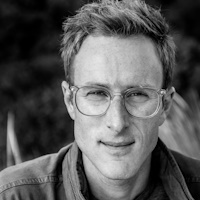 Daryl Van Tongeren, PhD, is a professor of psychology and the director of the Frost Center for Social Science Research at Hope College in Holland, Michigan. He studies the psychology of life’s big questions, including religion, values, and meaning in life. Van Tongeren has authored more than 200 scientific publications and four books, including his newest, Done: How to Flourish After Leaving Religion.