skip to main content

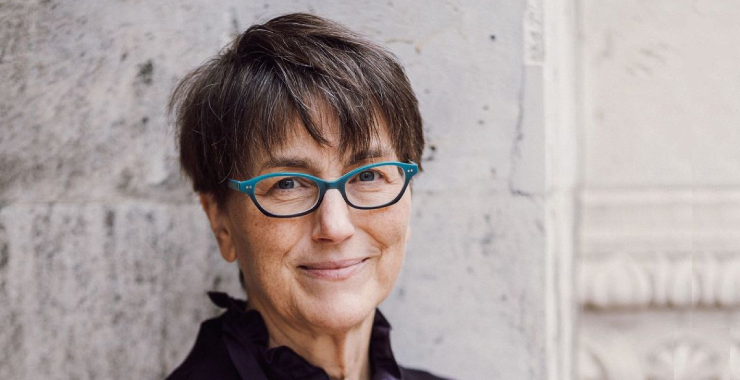
Scientist Spotlight: Q&A with Barbara Fredrickson, PhD

How can psych scientists gather high-quality, objective data in the contexts of people’s everyday lives, outside the laboratory.

APA Style leaf logo Cite This Article in APA Style
American Psychological Association. (2022, November 29). Scientist Spotlight: Q&A with Barbara Fredrickson, PhD. https://www.apa.org/news/science-spotlight/barbara-fredrickson

Barbara Fredrickson, PhD

In lay-friendly terms, what’s the big question your work is addressing?

What is everyday love? My team and I have been building the case that love (as an emotion) occurs whenever two or more people co-experience positive affect with mutual kindness and synchrony. These high-quality moments of connection are the building blocks of loving relationships, caring communities, emotional well-being, and physical health. I charted out these ideas in my 2013 book, Love 2.0opens in new window, and have been amassing evidence for them in the years since.
What scholars’ work, recent papers, or recent discoveries have recently gotten you most excited?

I get excited about new, inobtrusive methods that allow us to gather high-quality, objective data in the contexts of people’s everyday lives, outside the laboratory. Two examples are passive geotracking to index “experiential diversity” (Association between real-world experiential diversity and positive affect relates to hippocampal–striatal functional connectivity, PDF, 971KBopens in new window) and reaction time measures of conversational responsiveness (Fast response times signal social connection in conversation, PDF, 946KBopens in new window). My team and I are already adding these to our current work on positive social connections and emotional well-being.

What question do you wish more people were asking/working on in your area/sub-discipline?

We need more work that spans levels of analysis to include social-structural predictors of positive social connections. Cross-level studies stand to illuminate social injustices more fully. My team is finding, for instance, that high economic inequality in a community can undermine the emotional quality of social interactions in public spaces, especially for people with low social status.

What are you working on now?

I’m using my current sabbatical (the best perk of academic life!) to shift from examining the consequences of everyday love to examining its causes. With social divisiveness and injustices looming large, I’m especially motivated to help build the science on how best to restore connectedness, humility, and goodwill in our communities through effective and equitable micro- and macro-level interventions.

What do you wish you knew when you were first starting off as a new PhD?

That being an academic—writing and teaching—is super hard work at first and full of obstacles. Yet these feats get easier and more rewarding year by year, as you learn to add fitting degrees of precision and passion. Hanging in to humbly polish your craft can be well worth it.

Recommended Reading

You may also like