skip to main content

Scientist Spotlight: Q&A with Nancy Hill, PhD

How culture, ethnicity, and socioeconomic background shape families.

APA Style leaf logo Cite This Article in APA Style
American Psychological Association. (2022, May 26). Scientist Spotlight: Q&A with Nancy Hill, PhD. https://www.apa.org/news/science-spotlight/nancy-hill

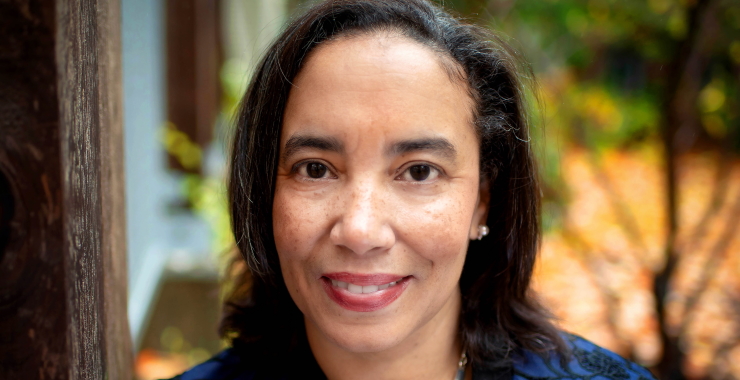
Nancy Hill, PhD

In lay-friendly terms, what’s the big question your work is addressing?

My research has always focused on parenting and families as they support adolescent development, especially the ways in which culture, ethnicity, and socioeconomic background shape the way families help their children navigate the world. As adolescents become more independent and autonomous, and parents and families move into advisory and supportive roles, my work has focused increasingly on how adolescents navigate high school and the transition from high school into adulthood. My work focuses on how youth navigate inequities in opportunity, envision a meaningful future, and these factors impact their mental health. How do youth imagine each part of their adult lives and the pathway into adulthood? Our research demonstrates that when the job market is challenging, youth struggle to find their way. This is especially true for youth from minoritized and/or lower income backgrounds. How do youth identify and hone their interests and goals and in what ways can families, schools, and communities support adolescents as they make the transition from high school to the rest of their lives?


What scholars’ work, recent papers, or recent discoveries have recently gotten you most excited?

My colleague and I just finished a comprehensive review and analysis of the extant research on coming of age, with a global lens. I was amazed at how much economic and educational opportunities, gender, and social safety nets impact the pathway to adulthood in similar ways within and across diverse nations and regions of the world. Following on this, I have been spending more time with my economist friends who have been helping me understand the economic landscape that adolescents are entering.

A key example of this type of work is Peter Blair’s work on identifying STARs (Skilled Through Alternative Routes). While some jobs require a college degree, often a college degree is used as a signal to employers for skills that may be obtained without a college degree. However, it is often difficult for young adults, without a college degree, to communicate their resumes that they have the requisites skills for jobs that pay a living wage and have opportunities for advancement.

Blair, P. Q., Castagnino, T. G., Groshen, E. L., Debory, P., August, B., Ahmed, S., Diaz, G. C., & Bonavid, C. (2020). Searching for STARs: Work experience as a job market signal for workers without bachelor’s degrees. NBER Working Paper (No. 26844). DOI: 10.3386/w26844opens in new window.

Further, whereas most research on adolescence and the transition to adulthood assumes that these are individual pathways. However, I am intrigued by Wong’s (2018) model, which shows how youth navigate the pathway to adulthood in a way that is co-constructed with others, especially a potential life partner. She describes the ways in which gender matters in how young adults compromise and co-create their adult lives. 

Wong, J. S. (2018). "Toward a Theory of Gendered Projectivity and Linked Lives in the Transition to Adulthood." Journal of Family Theory & Review, 10(1), p. 126-140. https://doi.org/10.1111/jftr.12253opens in new window

What question do you wish more people were asking/working on in your area/sub-discipline?

Most youth define adulthood as being responsible for themselves, including establishing themselves into stable jobs, finishing their education, finding a life partner (e.g., marriage), and parenthood. However, many adolescence and young adults today are delaying adulthood because they are unprepared to enter today’s economy. I wish more people were addressing how high schools and postsecondary training and college can be better linked to the needs of the job market, helping youth bridge the gap between high school and adulthood. I wish there were more research-practice partnerships and transdisciplinary work addressing these questions. There is a tendency to blame the current generation and cast them as reticent to grow up when they haven’t figured it out. I wish more research was focused on youths’ experiences and generated greater empathy for the next generation.

What are you working on now?

Right now, we are working on two related projects. First, we are conducting a series of studies on high school and college students. One is a follow up study of the college students who were the subject of our recent book: The End of Adolescence: The Lost Art of Delaying Adulthoodopens in new window (w. Alexis Redding, 2021, Harvard University Press). The book is based on insights from a lost archive of interviews with college students from the early 1970s. The experiences those students described were shockingly similar to students’ experiences today. We are conducting follow up interviews with these participants, now that 50 years have passed. We are identifying their insights on growing up, raising up the next generation of young adults, the arc of their adult years, and which experiences from early adulthood mattered most.  Relatedly, we are conducting a replication study of college students in the class of 2025 (a 50 year replication study).  Second, I am engaged in research practice partnerships on the postsecondary transitions with urban school districts, focusing on reducing inequities in the transition and guiding students in envisioning a meaningful future and understanding how society shapes how youth think about their future.

What do you wish you knew when you were first starting off as a new PhD?

There are no perfect data. I wish I knew more about the full research process and how to understand the strengths and weaknesses of data. I was often stymied by not having “perfect” data. I believed that I couldn’t publish until I had the perfect data to answer my question. I sought perfect data, which were never perfect. I wish I knew that no data are perfect and the best we can do is answer the questions we can, acknowledge that both the assets and limitations of our data, and replicate and extend the findings with different data.

Recommended Reading

You may also like