skip to main content

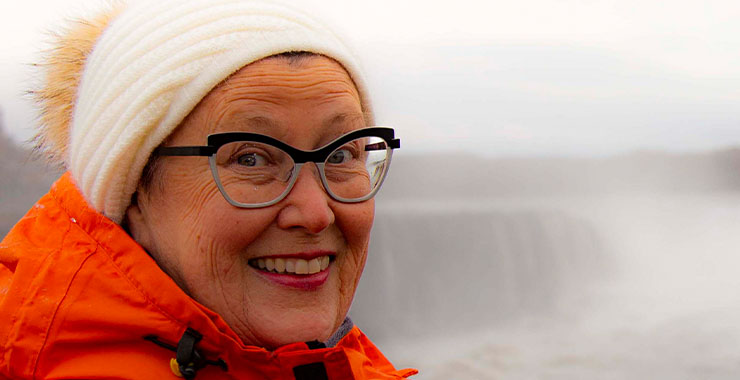
Scientist Spotlight: Q&A with Terrie Moffitt, PhD

The newly emerging field of geroscience provides plenty of opportunities for researchers.

APA Style leaf logo Cite This Article in APA Style
American Psychological Association. (2022, March 1). Scientist Spotlight: Q+A with Terrie Moffitt, PhD. https://www.apa.org/news/science-spotlight/terrie-moffitt

Terrie Moffitt, PhD

In lay-friendly terms, what’s the big question your work is designed to answer?

My research program is called “Grow up: Grow Old” because we identify cohorts of babies and follow them throughout their lives. We look at how features from the early lives of our study members predict outcomes of mental and physical health in later life. Studying connections between early life and late life is more important now because of three big societal changes. First, birth rates are dropping, leaving fewer children. Second, the number of older adults is increasing, leaving more seniors supported by fewer working-age young people. And third, lifespan has lengthened, so today’s children not only must support today’s seniors, they must also prepare for their own very long lives. More than ever before, every child must grow up to be productive, physically healthy, and mentally healthy–and sustain that for 100 years.
What scholars’ work or recent papers have recently gotten you most excited?

I’m really excited about the new field of geroscience, and excited about what psychology has to offer it. Geroscience aims to extend older adults’ years of health while compressing their years of sickness. I recommend a set of three articles about how psychology can contribute:

  • Crimmins EM. (2020) Social hallmarks of aging: Suggestions for geroscience research. Ageing Research Reviews. doi: 10.1016/j.arr.2020.101136. Epub 2020 Aug 13. PMID: 32798771; PMCID: PMC7530044.
  • Epel, E. (2020) the Geroscience Agenda:  Toxic Stress, hermetic stress, and the rate of aging. Ageing Research Reviews. https://doi.org/10.1016/j.arr.2020.101167opens in new window
  • Moffitt TE. (2020) Behavioral and Social Research to Accelerate the Geroscience Translation Agenda. Ageing Research Reviews. DOI: 10.1016/j.arr.2020.101146. PMID: 32814128; PMCID: PMC7894048.

Additionally, here are three more articles of interest: 

What question do you wish more people were asking/working on in your sub-discipline?

I wish more graduate students were interested in aging research. This year, only one student stated an interest in aging out of the hundreds of applicants to our clinical psychology training program. That’s amazing and appalling considering the aging of our population and the significant opportunities for psychologists to make a difference by studying aging.

What are you working on now?

The goal of our research is to discover why some people age earlier and faster than others–and what might be done to prevent it. Increasingly, prevention-minded scientists look to the young-adult to middle-age years as the life stage to make changes in time to delay onset of the diseases that shrink seniors’ healthy years. But because most studies of aging started well past midlife–and most studies of young adults have not measured aging–surprisingly little is known about aging during the middle years of life. We want to fill this gap.

We are studying different kinds of aging in peoples’ midlife years in each of eight different domains of life: the pace of biological aging, cognitive aging, physical-function aging, facial aging, social aging, sexual aging, inflammatory aging, and microvascular aging. Each of these eight domains is typically studied by a different scientific discipline, but we study them together to show the great variety within each person’s experience of aging.

What do you wish you knew when you were first starting off as a new PhD?

I had outstanding mentorship from many senior academics, and it’s difficult to think of anything they overlooked. But I wish I had taken more seriously the fact that every achievement comes with its own downside challenges. For example, it’s great to receive a grant for your research, but once you have one you must become a business manager and a staff manager. It’s great to do multidisciplinary research, but once you do it finding journals to publish your manuscripts can be difficult. It’s great to work with collaborators, but once you have them you must work constantly at communication and conflict negotiation. It’s great to attract graduate students, but once you get them you must mentor them. (Actually, that last challenge is fun.)

Recommended Reading

You may also like