American Indian Life Skills: A community-based intervention for indigenous mental health
2011
Child Psychology and Mental Health
Teresa D. LaFromboise, PhD
Azadeh S. Fatemi
 Preface by Teresa LaFramboise, PhD: Suicide is the second leading cause of death among American Indian/Alaska Native (AIAN) youth between 15 and 34 years of age; suicide rates among this population are nearly double the national average for this age group. These alarming rates reflect the hopelessness and despair felt by young people who are dealing with a unique context that consists of factors such as historical trauma, acculturation stress, pervasive poverty, family disruption, substance abuse and depression.
The American Indian Life Skills (AILS) is a culturally informed suicide prevention intervention designed for AIAN youth. Development of the AILS was guided by the social cognitive theory proposed by Albert Bandura (1986) and the stress-coping theory proposed by Richard Lazarus (1966). Congruent with an Indigenist stress coping theory proposed by Karina Walters and colleagues (2002), the intervention is an intensive and multi-component program consisting of social emotional development and lifestyle changing activities. The curriculum emphasizes approach coping and systematically imparts skills associated with positive thinking and effective problem solving so that, ultimately, interaction with stress can lead to resilient adaptation rather than suicidal behavior. The AILS has been found to reduce suicidal thoughts and feelings of hopelessness while increasing problem solving ability, confidence to manage anger and suicide prevention skills among AI/AN youth. To date, AILS trainings have been conducted with community members from over 100 reservations across Indian Country.
This chapter presents the unique risk factors associated with AI/AN youth suicide. We introduce the American Indian Life Skills (AILS) and discuss the theoretical underpinnings of the intervention.
The Zuni Life Skills Development Program: A School/Community Based Suicide Prevention Intervention
June 2008
Suicide and Life-Threatening Behavior
Teresa D. LaFromboise, PhD
Hayes A. Lewis, MEd
Preface by Teresa LaFramboise, PhD: The prevalence of suicidal ideation and suicidal behavior among AIAN populations, in particular among adolescents, is devastatingly high. Rates of suicide behavior are consistently higher for this group than any other ethnic minority group in the nation. In 2002, the rate of suicide among AIs between the ages of 5 and 14 years was 2.1 per 100,000 compared to a rate of 0.8 per 100,000 for all U.S. youth in that age group; the rate of suicide among AIs between the ages of 15 and 24 years was 37.4 per 100,000 compared to a rate of 11.4 per 100,000 for all U.S. youth in that age group. In 2005, suicide was the second leading cause of death among AI adolescents and young adults in the 15- to 24-year-old age group and the third leading cause of death in the 10- to 14-year-old age group. The unique socio-cultural and historical context of this population of adolescents calls for suicide prevention interventions to be culturally informed and created with in-depth involvement of the community.
This chapter discusses the development and evaluation of The Zuni Life Skills Development Program, an effective community-initiated, high-school-based suicide prevention intervention. Specific challenges associated with stabilizing and implementing the program are discussed. A more tribally diverse, culturally-informed model entitled the American Indian Life Skills (AILS) Development Curriculum is presented to illustrate a hybrid approach to the cultural tailoring of interventions. The AILS is broad enough to address concerns across diverse American Indian tribal groups yet respectful of distinctive and heterogeneous cultural beliefs and practices. Finally, we reflect upon issues in community-based research that emerged during this collaboration.


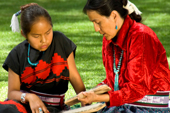 This November, the Ethnicity, Race, and Cultural Affairs Portfolio (ERCA) joins many Americans in recognizing National American Indian and Alaska Native Heritage Month. In honor of this commemorative month, ERCA is raising public awareness concerning the impact of historical trauma and acculturation stress on the mental health of American Indian and Alaska Native populations. Stress is the condition of focus for 2013's Ethnicity and Health in America Series.
 impact of enculturation and acculturation stress on AIAN adolescent mental health and well-being. For many AIAN youth, poverty, historical trauma, acculturation stress and other contextual factors foster feelings of hopelessness and despair, which, for some, can lead to an increased suicide risk. In her featured articles, LaFramboise examines risk factors associated with AIAN youth suicide and describes two community-based interventions that are designed to reduce the risks associated with suicide among this population. Prefaces by LaFramboise are provided before each article.