

Featured Psychologist
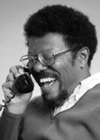 Reginald Jones, PhD, was born on Jan. 21, 1931 in Clearwater, Fla. After completing an MA in clinical psychology from Wayne State University in 1954, Jones was drafted into the U.S. Army as a clinical psychologist. Following his stint in the army, he later entered the doctoral program at Ohio State University where he graduated with a PhD in psychology, in 1959.
Jones began his academic career at Miami University in 1959 and then moved to Fisk University in 1963. He worked briefly at Indiana University and the University of California, Los Angeles before moving back to Ohio State University, where he was a professor and vice chair of the psychology department, in 1969. Later in 1969, he accepted a position at the University of California, Riverside, where he was a professor and chair of the department of education. Jones worked in this capacity for three years before he and his family moved to Africa in 1972, where he was a professor and director of the University Testing Center at Haile Sellassie I University in Addis Ababa, Ethiopia.
Returning to California in 1974, Jones joined the faculty of the University of California, Berkeley, where he held a variety of positions for the next 17 years. In addition to his role as a professor he was chair of the department of African-American studies, director of the joint PhD program in special education and faculty assistant to the vice chancellor for academic affirmative action.
Throughout his nearly 50-year career in psychology, Jones engaged in research and writing in two primary areas: research on the psychology and education of exceptional children and writing and research on issues of race and psychology. He was instrumental in the development of black psychology as an area of academic scholarship. He promoted the work of more than three decades of prominent black psychologists through anthologies and collected works. Over the course of his distinguished career, Jones produced 28 instructional videotapes in psychology; wrote over 200 papers, articles and reviews; and edited 22 books, including the widely adopted Black Psychology, New Directions in Special Education, Mainstreaming and the Minority Child, Problems and Issues in the Education of Exceptional Children, African American Children, Youth and Parenting, Black Adolescents, Black Adult Development and Aging, African American Mental Health, Advances in African American Psychology, and Handbook of Tests and Measurements for Black Populations (two volumes). He has been the associate editor of the American Journal of Mental Deficiency and editor of Mental Retardation, both journals of the American Association on Mental Retardation. His public service included appointments to President–elect Clinton's Council of Advisors to the Education Transition Team, President Richard Nixon's Task Force on Mental Health and a variety of other commissions and task forces at all levels of government.
Among Jones' many honors and awards were the Citation for Distinguished Achievement from Ohio State University, the J. E. Wallace Wallin Award from the Council for Exceptional Children, the Education Award from the American Association on Mental Retardation, the Distinguished Psychologist Award from the Association of Black Psychologists and the Berkeley Citation. In 2003, the American Psychological Association gave him its Distinguished Career Contributions to Education and Training in Psychology Award and its Lifetime Achievement Award for the Psychological Study of Ethnic Minority Issues. He was a Fellow of the American Psychological Association for more than 30 years. Jones' insightful work and his impact on the lives of those who studied with him or knew him leave a legacy that will certainly live on.
See a more extensive bioopens in new window on the Div. 45 website.
References
Henry, C., Hintzen, P., & Agee, J. (2014, September 30). In Memorium: Reginald Jones. Retrieved Jan. 5, 2015, from https://senate.universityofcalifornia.edu/inmemoriam/reginaldjones.htm