

Featured Psychologist
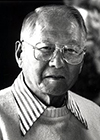 Kiyoshi Patrick Okura was born in the South Bay area of Los Angeles in 1911. He attended undergraduate and graduate school at UCLA where he received a B.A. in psychology in 1933. He was the first Asian American to receive a Master's degree in Psychology at the University of California, Los Angeles and was later granted an honorary doctorate from another supporting institution. Okura was among the 120,000 Japanese Americans who were interned during World War II and who later established a foundation for developing Asian-Pacific American leaders in the mental health field. As a result of internment, Okura (and his wife Lily) were among some 60,000 surviving Japanese Americans who in 1990 were granted $20,000 checks and a written apology from President George H.W. Bush under the 1988 Civil Liberties Act. He and his wife used the money to further their efforts to educate Asian-American mental health and human services professionals about policy development.
Okura was one of the leading Asian figures in the health field and a civil rights leader who fought for the rights of Japanese Americans. In 1962, he was president of the Japanese American Citizens League, the oldest and largest Asian-American civil rights organization.
Later in his career, Okura was offered a position as Boys Town's staff psychologist, which he held for 17 years. He then worked as a psychologist for the state of Nebraska until 1970. In 1971, he moved to the Washington area to become executive assistant to the director of the National Institutes of Health, launching programs to address social problems in minority communities. Okura and his wife Lily later co-founded the Bethesda-based Okura Mental Health Leadership Foundation in 1988 to provide leadership development for promising young professionals.
Okura was named Japanese American of the Biennium in 1978, the highest recognition given by the Japanese American Citizens League. He was honored by the emperor of Japan in 1999. In 2002, he also was inducted into the Montgomery County, Md., Human Rights Hall of Fame. Okura received the Lifetime Achievement Award presented by the American Psychological Association in 2002 and the 2005 Kun-Po Soo Award by the American Psychiatric Association Committee of Asian-American Psychiatrists. His contributions to the field of psychology and social justice will forever be felt by the Asian-American community.
References
Lamb, Y.S. (2005, February 13). K. Patrick Okura, pioneer of Asian-American civil rights, dead at 93. The Washington Post. Retrieved April 8, 2015, from https://community.seattletimes.nwsource.com/archive/?date=20050213&slug=okuraobit13
NAPAFASA History. (2014, January 1). Retrieved April 8, 2015, from https://napafasa.org/about/history/