

Featured Psychologist
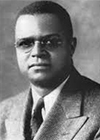 Thompson joined the faculty at Howard University in 1926. He spent the next 40 years in continuous service to the University until his retirement in 1966. His influence was felt throughout the University community. He served as associate professor, professor and chairman of the department of education, dean of the College of Liberal Arts, dean of the Graduate School, founder and editor-in-chief of The Journal of Negro Education, and director of the University's five-year self-study.
As dean of the College of Liberal Arts, Thompson instituted procedures that led to the selection of promising high school graduates through nationwide scholarship examinations. He inaugurated a freshman advisory system, improved the admissions process, studied and expanded the use of standardized tests, and helped in the development of faculty tenure policies and faculty improvement procedures.
As dean of the Graduate School, Thompson called for complete re-examination of objectives, standards of admission and scholarship, and requirements for the master's degree. Under his guidance, programs leading to the degree of Doctor of Philosophy were begun. Not only did Thompson have wide and varied experiences as a teacher, scholar and administrator at Howard, but he served on a number of national and governmental educational boards and commissions.
In addition to editing The Journal of Negro Education for 30 years, Thompson also served as an editorial consultant to The Nation's Schools (1943-1950) and to the "World Book Encyclopedia" (1942-1962). He was the author of more than one hundred important scholarly articles, research papers and editorials.
Because of his special interest and competence in the field of ethnic minority education, Thompson served as an expert educational witness in many of the major desegregation cases in the field of higher education. Particularly noteworthy was his involvement in the Sweatt case in Texas in 1946 and the Sipuel and McLaurin cases in Oklahoma in 1947. He was also a consultant in developing the legal strategies that led to the 1954 Brown v. Board of Education decision.
References
The Journal of Negro Education. (2012, September 12). Retrieved Jan. 5, 2015, from https://www.journalnegroed.org/editorchief.html