Integrative Systemic Therapy
Available formats
Also available from
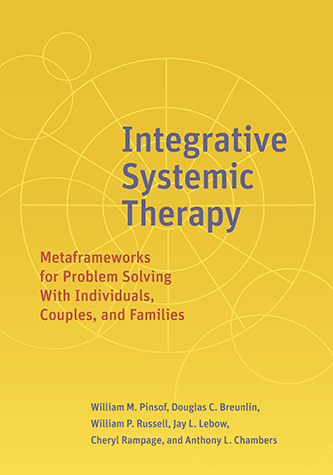
Integrative Systemic Therapy, now in paperback, offers a set of templates that enable therapists to navigate the course of therapy, as well as a treasure trove of case examples to illustrate how therapists can use the IST perspective to treat a wide variety of challenging problems.
Many psychotherapists today work in agencies where they see individuals, couples, and families from a variety of backgrounds who present with a broad range of problems. Integrative Systemic Therapy (IST) is a framework for these professionals, whether they are training in the basics of therapy or are well established in their careers. IST provides early-career therapists with a framework that guides their work and facilitates lifelong learning. It provides established therapists the opportunity to think outside the box of their established practice, using tools that facilitate more comprehensive care.
IST encourages a focused and efficient approach to problem-solving. It offers the means to continually assess the full complement of factors—psychological, biological, interactional, and cultural—that impact clients and their concerns. IST's blueprint for decision-making in therapy encourages practitioners to draw upon the valuable strategies of various theoretical models and empirically supported treatments.
Preface
- Chapter 1. How We Think and How We Work: Integrative Systemic Therapy in Action
- Chapter 2. The Foundation of Integrative Systemic Therapy: Fundamental Assumptions About People and Therapy
- Chapter 3. The Essence of Integrative Systemic Therapy: Beginning Therapy
- Chapter 4. A Blueprint for Therapy: Testing and Revising Hypotheses
- Chapter 5. The Hypothesizing Metaframeworks
- Chapter 6. What to Do, When, and Why: Planning and the Planning Metaframeworks
- Chapter 7. Conversing
- Chapter 8. Feedback
- Chapter 9. The Integrative Systemic Therapy Approach to Working With Families
- Chapter 10. The Integrative Systemic Therapy Approach to Working With Couples
- Chapter 11. The Integrative Systemic Therapy Approach to Working With Individuals
- Chapter 12. Lifelong Learning in Integrative Systemic Therapy: Beginning, Practicing, Supervising, and Continuing to Grow
William M. Pinsof, PhD, LMFT, ABPP, clinical psychologist, family therapist, and clinical professor of psychology at Northwestern University, joined the Family Institute of Chicago in 1975. Directing the Institute from 1986 until 2016, he oversaw its affiliation with Northwestern and renaming as The Family Institute at Northwestern. An advocate of psychotherapy integration, Dr. Pinsof has focused on integrating family systems thinking and practice into a general and comprehensive psychotherapy. In 2016, he founded Pinsof Family Systems, an organization that strengthens and heals complex family systems.
Douglas C. Breunlin, MSSA, LMFT, LCSW, is a clinical professor of psychology and program director for the Master of Science in Marriage and Family Therapy at The Family Institute at Northwestern University. His previous works include Metaframeworks: Transcending the Models of Family Therapy (with R. C. Schwartz and B. Mac Kune-Karrer) and The Handbook of Family Therapy Training and Supervision (coedited with H. A. Liddle and R. C. Schwartz). He has authored more than 60 articles and served on the editorial boards of four journals. Mr. Breunlin has served as secretary, treasurer, and board member of the American Family Therapy Academy and is a clinical fellow of the American Association for Marriage and Family Therapy.
William P. Russell, MSW, LCSW, LMFT, is a clinical assistant professor of psychology and core faculty director of the Master of Science in Marriage and Family Therapy at The Family Institute at Northwestern University. He has practiced, taught, and supervised systemic, integrative therapy for more than 30 years and has held leadership positions in academic and clinical programs. Mr. Russell is an approved supervisor in the American Association for Marriage and Family Therapy and a board-certified diplomate in Clinical Social Work. He has authored articles and book chapters on integrative systemic therapy.
Jay L. Lebow, PhD, ABPP, LMFT, is editor-in-chief of Family Process. He is a clinical professor of psychology and a senior therapist at The Family Institute at Northwestern and Northwestern University. He is author or editor of nine books, including the recent Couple and Family Therapy, Clinical Handbook of Couple Therapy, and Handbook of Family Therapy. He has engaged in clinical practice, supervision, and research on couple and family therapy for more than 30 years. Dr. Lebow served as president of the Society for Couple and Family Psychology and has received the Society's Family Psychologist of the Year award as well as the American Family Therapy Academy Lifetime Achievement Award.
Cheryl Rampage, PhD, serves in the role of senior academic and clinical advisor at The Family Institute at Northwestern University. She was the founding director of the Master of Science in Marriage and Family Therapy at Northwestern and was vice president of the Family Institute from 2002 until 2015. Dr. Rampage is a clinical psychologist and author of numerous articles and book chapters on intimacy and gender issues in couple therapy. She is a clinical associate professor at Northwestern and teaches a course on intimate relationships. In addition, she maintains an active clinical practice, focused on couple therapy.
Anthony L. Chambers, PhD, ABPP, is the chief academic officer of The Family Institute at Northwestern University, the director of the Center for Applied Psychological and Family Studies, and a clinical professor of psychology at Northwestern University. He is also the past president and a fellow of APA Division 43 (Society for Couple and Family Psychology). Dr. Chambers completed his PhD in clinical psychology at the University of Virginia and completed his internship at Harvard Medical School and Massachusetts General Hospital, specializing in couple therapy.
Imagine that a sextet of our brightest minds sets out to simultaneously blend and transcend the best ideas in psychotherapy: a systemic perspective, client feedback, clinical integration, outcome measurement, and cultural sensitivity. The result would be this comprehensive and practical framework that details the practice of IST. First-rate, leading-edge psychotherapy!
—John C. Norcross, PhD, ABPP, Distinguished Professor of Psychology, University of Scranton, Scranton, PA; Coeditor, APA Handbook of Clinical Psychology
The authors provide a comprehensive model of psychotherapy grounded in theory and research on the therapeutic alliance and multilevel systems functioning. In contrast to most other approaches, which distort the realities of human existence, IST encompasses the full complexity of interpersonal life and psychotherapy. It's a book worth owning and studying, rather than merely skimming, for professionals at all levels of experience.
—Robert-Jay Green, PhD, Distinguished Professor Emeritus, California School of Professional Psychology, San Francisco
This volume, written by experts in couple and family therapy at one of the world's leading training and research institutes, is an essential guide for clinicians and clinical supervisors. It intimately details one of the few evidence-based integrative approaches to treatment in providing both a clear conceptual framework as well as step-by-step clinical guidelines. It is essential for anyone engaging in couple or family therapy.
—Douglas K. Snyder, PhD, Professor of Psychology, Texas A&M University, College Station
Novice and seasoned therapists alike will find value in the IST framework. IST provides a clear yet flexible pathway for therapists to tailor treatment to meet the diverse needs of individuals, couples, and families. Rich case examples and compelling vignettes bring IST to light and help readers understand how to apply the framework in clinical practice.
—Jenna Scott, PhD, LMFT, Faculty, Florida State University; Private Practice, Tallahassee
Welcome to the clinician and practitioner resources for Integrative Systemic Therapy: Metaframeworks for Problem Solving With Individuals, Couples, and Families. These resources contains two bonus chapters to help you further explore the IST psychotherapeutic perspective. Bonus Chapter 1 takes readers through a day in the life of an IST practitioner. It illustrates the comprehensive nature of IST and the diversity of therapeutic pathways that are possible within IST. Bonus Chapter 2 shows how IST practitioners can use empirical feedback provided by clients to inform decision making. This chapter follows one client system—a couple—through their therapy journey as they provide clinical data via a measurement and feedback system that was developed in concert with IST.
These materials are offered for your personal use. If you reprint or adapt them for publication, permission is required from the copyright holder.
All materials © 2017 by American Psychological Association, except Figure B1.1, which is © 2011 by John Wiley & Sons.
- Bonus Chapter 1: Synthesizing Integrative Systemic Therapy (IST) and Making It Your Own (PDF: 115 KB)opens in new window
- Figure B1.1: The loaded integrative systemic therapy blueprint (PDF: 534 KB)opens in new window
- Bonus Chapter 2: Empirically Informing Integrative Systemic Therapy (IST) (PDF: 247 KB)opens in new window
- Figure B2.1: Initial STIC Scores for Tim and Nora on Individual Problems and Strengths (IPS) and Relationship with Partner (RWP) (PDF: 62 KB)opens in new window
- Figure B2.2: Nora’s responses on STIC Initial IPS Self-Misunderstanding Subscale (PDF: 521 KB)opens in new window
- Figure B2.3: Tim and Nora’s Alliance Change Warning for Session 10 (PDF: 518KB)opens in new window
- Figure B2.4: Tim and Nora’s twelfth session bar graphs (PDF: 553KB)opens in new window
- Figure B2.5: Big 6 feedback report data for Tim and Nora’s penultimate session (PDF: 596KB)opens in new window