

To encourage manuscript submissions representing the greatest breadth of psychological research, Cooper has appointed a diverse team of associate editors representing a broad range of disciplines in psychological science.
The American Psychologist editorial board
Editor-in-chief
Harris Cooper, PhD
 Harris Cooper is the Hugo L. Blomquist Professor Emeritus in the Department of Psychology and Neuroscience at Duke University. A former editor of Psychological Bulletin and Archives of Scientific Psychology, Cooper brings to American Psychologist research expertise in meta-analysis, research methods, and applications of social and developmental psychology to education policy, among other topics. He is the author of Ethical Choices in Research: Managing Data, Writing Reports, and Publishing Results in the Social Sciences and served as chair of the first task force that developed APA’s Journal Article Reporting Standards.
From Cooper: “Our new team of editors will do its best to maintain the standards that Anne [Kazak] and her team set. We will continue to publish articles that advance the science of psychology and break down the barriers between psychology’s researchers and practitioners. We will work to make our science more transparent in its descriptions of methods, more open to data sharing and more widely available to people regardless of where they live or their economic circumstance.”
Associate editors
Michał Bilewicz, PhD
 Michał Bilewicz is a social and political psychologist. He is an associate professor of psychology at the University of Warsaw, where he holds the UNESCO Chair on Interdisciplinary Studies of Anstisemitism and Other Forms of Group-Based Hatred. His research focuses on intergroup relations, prejudice, political ideologies, reconciliation and collective memory, with a particular emphasis on antisemitism and the legacy of the Holocaust. He has led numerous international research projects examining the psychological roots of hate speech and historical distortions. Bilewicz’s work combines experimental, survey, longitudinal, and cross-cultural methods, as well as intervention studies. Previously he served as the editor of the European Journal of Social Psychology.
Belinda Borrelli, PhD
 Belinda Borrelli clinical psychologist and professor and director of The Center for Behavioral Science Research at Boston University, Goldman School of Dental Medicine, and a visiting professor at the University of Manchester, UK. Her research focuses on motivating health behavior change across a wide variety of behaviors (e.g., smoking, vaping, oral health, treatment adherence, asthma, dietary, physical activity) and populations. She specializes in treatment development, particularly for those who are unmotivated to change, and integrating theory-based treatments into public health contexts. She has developed and tested mobile health platforms for health behavior change (mobile apps, text messaging, virtual reality).
Joshua W. Clegg, PhD
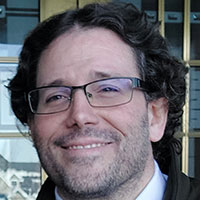 Joshua W. Clegg is professor of psychology at John Jay College of Criminal Justice, City University of New York and a member of the faculty in the critical social and personality psychology doctoral program at The Graduate Center, City University of New York. He has published widely on history, methods, epistemology, and the social and cultural practices of science in psychology. He is a former president of the Society for Theoretical and Philosophical Psychology (Division 24 of American Psychological Association).
Lillian Comas-Díaz, PhD
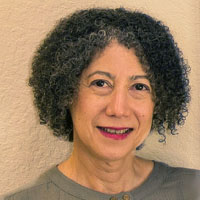 Lillian Comas-Díaz is a clinical psychologist in private practice, and a clinical professor at the George Washington University Department of Psychiatry and Behavioral Sciences. Lillian’s areas of scholarship include diversity issues in mental health, psychotherapy, multicultural psychology, trauma, PTSD, and resilience. Comas-Díaz was the first editor-in-chief of the APA Division 45 journal, Cultural Diversity and Ethnic Minority Psychology, and currently serves as a Council of Representatives member for the Society for the Advancement of Psychotherapy (APA Division 29).
Nancy Eisenberg, PhD
 Nancy Eisenberg is a developmental psychologist who studies socioemotional development, especially in childhood and adolescence. Topics she has studied include self-regulation, emotionality, and other aspects of temperament/personality (e.g., conscientiousness, agreeableness, shyness); adjustment/maladjustment; prosocial behavior, empathy-related responding, and moral reasoning, often examined in longitudinal and/or cross-national studies.
Igor Grossman, PhD
 Igor Grossmann is a professor in the Department of Psychology at the University of Waterloo in Canada. He is a social and cultural psychologist whose research focuses on wisdom, forecasting, cultural change, and the intersection of AI and society. His specific interests include wisdom and judgment, probabilistic reasoning in societies, AI-augmented cognition and alignment, and metacognitive AI agents. He employs various methodologies in his work, including computational social science methods such as natural language processing and agent-based models, as well as large-scale forecasting tournaments and longitudinal field experiments.
Nancy E. Hill, PhD
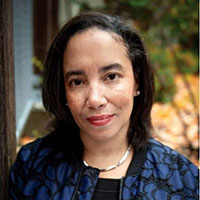 Nancy E. Hill is the Charles Bigelow Professor of Education at Harvard University. She is a developmental psychologist who focuses on adolescent development, especially demographic variations in factors that promote successful postsecondary planning and traditions. Specifically, she focuses on the role of parenting in supporting youth as they develop goals and motivation and make sense of postsecondary opportunities, across ethnicities and cultures. Her program of research utilizes a variety of methodologies including methods involving quantitative survey and administrative data, such as structural equation modeling, latent class analysis, and meta-analysis, along with qualitative methods, including open-ended interviews and focus groups. She is a former president of the Society for Research in Child Development. Read a Q&A with Nancy Hill.
Rick Hoyle, PhD
 Rick Hoyle is professor of psychology of neuroscience and director of the Center for the Study of Addictive Risk and Resilience at Duke University. He is a social psychologist with expertise in self and identity, personality processes, and quantitative methods. He was previous editor of the Journal of Social Issues and Self and Identity.
Yo Jackson, PhD, ABPP
 Yo Jackson is a board-certified clinical child psychologist in the Psychology Department at Penn State University and the associate director of the Child Maltreatment Solutions Network. She specializes in the study of the mechanisms of resilience for youth exposed to trauma, the nature and impact of intergenerational trauma, and developmental psychopathology.
Annette M. La Greca, PhD, ABPP
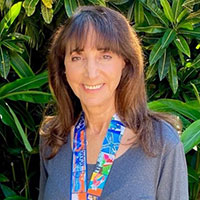 Annette M. La Greca is a board-certified clinical child psychologist and a distinguished professor of psychology and pediatrics at the University of Miami. Her areas of expertise include preventive mental health interventions, stress and coping, the impact of disasters and other traumatic stressors on youth and family physical and mental health, social anxiety in youth, and the impact of peer relations and peer victimization on youth. La Greca previously edited the Journal of Consulting and Clinical Psychology and the Journal of Pediatric Psychology.
Kristin Naragon-Gainey, PhD
 Kristin Naragon-Gainey is a clinical psychologist and associate professor at the University of Western Australia. Her research focuses on transdiagnostic processes, such as emotion regulation and mindfulness, that have implications for wellbeing, depression, and anxiety. She frequently uses ecological momentary assessment designs in conjunction with ambulatory behavioral and physiological assessments to understand these processes in real-time in people’s natural environments. She also has expertise in clinical assessment, psychometrics, and multivariate analytic approaches.
Michelle G. Newman, PhD
 Michelle G. Newman is a clinical psychologist and professor of psychology and psychiatry at The Pennsylvania State University and director of the Laboratory for the Treatment of Anxiety and Depression. She studies the nature and treatment of anxiety and depression, doing basic and applied research as well as work with digital mental health. She employs a variety of methodologies including basic experimental research, psychophysiology, momentary assessment, momentary intervention, randomized controlled trials, meta-analyses, machine learning, and network analyses. She was associate editor of Behavior Therapy from 2009–13 and editor from 2014–17. She is also currently an associate editor for Journal of Anxiety Disorders.
Eduardo Salas, PhD
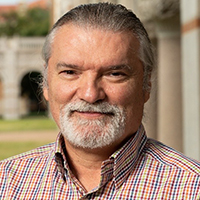 With 40 years of experience in applying psychological science to teamwork, learning and development, and safety culture in complex and dynamic environments, Salas has a proven track record and passion for developing evidence-based principles, guidance, tools and interventions to improve teamwork, learning, and safety across a wide variety of contexts such as aviation, oil and gas, military, emergency response, space exploration, and health care. Salas is a past president of the Society for Industrial/Organizational Psychology and the Human Factors and Ergonomics Society (HFES), fellow of APA, the HFES and Association for Psychological Science, and a recipient of the Meritorious Civil Service Award from the U.S. Department of the Navy as well as various awards for his applied scientific contributions.
Natalia Zarzeczna, PhD
 Natalia Zarzeczna is an assistant professor at the University of Essex, UK, specialising in social cognition. Natalia examines meaning-making processes, aiming to bridge the gap in understanding how basic cognitive processes (such as, grounded cognition, cognitive conflict, and logical reasoning) inform social beliefs, with a focus on beliefs associated with science, religion, spirituality, political ideology, conflict between these beliefs, and their consequences for science rejection. She uses diverse methodologies, including reaction-time experiments, self-report surveys, and physiological measures of arousal, and collects data from diverse samples.
Philip David Zelazo, PhD
 Philip David Zelazo is the Nancy M. and John E. Lindahl Professor at the Institute of Child Development, University of Minnesota, where he studies the development and neural correlates of reflection and executive function, as well as how to promote the healthy development of these skills in children at risk for developmental difficulties.
Sigal Zilcha-Mano, PhD
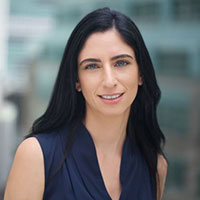 Sigal Zilcha-Mano is a professor of clinical psychology at the University of Haifa, specializing in personalized treatment approaches that focus on identifying individual-specific mechanisms of therapeutic change. Her work, grounded in the trait-like/state-like (TLSL) theoretical framework she developed, emphasizes the potential of pre-treatment trait-like dynamic characteristics of the individual’s mental health and psychopathology to guide targeted mental health interventions. Her research explores various manifestations of these mechanisms—such as digital phenotyping, neurobiological markers, and socio-psychological factors—creating a holistic understanding of individualized pathways that drive therapeutic change to advance personalized treatment approaches.
Art editors
R. Walter Heinrichs, PhD
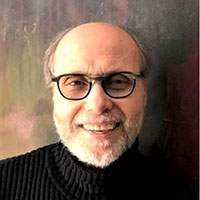 R. Walter Heinrichs is professor emeritus and senior scholar in psychology, at York University in Toronto, Canada. He studied drawing and painting at the Ontario College of Art (now the Ontario College of Art and Design University) and aesthetics and neuropsychology at the University of Toronto. His research has focused on schizophrenia and his artwork on landscape and abstraction in a variety of media.
Anne E. Kazak, PhD, ABPP
 Anne E. Kazak is enterprise director of the Center for Healthcare Delivery Science at Nemours Children’s Health System and a professor of Pediatrics at Thomas Jefferson University and at the University of Pennsylvania. She is also the co-director of the Center for Pediatric Traumatic Stress. Kazak is the immediate past editor-in-chief of American Psychologist and a prior editor of the Journal of Pediatric Psychology, Journal of Family Psychology and Health Psychology. She is also a photographer and has a Certificate in Digital Photography from the University of the Arts in Philadelphia.
More details on the journal, including how to submit a manuscript, are available on the American Psychologist homepage.
Last updated: August 2026Date created: April 2021