

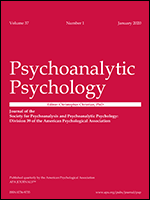

Psychoanalytic Psychology®, published quarterly by APA, aims to advance the scientific and scholarly understanding of psychoanalysis by fostering a dialogue grounded in both clinical insight, rigorous psychological inquiry, and empirical research.
A crucial resource for clinicians, academics, and researchers, the journal invites original contributions that reflect and broaden the dynamic interaction between psychoanalysis and psychology. The journal's mission is to publish high-quality work that explores the fertile ground where these two disciplines intersect. It specifically welcomes manuscripts that address:
- Issues in psychology raised by psychoanalysis: This includes the application of psychoanalytic concepts to understand psychological phenomena, developmental processes, and personality.
- Issues in psychoanalysis raised by psychology: This involves using psychological research methods, theories, and findings to test, refine, and expand upon psychoanalytic ideas.
A key feature of Psychoanalytic Psychology is its strong emphasis on empirical research. While valuing clinical and theoretical contributions, additional consideration is given to articles that use quantitative, qualitative, or mixed-methodology approaches to investigate psychoanalytic concepts. The journal welcomes rigorous empirical and scholarly investigations into:
- Clinical phenomena and psychoanalytic technique: This includes the psychological study of core concepts (e.g., transference, countertransference, defenses, interpretation, insight) and the effectiveness and mechanisms of psychoanalytically informed interventions in individual, group, and institutional settings.
- Interdisciplinary and intradisciplinary collaborations: This includes partnerships between psychoanalysis and other major fields like the humanities and sciences. We also strongly encourage work that explores the intersection of psychoanalysis with other psychology subfields, such as biopsychology, neuroscience, cognitive science, social-personality psychology, industrial-organizational psychology, and psychotherapy research.
- Developmental research: Drawing on empirical findings from infancy research and child development to inform clinical theory and psychological understanding.
- Applied psychoanalytic and psychological insights to social and cultural phenomena: Understanding complex issues such as violence, gender, ethnicity, politics, trauma, and societal conflict from a combined psychoanalytic and psychological viewpoint.
The journal publishes a wide variety of work, including original research papers, clinical papers and case studies, theoretical and conceptual articles presenting novel ideas, comprehensive literature reviews, brief reports for the rapid dissemination of new findings, and book reviews.
Disclaimer: APA and the editors of Psychoanalytic Psychology assume no responsibility for statements and opinions advanced by the authors of its articles.
Author and article recognition



Abstracting and indexing
Abstracting and indexing services providing coverage of Psychoanalytic Psychology
- Reviewer recognition via ORCID
- Translated abstracts
- Impact factor
