

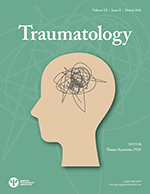

Traumatology® is a journal dedicated to better understanding the nature and risk factors for traumatic and stressful experiences, such as natural or manmade disasters, the psychological consequences of such experiences, and how people can be helped to overcome the psychological and social problems associated with them. The journal publishes high quality research that is relevant for researchers, clinicians, health professionals, and policy makers. Traumatology welcomes original and innovative papers that propose and test theoretical models, add to the extant research on psychological risk factors for, and responses to, stress and traumatic experiences such as disasters, develop and refine measurements and assessment tools, and research that informs education, treatment and prevention of trauma related problems.
Traumatology aims to publish high quality and impactful research irrespective of topic or research methodology. Each unique issue offers original articles, reviews, field reports, brief reports, commentary, and media reviews on trauma research, treatment, prevention, education, training, medical, legal, policy and theoretical concerns.
We accept the following types of submissions:
- Scientific pieces : High quality primary data research that would be relevant to the scientific community (30 pages max).
- Brief reports : Preliminary findings of primary data research (10 pages max including main text, tables/figures, and references. Reference to background literature should be kept at a maximum of 15 entries).
- Systematic reviews and meta-analyses to summarize relevant evidence in the field and identify gaps for future research (30 pages max).
- Commentaries : Individual views on the state of the science pieces that provide comprehensive summaries of current knowledge, trends, and advancements within the discipline (e.g. regional variation in epidemiology and local health care needs) (10 pages max); or a short form of communication on every topic which may be of importance to the readership or in response to a piece published by the journal (600 words and a maximum of 5 references).
- Educational pieces including essays on applications of methods and therapies for trauma workers and professionals studying and treating people exposed to highly stressful and traumatic events, such as natural disasters. This can also include methodological pieces which capitalize on the proliferation of methodologies in psychotraumatology the last few years (10 pages max).
- Debate pieces (by invitation): Two authors with opposing views discuss a topic in the field (e.g. Is CPTSD a useful diagnosis in clinical practice?) (10 pages max).
- Research prioritization pieces (by invitation only): Clinicians and policy makers identify and discuss important questions that should be answered in future research (10 pages max).
Disclaimer: APA and the editors of Traumatology assume no responsibility for statements and opinions advanced by the authors of its articles.
Author and article recognition

Abstracting and indexing
Abstracting and indexing services providing coverage of Traumatology
- Publishes reflexivity/positionality statements
- Reviewer recognition via ORCID
- Publishes impact statements
- Impact factor
