Weir, K. (2025, May 14). The implicit association test: Shining a light on hidden beliefs. https://www.apa.org/research-practice/conduct-research/hidden-association
For more than 100 years, APA’s journals, books, and databases have provided top-quality psychological research content to scholars around the world. The Breakthrough Research series revisits key papers published in APA journals that continue to shape the field decades later.
In each article, you’ll learn about the original research—its inspiration and impact—and hear from psychological scientists who are building on that foundational work today, demonstrating its enduring and evolving relevance.
The breakthrough
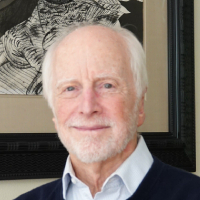
Anthony Greenwald, PhD
Around 1995, Anthony Greenwald, PhD, became the first person in the world to take a new test designed to measure automatic, unconscious beliefs about different races. The results showed Greenwald, a social psychologist at the University of Washington, held an unconscious, or implicit, preference for White faces over Black ones. On one hand, he was troubled to discover that he possessed hidden beliefs that he didn’t consciously endorse. On the other, “I was amazed because it showed me something I didn’t know was in my head,” he said.
The new test, known as the implicit association test (IAT), quickly became an important measure used across social psychology and beyond. Since its introduction in 1998, tens of millions of IATs have been completed by people around the world, leading to a treasure trove of data on implicit associations involving race, age, gender, political preferences, and much more.
“Implicit biases are clearly related to what social psychologists and others had long ago identified as attitudes and stereotypes, but are also very clearly different,” Greenwald said. He and his main collaborators thought the IAT was a good idea. “But we had no idea it would take off in the way that it did.”
Greenwald and Mahzarin Banaji, PhD, who is now at Harvard University, had laid the groundwork for studying implicit social cognition in an earlier paper that described how attitudes and stereotypes could operate beneath conscious awareness (Psychological Review, Vol. 102, No. 1, 1995opens in new window). Unhappy with the self-report measures that were prevalent in social psychology research at the time, Greenwald and his UW graduate students Debbie McGhee and Jordan Schwartz developed the IAT as an empirical measure of implicit attitudes.
A typical version of the test presents participants with stimuli (such as photos of Black or White faces) and words with positive and negative connotations (such as “exciting” or “grief”). Participants press one key with the left or right hand if presented with either a Black face or a pleasant word, and another, with the other hand, if they see either a White face or an unpleasant word. In separate blocks of trials at this task, the categories are swapped, assigning one hand to Black faces and unpleasant words and the other to White faces and pleasant words.
Using data for both reaction times and the numbers of mistakes a participant makes at each of the two task variations, the IAT reveals automatic associations and preferences (such as a tendency to more readily associate White faces with pleasant terms). People typically respond faster and make fewer mistakes to the extent that they associate the two categories that share the same key. The method can be adapted to measure any kind of association, from value-neutral (such as concepts one associates with “hot” versus “cold”) to socially consequential (such as bias related to race, gender, or sexuality).
Knowing they were onto something important, Greenwald and Banaji, along with the latter’s then-graduate student Brian Nosek, PhD, now executive director of the Center for Open Science and a professor at the University of Virginia, “decided to do everything we could to inform others of the IAT method and convince them of its value,” Greenwald said. This included publishing as much research as they could, developing demonstrations of the procedure that educators could use in psychology classrooms, and freely sharing the software they’d developed with other researchers. But the test took off when the trio made it available in 1998 at a website originally at the University of Washington, later migrating to Harvard. That website became the chief asset of the nonprofit that the three created in 2005 (Project Implicitopens in new window). Project Implicit continues to collect IAT data annually (and worldwide) from millions of visitors who can take tests measuring more than a dozen different social constructs.
The IAT has not been without its detractors, some of whom have argued that associations between IAT scores and real-world discrimination or biased behavior are weak. Yet various meta-analyses have repeatedly found support for the test’s validity. Furthermore, it is now established that statistically small effects on the IAT can be associated with large discriminatory impacts in society because of the pervasiveness of the biases they measure (Greenwald, A. G., et al., Journal of Personality and Social Psychology, Vol. 108, No. 4, 2015opens in new window).
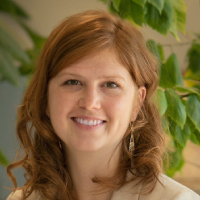
Tessa Charlesworth, PhD
The IAT is more than a measurement tool, said Tessa Charlesworth, PhD, an assistant professor of management and organizations at Northwestern University who studies how biases about social groups shift over time. “It was a measure to capture a concept—this whole idea of implicit bias,” she said. That idea has permeated popular culture and left a lasting mark on social science research. “The legacy of the IAT has been creating a new vocabulary to allow us to talk about and study these hidden, unconscious, automatic kinds of concepts,” she said.
Collecting data
Founded in 1998, Project Implicit collects IAT data from visitors who take tests measuring more than a dozen different social constructs.
After Project Implicit took off, the notion that implicit biases exist quickly entered the popular culture. It was clear the concept had entered the national discourse when, during the 2016 presidential debate, then-candidate Hillary Clinton was asked whether she believed police are implicitly biased against Black people. Around that time, diversity initiatives were gaining strength, and there was a burst of public interest in trainings meant to reduce implicit bias, with workshops promoted to reduce bias in organizations, policing, and schools. Yet there was little evidence that such trainings were effective, Greenwald said. “Unfortunately, it’s a popular misconception that such trainings can alter long-established and automatically operating biases.”
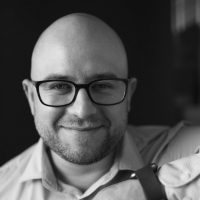
Benedek Kurdi, PhD
While some experimental interventions shift IAT scores temporarily, implicit biases tend to snap back within 24 hours. But recent research suggests that’s not the end of the story. “The message emerging is that there is malleability and flexibility in attitudes measured by the IAT, both at the individual and cultural levels,” said Benedek Kurdi, PhD, an experimental psychologist at the University of Illinois Urbana-Champaign and chair of the Project Implicit scientific advisory board.
In one line of research, Kurdi explores the basic mechanisms involved in making social judgments. The old view, he explained, was that exposure to certain associations in the environment would seal implicit biases in your mind, regardless of whether you consciously agreed with them. If you’re bombarded with cultural messages that women are more domestic and men more career-oriented, you’ll form an implicit bias associating women with family and home, even if you’re a career-focused woman yourself. “The idea is that if you’re constantly exposed to these pairings, there’s not much you can do about it. It’s like a thumbprint of the culture on your brain,” Kurdi said.
Newer research suggests there may be ways to override that cultural stamp. In a meta-analysis of 51 experimental studies, Kurdi and his colleagues showed that people’s evaluations of the messages matter (Journal of Personality and Social Psychology: Attitudes and Social Cognition, Vol. 124, No. 6, 2023opens in new window). For example, if you consciously reject as untrue the idea that women aren’t career-oriented, it can interfere with the formation of that implicit bias—at least in experimental settings.
So why can’t we just will away these automatic beliefs? The problem, Kurdi suspects, is that biased messages are everywhere. “Even if you do change a bias temporarily, you go back to an environment that reinforces it over and over again,” he said. “The big question is, how do you equip people to make these changes more enduring and more persistent? And we don’t have an answer for that.” At least, not yet. That’s one problem that Kurdi and other psychologists hope to solve.
IAT today: social shifts
Science may not yet have a solution for curing implicit bias. Yet it does reveal that beliefs can evolve. As a graduate student in Banaji’s lab at Harvard, Charlesworth looked at more than 7.1 million implicit and explicit attitude tests from IAT participants in the United States between 2007 and 2020. Over that time, implicit racial bias decreased 26%, while implicit pro-straight/anti-queer bias decreased a startling 65% (Psychological Science, Vol. 33, No. 9, 2022opens in new window). “The punchline is that implicit attitudes can change over the long term, in enduring ways,” Charlesworth said.
Those changes weren’t unique to the United States. In a forthcoming paper, Charlesworth and Kurdi found the same pattern held across 33 different countries between 2009 and 2019 (Journal of Experimental Psychology: General, advance online publication, 2025opens in new window). Yet in both studies, while race and sexuality bias declined, implicit biases related to age and body weight didn’t budge. Charlesworth suggests that structural changes like the legalization of gay marriage, along with changing social rhetoric around race and sexuality, led to changes in implicit attitudes. “People are less accepting of verbal expressions of prejudice today, and the youngest generation is more likely to be queer or gender nonconforming,” Charlesworth said. There’s been less social discourse around topics like age and body weight bias, however, and those attitudes have remained unchanged. “This tells us that these implicit measures are much more tuned in to the specific kinds of conversations we’re having only about certain topics,” she added.
Findings from the IAT literature don’t just reveal that biases are shifting. They also highlight the types of places leading the change. Urban psychologist Andrew Stier, PhD, a postdoctoral fellow at the Santa Fe Institute, studies the ways organizational structures drive social interactions, using cities as a model system. Because Project Implicit collects geographical data from participants, Stier and his colleagues were able to compare average IAT scores from the past 10 years for cities across the United States. They found cities that are more populous, more diverse, and less segregated have less implicit bias, on average (Nature Communications, Vol. 15, No. 961, 2024opens in new window). When a city starts to become less biased, they found, it takes at least 3 years before structural changes (like increased diversity or reduced segregation) will follow. When a city experiences such structural changes first, however, its average implicit bias scores begin to fall within a year. “This shows that we can take seriously the idea that people are rapidly updating their biases based on social exposure,” Stier said.
Future focus
Greenwald now resides in New Hampshire but remains active as an emeritus professor at the University of Washington and serves as an expert witness in lawsuits in which plaintiffs raise the question of implicit bias in discrimination claims. While he’s pleased with the widespread acceptance of the science of implicit bias among researchers, he says he’s disappointed that more organizations have not applied scientific understanding of implicit bias to root out biases in their hiring and promotion of employees, as well as in the ways they interact with customers and clients. “It would be good to see organizational leaders take responsibility for examining their personnel data and exposing unintended and undesired discriminatory disparities,” he said. “The main reason most leaders don’t now know about those disparities is that they haven’t looked.”
Meanwhile, his collaborators and an ever-expanding network of researchers continue to draw from the IAT to deepen our understanding of individuals, societies, and cultural change. In an era when equity, diversity, and inclusion (EDI) programs are under attack, advocates argue that the study of implicit bias is more crucial than ever. “It’s important to continue advancing our goals of social justice and increasing equity. The IAT, and this whole area of research on implicit bias, have been pivotal in creating a language we can use to have these conversations in a scientifically grounded way,” Charlesworth said.
Yet it’s too simplistic to say that the IAT is merely a tool for understanding bias. “The IAT came out of a basic scientific inquiry to understand the nature of the mind, of societies, and of cultural differences,” she added. “If we take it back to those first principles, there’s always a huge value in basic science.”
For more than 100 years, APA’s journals, books, and databases have provided top-quality psychological research content to scholars around the world. This series revisits key papers published in APA journals that continue to shape the field decades later.