Catherine Haden, PhD, is a professor of developmental psychology at Loyola University Chicago. An expert in cognition and development who studies how children learn and remember, she explores how museum-based practices that encourage families’ narratives and storytelling can promote STEM learning in children.
American Psychological Association. (2025, October 8). STEM learning opportunities within museums. https://www.apa.org/research-practice/conduct-research/science-suspended/stem-learning-opportunities

We were in the first phase of a 3-year study aimed at creating more equitable STEM educational opportunities in museums when our funding from the National Science Foundation was terminated. Our study involved a new, exciting partnership between Chicago Children’s Museum and Palenque LSNAopens in new window, a community learning center that serves families that identify as Latine. Museum programs are usually designed by a small group of people who intend to create exhibits and activities for all, but people representing diverse communities are not usually at the table making decisions.
Each year, we planned to host 12 after-school sessions with families served by Palenque. The families would help us codesign playful engineering activities for their 5-to-8-year-old children. During the summer, we would bring these activities into the Chicago Children’s Museum to support play and learning among many more families.
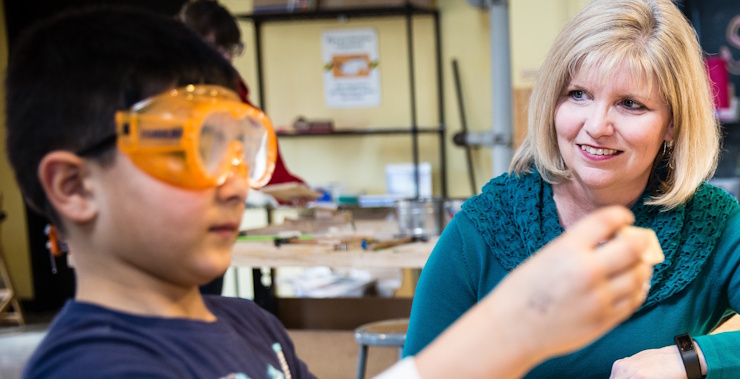
In the first year, the families in the after-school program helped us design activities around how to make puppets, like marionettes, and pinatas. We were learning which activities felt memorable, meaningful, and spoke to family practices. During the summer, we featured these activities in the museum’s Tinkering Lab, a maker space for family visitors to experience. Our research questions explored whether the codesigning process fostered interest, understanding, and a sense of belonging in STEM for all visitors at the museum. We were asking questions such as “How does bringing these activities to the museum enhance learning for all families? How are families engaging in activities, and are they engaging in engineering? Do they share their own stories about how these activities connect to their life experiences?”
Losing funding was difficult because we had developed wonderful relationships with 30 families who participated in the after-school sessions and who saw the partnership as an incredible opportunity for their children.
In the face of the sudden and consequential loss, we sought ways to carry on in a scaled-back way. The museum applied for rapid response funding that was available in response to the rash of NSF terminations. An award of $25,000 from The Spencer Foundation covered the cost of materials, signage, and some of the staff time for summer museum programming to showcase the activities the Palenque families had codesigned. But we’re unable to do two more rounds of codesigning with 60 other Palenque families over the next two years, plus summer programming at the museum, as we had planned.
Although the funding landscape is changing dramatically, we will continue to find ways to collaborate with Chicago Children’s Museum and community organizations across Chicagoland to promote children’s development and learning. Our goal is to identify and test design principles that could be useful in creating scientifically based, effective, out-of-school opportunities for informal learning throughout the United States.