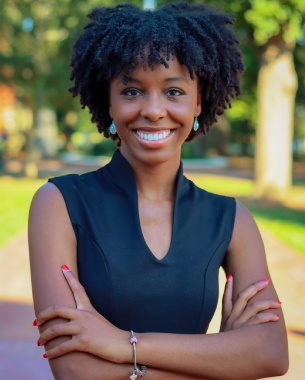
Dyamon Brown is a third-year clinical psychology PhD student at Texas A&M University in College Station, Texas. Her research centers broadly on the mental health of Black adolescents and young adults, with a specific focus on substance use, suicide, and trauma. She also works two days each week counseling incarcerated individuals.
American Psychological Association. (2025, July 17). Black youth affected by trauma exposure. https://www.apa.org/research-practice/conduct-research/science-suspended/trauma-exposure
In addition, I hoped to do research with the NIJ related to victims, perpetrators, and bystanders. As a Ronald E. McNair scholaropens in new window, I previously studied the bystander effect in sexual assault cases and noticed there was a lot of scrutiny of bystanders by the media in the 2020 George Floyd murder. People on social media were blaming people for “standing around, recording, and doing nothing” as well as blaming other officers for not intervening. This opened up broader questions about the role of bystanders and whether we are inadvertently lessening the blame of perpetrators by focusing on bystanders, or if there should be programs empowering bystanders to safely intervene in these instances. The NIJ would have been a great opportunity to re-explore this phenomenon.
I am worried that the funding cuts will continue to foster the cycle of trauma, suicide, and substance use among Black youth. There is already significant racial and ethnic inequity in this country, so I am not surprised that Black people are being overlooked again. Still, it strengthens my commitment to make meaningful contributions, even though I know it is an uphill battle to do this type of research. I currently work in a clinical setting at a detention center in College Station, Texas, where I provide therapy to adults who are waiting for trial. Many of them are Black and Hispanic men who talk about how nobody taught them about concepts such as trauma and the impact of substances on their mind and body, and they've expressed appreciation to have this opportunity to begin addressing their mental health.
I am still deciding what to do after I earn my PhD, and the NIJ assistantship would have helped me see if I enjoy working in a policy setting. I was hoping to gain experience communicating research to different audiences and translating research into policy recommendations. But now I’m more hesitant to pursue a career path in government or policy because the funding cuts have created so much uncertainty.