Weir, K. (2025, October 22). Self-efficacy: The theory at the heart of human agency. https://www.apa.org/research-practice/conduct-research/self-efficacy-human-agency
For more than 100 years, APA’s journals, books, and databases have provided top-quality psychological research content to scholars around the world. The Breakthrough Research series revisits key papers published in APA journals that continue to shape the field decades later.
In each article, you’ll learn about the original research—its inspiration and impact—and hear from psychological scientists who are building on that foundational work today, demonstrating its enduring and evolving relevance.
The breakthrough
Two equally bright first-year college students enroll in a challenging course. They both bomb their first exam. One is undeterred and commits to studying harder. The other feels defeated and essentially gives up, barely taking notes or studying for the rest of the semester. In fact, both students started the year perfectly capable of passing the class. So why are their experiences so different? Albert Bandura, PhD, would likely have pointed to their beliefs about their capabilities.
In an influential 1977 paper, Bandura, a professor of psychology at Stanford University, laid out his theory of self-efficacy—a belief in one’s capacity to execute the behaviors necessary to achieve a specific outcome. Someone with high self-efficacy believes they will pass the test, clear the hurdle, or make it to the top of the mountain. Because they believe they can, they set bigger goals, persevere through challenges, and bounce back more easily from setbacks. Someone with low self-efficacy, by contrast, will avoid tough tasks and get discouraged easily.
Self-efficacy theory has infused psychology and influenced a host of other fields, including education, public health, and sports. “Self-efficacy theory has been so influential because it’s such a useful construct to explain behavior, and it’s such a practical theory to build on,” said Robert Klassen, PhD, an educational psychologist at the University of Oxford. “Our beliefs about our capabilities are at least as important as the capabilities themselves.”
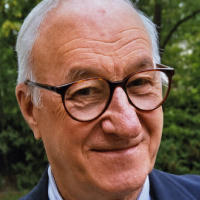
Bandura’s name is familiar to most psychology scholars. A social cognitive psychologist who spent nearly 60 years at Stanford University and served as APA president in 1974, Bandura published hundreds of papers during his career and regularly appears on lists of the world’s most influential psychologists. He rose to prominence in the 1960s for his “Bobo doll” experiments, which showed that children who observed adults acting aggressively toward an inflatable clown were more likely to hit or kick the doll when playing with it themselves. The experiment demonstrated the importance of modeling in learning and helped move the field away from a strict behaviorist lens that conceptualized learning as the simple product of reward and punishment. The Bobo doll experiments also provided a basis for Bandura’s social cognitive theory, an ambitious framework that described the ways behavior, personal factors like cognition and beliefs, and the environment interact with and influence one another. He conceived of self-efficacy as a key personal factor within that broader framework.
The son of immigrants, Bandura grew up in a remote farm community in Alberta, Canada. As he developed his theory of self-efficacy, he drew on his own journey from rural farm boy to internationally recognized giant in the field of psychology. In a 2013 interview for the Association for Psychological Science’s Inside the Psychologist’s Studio video series, recorded 8 years before his death at age 95, Bandura described his enduring belief in human potential. “In a way my psychological theory is founded on human agency, which means that people have a hand in determining the course their lives take, and in many respects my theory is really a reflection of my life path,” he said.
In the years since he published his theory of self-efficacy, researchers have amassed evidence to support it. Greater self-efficacy beliefs have been linked to academic achievement, health behavior change, sports performance, leadership behavior, resilience to stressful experiences, and enhanced well-being. Yet despite self-efficacy theory’s lasting impact, many researchers believe the construct can be improved, demonstrating how an important theory can be reassessed and evolve as science advances.
Self-efficacy today: Capability or motivation?
One area in which self-efficacy theory has made a splash is around health behaviors. In a 2016 meta-analysis, researchers explored 204 experimental studies that targeted attitudes, norms, and self-efficacy beliefs with the goal of improving health-related intentions and behaviors. The research spanned a variety of behaviors including condom use, exercise, alcohol and tobacco use, blood donation, and health screenings. Overall, the researchers found, self-efficacy had a medium-size effect on health-related behaviors. The researchers concluded that interventions that change cognitions about self-efficacy had a causal, meaningful effect on both intention and behavior (Sheeran, P., et al., Health Psychologyopens in new window, Vol. 35, No. 11, 2016).
David M. Williams, PhD
But were those experiments really measuring self-efficacy? David M. Williams, PhD, a psychologist at Brown University, has doubts that reflect broader concerns within the field.
“Self-efficacy is an extremely useful concept when it comes to understanding, predicting, and ultimately helping people change behaviors that are not in their volitional control—the behaviors that people can’t simply make the choice to do even if the stakes are high,” Williams said. He points to examples like doing well on a test or winning a bike race—you can’t choose to get a perfect score or cross the finish line first, no matter how badly you want to. In such cases where the outcome is outside one’s volitional control, greater self-efficacy often predicts better outcomes. Believing you can do it becomes something of a self-fulfilling prophecy.
But things that are within one’s volitional control, like exercising every day or quitting smoking, may not be well explained by the concept of self-efficacy, Williams has argued. In the context of health behaviors, self-efficacy is often conflated with motivation, he said. When you ask someone how confident they are that they can get a colonoscopy or quit smoking, people tend to hear it as “How confident are you that you will do it?”
Williams outlined his argument in a paper with Ryan Rhodes, PhD, who studies exercise and health promotion at the University of Victoria (Health Psychology Reviewopens in new window, Vol. 10, No. 2, 2016). One piece of evidence they cited was Williams’s finding that self-efficacy ratings are often correlated with outcome expectancies (Personality and Social Psychology Reviewopens in new window, Vol. 14, No. 4, 2010). People who are confident they can lose weight, say, might also be more likely to believe that weight loss will reduce their risk of heart disease. “But logically, my rating of my ability to do something should have no relationship with what I expect the outcome of that behavior to be. The reason they’re correlated is that if I expect positive things to occur as a result of my behavior, that will make me more likely to want to engage in that behavior,” he explained. “At the end of the day, I think our assessments of self-efficacy end up being a proxy for motivation and not really an assessment of perceived capability.”
The argument that self-efficacy is often conflated with motivation has swirled around the theory since Bandura first published it in 1978—yet the field has never fully reckoned with the idea, Williams said. One reason, he suspects, might be the common misunderstanding that lack of motivation means someone is lazy. But motivation in the scientific sense isn’t a value judgment. It’s simply an input that drives behavior. A single parent who works two jobs may say they aren’t confident that they can exercise every day. But given the right contingencies—affordable childcare, an insurance plan that pays for gym memberships—they might be sufficiently motivated to engage in physical activity. “It’s not about self-efficacy. It’s about increasing people’s motivation to be able to do it,” he said.
While it might seem like a semantic splitting of hairs, distinguishing motivation from self-efficacy has implications for intervening. That’s not to say interventions that aim to boost self-efficacy around health behaviors aren’t effective. For example, a group exercise intervention that models peer success, targeting vicarious experience, one of the sources of self-efficacy (see “Sources of self-efficacy” section below), might also increase motivation by making exercise more fun. “Interventions (targeting self-efficacy) might still be beneficial, but they could probably be tweaked in such a way that would make them even better,” Williams said.
Overall, the best results might come from interventions that boost confidence in one’s ability to become healthier and also create a context that supports their motivation to implement healthier behaviors. “There are good reasons why people struggle (to change health behaviors). Let’s figure out how to change their environment in such a way that they’re motivated to do it,” he added.
Sources of self-efficacy
Bandura described four sources that determine a person’s beliefs about their own self-efficacy:
Performance accomplishments: The positive and negative outcomes from previous experiences that influence one’s feelings of self-efficacy. Someone who has performed well at a task previously—or had a “mastery experience”—is more likely to believe they can achieve similar tasks in the future.
Vicarious experience: Seeing others accomplish a goal indicates to the observer that they, too, might achieve similar outcomes. That’s especially true if they think of the person as being similar to themselves in some way.
Verbal persuasion: Encouragement and assurances from others can help build self-efficacy beliefs, especially when coming from someone credible, like a coach or a teacher.
Emotional arousal: Feeling stressed or anxious can chip away at feelings of self-efficacy, while positive experiences—like successfully coping with stress—can boost them.
Self-efficacy today: Believing in yourself—and others
Mark Beauchamp, PhD
Separating self-efficacy from motivation is a valid concern, agrees Mark Beauchamp, PhD, a psychologist who studies sport and exercise psychology and health behavior at the University of British Columbia, who has addressed criticisms of self-efficacy (Psychology of Sport & Exerciseopens in new window, Vol. 42, 2019). “I think there’s a substantive basis for those critiques. It’s a 50-year-old theory, and as with all science, it evolves,” he said. “That doesn’t mean the whole theory is problematic, or that one needs to throw the baby out with the bathwater.”
Instead, Beauchamp said, the critiques underscore the importance of applying methodological rigor to studies of human agency. “It behooves those of us doing work in this area to make sure we are holding motivation constant or controlling for it as much as we possibly can to isolate the effects of self-efficacy,” he said. “Measurement matters.”
In his own research, Beauchamp studies an extension of self-efficacy theory first developed by psychologists Robert W. Lent, PhD, and Frederick G. Lopez, PhD (Journal of Social & Clinical Psychologyopens in new window, Vol. 21, No. 3, 2002). Their “tripartite” view of efficacy described how a person’s self-efficacy beliefs exist in a dynamic interaction with beliefs they hold about others and the beliefs those other people hold about them. In that model, an athlete’s efficacy beliefs might be influenced by their confidence in their own abilities, their confidence that their coach has what it takes to help them win, and whether they think their coach believes they can do it.
Beauchamp explored those interactions in research with his then-doctoral student Ben Jackson, PhD, now at the University of Western Australia. In a study of junior tennis partners who played doubles with a regular partner, they found that an athlete’s beliefs in their own and their partner’s capabilities predicted the athlete’s commitment to and satisfaction with the partnership (Journal of Sport and Exercise Psychologyopens in new window, Vol. 29, No. 2, 2007). In a similar study, Beauchamp and Jackson explored efficacy beliefs among youth tennis players and their coaches. They found that the athletes’ beliefs about their coaches’ abilities, in the form of “other-efficacy,” were related to the player’s commitment, satisfaction, and effort. The findings have relevance for sport psychologists, they concluded, who can help strengthen partnerships between athletes and their coaches and teammates by credibly highlighting one partner’s strengths and capabilities to the other (Applied Psychologyopens in new window, Vol. 59, No. 2, 2010).
“Humans don’t exist in a vacuum. They exist in social worlds,” Beauchamp said. “Efficacy beliefs really do matter, but it’s not just about self-efficacy. Relational efficacies matter as well.”
Self-efficacy today: The capacity to learn
Robert Klassen, PhD
The concept of self-efficacy has also had influential effects on teaching and learning, some of which were detailed in a special issue of the journal Theory Into Practice, which was dedicated to Bandura’s legacy in education (Theory Into Practiceopens in new window, Vol. 62, No. 3, 2023).
Today, education researchers continue to build on that legacy. Klassen’s work centers on increasing teacher retention and recruitment into the education workforce—an urgent goal in many countries where teachers are in short supply and enrollment in teacher education programs is declining. In an ongoing project, he and his team created a game-based intervention to boost teaching self-efficacy beliefs among undergraduates and teachers in training. Through the animated, graphic novel–style game, students put themselves into a teacher’s shoes as they interact with virtual students, parents, and colleagues in a simulated classroom setting. “They experience what it’s like to work in a school, get feedback, interact with mentors, and have the ups and downs that one would have in any job,” Klassen said.
To develop the game, Klassen and his colleagues drew closely from the four sources of self-efficacy that Bandura described in his original theory.
In the game, called TeachQuest, players make choices about how to manage classroom situations and see the impact of their various decisions (performance accomplishments). They also get feedback about their choices (verbal persuasion) and witness how other characters in the game handle similar scenarios (vicarious experience). And by turning the intervention into a game that’s fun to play, participants are more likely to have a positive emotional response (emotional arousal).
In early research, the online game increased teaching self-efficacy among preservice teachers recruited from teacher training programs in the United Kingdom and Australia, Klassen and his colleagues found (Teaching and Teacher Educationopens in new window, Vol. 154, No. 1, 2025; Computers & Educationopens in new window, Vol. 239, 2025). He’s continuing to develop the game to help draw more capable students into the education field. “A large proportion of undergraduates are uncertain about their future,” Klassen said. “We want to increase their self-efficacy and confidence so they feel they have the capability to succeed as a teacher if that might be a desired goal for them.”
Future focus
With tens of thousands of citations, there’s little doubt that Bandura’s theory of self-efficacy has left its mark. But as the theory approaches its 50-year anniversary and moves into its next chapter, there’s more work to be done.
One area in need of attention may be in improving the measurement of the construct, as Williams and Beauchamp have encouraged. Another may be in revisiting whether there are more than the four sources of self-efficacy Bandura described. George Mason University psychologist James Maddux, PhD, for example, described a fifth source: imagined experiences, in which people visualize themselves succeeding (Maddux, J. E., & Kleiman, E. M., Self-efficacy: The power of believing you canopens in new window, in Snyder, C. R., et al. (eds.), The Oxford Handbook of Positive Psychology (3rd ed.), Oxford University Press, 2021). That concept underlies the common practice of guided imagery in domains like sport psychology.
“There are probably other sources that aren’t accounted for in Bandura’s theory,” Klassen said. “We should challenge the idea that there are only four sources and continue to look for alternatives.”
Researchers should also push past the Western industrialized lens through which self-efficacy (and so many other psychological theories) was conceived, said Klassen, who reviewed some of the cross-cultural research on self-efficacy in his earlier work. In one analysis, he found self-efficacy beliefs tended to be lower for non-Western cultural groups. But he also found hints that for some non-Western groups, collective efficacy—which focuses less on one’s individual beliefs and more on the beliefs of those around them—may be more important than self-efficacy (International Journal of Psychologyopens in new window, Vol. 39, No. 3, 2004).
Bandura touched on the idea of collective efficacy, but neither he nor his followers has taken a deep dive into the concept, Klassen said. Yet collective efficacy isn’t only relevant in non-Western cultures. Being part of a whole is important in many contexts. In education, collective efficacy might focus on what a classroom or a school might accomplish together. In sports and in workplaces, it’s about a shared team mentality. “You can bring it up all the way to the national level: Countries have a sense of collective efficacy, too,” he added. In the current era of political division, that national collective efficacy may be harder to spot, at least in the United States. But if collective efficacy works as self-efficacy does, finding ways to support it could help us persevere together toward a better future.
For more than 100 years, APA’s journals, books, and databases have provided top-quality psychological research content to scholars around the world. This series revisits key papers published in APA journals that continue to shape the field decades later.