


The American Psychological Association is pleased to announce the recipients of the 2020 APA Distinguished Scientific Awards, which are among the highest honors for scientific achievement by psychologists.
American Psychological Association. (2020, June 1). 2020 APA Distinguished Scientific Awards. https://www.apa.org/news/apa/2020/distinguished-scientific-awards
Award for Distinguished Scientific Contributions
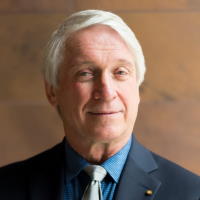 Stephen P. Hinshaw
University of California, Berkeley
Citation:
For seminal contributions to understanding and treating attention-deficit/hyperactivity disorder (ADHD) and to overcoming the stigma of mental illness. Stephen P. Hinshaw has produced insights into the nature and life course of ADHD, particularly in girls, in work that encompasses the roles of biological, family, and peer factors and the relation of ADHD to other disorders. He has been a leader in conducting sophisticated clinical trials of treatments for ADHD, notably the Multimodal Treatment Study, that have examined a broad range of outcomes and identified mediating factors. Moreover, he has scientifically assessed the nature and impacts of mental illness stigma and efforts to reduce stigma, as well as educated the public about stigma through eloquent writing and speaking.
 Elissa L. Newport
Georgetown University Medical Center
Citation:
For seminal contributions to our understanding of the role of early experience in acquiring the stable use of linguistic rules. Elissa L. Newport’s multiple, influential lines of research include the innovative “less is more” theory about superior learning in children compared with adults, insightful studies of learning novel grammatical systems in the laboratory as a complement to studies of natural language acquisition, demonstration of the powerful role of statistical information in learning about words and their assignments to grammatical categories, and studies of the remarkable plasticity of the developing brain to acquire language despite injury.
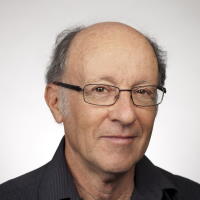 Lynn Nadel
University of Arizona
Citation:
For outstanding contribution, with John O’Keefe, in developing a framework that linked the discovery of neurons that encode spatial location with a computational theory, a foundational advance in the field of cognitive neuroscience. As described in their influential 1978 book, "The Hippocampus as a Cognitive Map," they showed how neurons within the hippocampus fire when an animal is in a particular place and can be used to map and navigate the world. Building upon this work, Lynn Nadel has shown how hippocampal dysfunction contributes to memory deficits in Down syndrome and in response to stress.
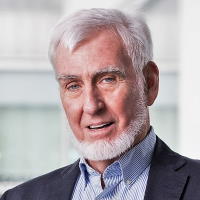 John O’Keefe
University College London
Citation:
For outstanding contribution, with Lynn Nadel, in developing a framework that linked the discovery of neurons that encode spatial location with a computational theory, a foundational advance in the field of cognitive neuroscience. As described in their influential 1978 book, "The Hippocampus as a Cognitive Map," they showed how neurons within the hippocampus fire when an animal is in a particular place and can be used to map and navigate the world. Over the ensuing years, John O’Keefe’s research has further elucidated how the brain represents spatial relations.
Award for Distinguished Scientific Applications of Psychology
 Steven D. Hollon
Vanderbilt University
Citation:
For outstanding research on the treatment of depression, including the analysis of mechanisms and moderators of therapeutic change, and for promoting the dissemination and implementation of evidence-based treatments across different cultures and countries. Steven D. Hollon is renowned for sharing his wisdom in research collaborations with psychologists and other mental health professionals in the United States and throughout the world. His work is characterized by a balanced approach to the interplay between psychological science and the clinical practice of evidence-based treatment.
Awards for Distinguished Scientific Early Career Contributions to Psychology
 Timothy F. Brady (Cognition and human learning)
University of California, San Diego
Citation:
For outstanding research on the relationship between perception and memory. Timothy F. Brady's work relies on creative psychophysics experimentation and advanced computational modeling of learning to reveal the fidelity of memory systems, particularly in situations at the scale of real-world experiences. His work has revealed important continuities between working memory and long-term memory systems, including the formation of structured representations, decay of object features, limits on fidelity, and the importance of psychological similarity and scaling in modeling of storage and capacity. He has led the way in pursuing modern views of how perception relates to memory with elegant and powerful theoretical frameworks.
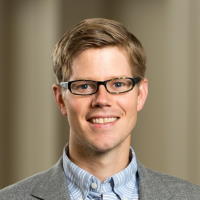 Ben Dantzer (Animal learning and behavior, comparative)
University of Michigan
Citation:
For seminal contributions to our understanding of both proximate and ultimate causes of animal behavior in natural environments, particularly the evolutionary and physiological mechanisms that enable wild animals to cope with environmental change. Ben Dantzer’s research has led to important new insights into the consequences of physiological stress for pace of development, for maternal behavior, and for social/cooperative behavior. His work showed that, contrary to popular belief, organisms that experience stress in the wild typically experience increased, rather than decreased, fitness. His research is already having a profound impact and has helped to establish the relatively new field of evolutionary endocrinology.
 Katherine B. Ehrlich (Health psychology)
University of Georgia
Citation:
For outstanding research that elucidates how children's social relationships affect their physical health. Katherine B. Ehrlich’s innovative research brings together insights from multiple sub-areas of psychology, including health, developmental, and social, to address questions of great importance for public health and human development. Her studies are characterized by sophisticated theory, rigorous methodology, and impressive creativity. Her theoretical and empirical work is already leaving a substantial mark on the field and paving the way for an integrative biosocial science of human development.
 Luke W. Hyde (Psychopathology)
University of Michigan
Citation:
For outstanding contributions to developmental psychopathology in particular and clinical and developmental psychology broadly. Luke W. Hyde’s programmatic and novel empirical work has changed how we view the development of antisocial behavior and callous-unemotional traits. His research also highlights how familial and neighborhood factors may sculpt brain development and increase risk for psychopathology. His theoretical work has drawn on many areas of psychology and other disciplines to lay out novel directions for understanding the roles that genes, context, and the brain play in the development of risk and resilience.
 Nazbanou Nozari (Cognition and human learning)
Carnegie Mellon University
Citation:
For outstanding contributions to the cognitive and neural bases of language production. By carrying out incisive experimental studies of impaired and unimpaired speakers and developing computational models of the production process, Nazbanou Nozari discovered how errors in production are detected and corrected. More generally, her work provides a fresh look at how attention and control modulate language use and demonstrates the applicability of domain-general computational principles of cognition to the activities of speaking, writing, and typing.
 Michael T. Treadway (Psychopathology)
Emory University
Citation:
For innovative research on decision making about expending effort and its role in motivational deficits in psychopathology. Building on insights from animal paradigms, Michael T. Treadway has leveraged a combination of neuroimaging, pharmacological and behavioral economic techniques to reveal the neural and computational underpinnings of individual differences in the sensitivity to effort requirements when pursuing potential rewards. This work, conducted in both healthy and clinical populations, has led to critical insights into the nature of alterations in reward and motivational processes in affective disorders and other forms of pathology.
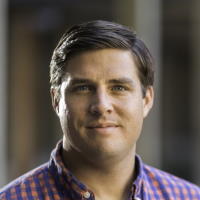 David S. Yeager (Developmental psychology)
University of Texas at Austin
Citation:
For outstanding contributions to understanding adolescent development and enhancing adolescents’ well-being. Based on analyses of adolescents’ motivations, environments, and behaviors, David S. Yeager has designed and demonstrated the effectiveness of brief interventions for changing trajectories of aggression, depression, stress, and achievement, often on a large scale. His work, which draws from multiple areas of psychology, demonstrates deep theoretical, methodological, and statistical sophistication.
Background on the awards
The Award for Distinguished Scientific Contributions recognizes senior scientists for distinguished theoretical or empirical contributions to basic research in psychology. This award, which was first made in 1956, is typically given to three scientists (or pairs of collaborating scientists) each year.
The Award for Distinguished Scientific Applications of Psychology recognizes psychologists who have made distinguished theoretical or empirical advances in psychology leading to the understanding or amelioration of important practical problems. This award, which was first made in 1973, is typically given to one scientist each year.
The Award for Distinguished Scientific Early Career Contributions to Psychology recognizes excellent psychologists who are at early stages of their research careers (up to 10 years after receiving their doctorates). The award, which was first made in 1974, is currently given to scientists in five specific research areas each year. A total of ten research areas are considered, with each area covered in alternating years.
The Committee on Scientific Awards, which is overseen by the APA Board of Scientific Affairs and staffed by the APA Science Directorate, selects the recipients of these awards on the basis of nominations submitted by a wide range of scientists and institutions. Reviewers with expertise in particular areas of research provide further advice to the committee.
Further information about the recipients' backgrounds and research will appear in the December awards issue of American Psychologist®.