skip to main content
Science Brief

Religious and spiritual struggles

Research is shedding new light on an overlooked but important human experience.

APA Style leaf logo Cite This Article in APA Style
Pargament, K. I., & Exline, J. J. (2020, November 1). Religious and spiritual struggles. https://www.apa.org/topics/belief-systems-religion/spiritual-struggles

Lady meditating on a dock

Kenneth I. Pargament, PhD, is a professor emeritus of psychology at Bowling Green State University. He has published extensively on religion, spirituality, and health, and is the author of “The Psychology of Religion and Coping: Theory, Research, Practice” (1997); “Spiritually Integrated Psychotherapy: Understanding and Addressing the Sacred” (2007); and, with Julie J. Exline, the forthcoming “Shaken to the Core: Spiritual Struggles in Research and Clinical Practice.” Pargament was editor-in-chief of the two-volume “APA Handbook of Psychology, Religion, and Spirituality” (2013). He was distinguished scholar at the Institute for Spirituality and Health at the Texas Medical Center in 2011-13, received an honorary doctor of letters from Pepperdine University in 2013, and received the first Outstanding Contribution to the Applied Psychology of Religion and Spirituality Award from the Society for the Psychology of Religion and Spirituality (APA Div. 36) in 2017. Author websiteopens in new window.


Julie J. Exline, PhD, is a professor in the Department of Psychological Sciences at Case Western Reserve University. Her research centers primarily on the interface of clinical, social, and personality psychology, with a special focus on topics involving spirituality, religion, and existential concerns. She has served as principal investigator on two projects funded by the John Templeton Foundation: one on religious/spiritual struggles and another on supernatural attributions. She is a licensed clinical psychologist in Ohio and has been certified as a spiritual director through the Ignatian Spirituality Institute at John Carroll University. She is also a past president of the Society for the Psychology of Religion and Spirituality (APA Div. 36). Author websiteopens in new window.


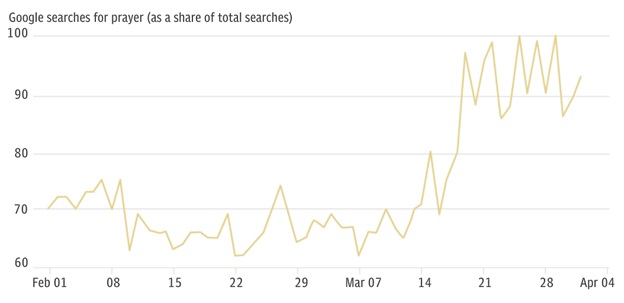
Religion and spirituality are important resources to many people. Hundreds of studies have shown significant links between health and various facets of religion/spirituality—from prayer and meditation to participation in rituals and religious services (e.g., Koenig, King, and Carlson, 2012). Religion/spirituality are also commonly called upon in times of crisis, as evidenced most recently by the COVID-19 pandemic. From February to March 2020, the period when cases of COVID-19 dramatically surged, Google searches for the term “prayer” increased 50% in 95 countries across the globe (Bentzen, 2020; see Figure 1).


Figure 1: Source: Pandemic prompts surge in interest in prayer, Google data showopens in new window. The Telegraph (May 22, 2020).


It is also true, however, that religion/spirituality can be a source of stress and strain at times, including times of upheaval. Major life crises can affect people not only psychologically, socially, and physically but spiritually as well by raising profoundly unsettling questions: How can God allow such pain and suffering? Am I being punished? Do I still believe in God? How can I live up to my spiritual values? Has my religious community abandoned me? Does my life have a deeper ultimate purpose and meaning? Questions such as these are signs of religious/spiritual struggle. 

In the last 25 years, religious/spiritual struggles have begun to receive attention from researchers and practitioners. This growing body of work indicates that religious/spiritual struggles are an important part of human experience, one that holds significant implications for health and well-being. This paper briefly highlights some of this new knowledge (for an extensive review, see Pargament and Exline, in press).

There are many types of religious/spiritual struggles

Religious/spiritual struggles are defined as tensions, strains, and conflicts in relation to what people hold sacred (Exline, 2013; Pargament, Murray-Swank, Magyar, and Ano, 2005). Conceptually, religious/spiritual struggles can be grouped into three general categories: supernatural struggles involving perceptions of deities or demonic/evil forces; intrapsychic struggles that reflect strains and tensions about religious/spiritual beliefs, moral issues, and ultimate meaning; and interpersonal struggles that involve conflicts with other people about religious/spiritual issues. In support of this general conceptual framework, a factor analytic study by Exline, Pargament, Grubbs, and Yali (2014) identified six types of religious/spiritual struggles, as shown in Table 1. These types of religious/spiritual struggles are moderately intercorrelated, suggesting that people who experience one type of struggle are more likely to experience others. In fact, researchers have also identified a general religious/spiritual struggles factor (Stauner et al., 2016).

Divine struggles Anger or disappointment with God, and feeling punished, abandoned, or unloved by God.

Sample item: Felt angry at God.
Demonic struggles Worries that problems are caused by the devil or evil spirits, and feelings of being attacked or tormented by the devil.

Sample item: Felt attacked by the devil or by evil spirits.
Doubt-related struggles Feeling confused about religious/spiritual beliefs, and feeling troubled by doubts or questions about religious/spiritual.

Sample item: Felt troubled by doubts or questions about religion/spirituality.
Moral struggles Tensions and guilt about not living up to one’s higher standards and wrestling with attempts to follow moral principles.

Sample item: Felt guilt for not living up to my moral standards.
Struggles of ultimate meaning Concerns that life may not really matter, and questions about whether one’s own life has deeper meaning.

Sample item: Questioned whether my life will really make any difference in the world.
Interpersonal struggles Conflicts with other people and institutions about sacred issues, anger at organized religion, and feeling hurt, mistreated or offended by others in relation to religion/spirituality.

Sample item: Felt as though others were looking down on me because of my religious/spiritual beliefs.

Table 1: Six Sub-Types of Religious/Spiritual Struggles and Illustrative Items from the Religious and Spiritual Struggles (RSS) Scale. (Exline et al., 2014)

Religious/spiritual struggles are not unusual

Religious/spiritual struggles are an important part of the life stories of many people, past and present. These struggles loom large in the narratives of the world’s religious exemplars—from Job’s questioning why the righteous suffer (Job 9: 22-24) to Jesus’s final anguished plea and expression of abandonment on the cross: “My God, my God, why hast thou forsaken me?” (Matthew 27:46) to the great moral temptations Siddhartha Gautama faced before he became the Buddha (Smith, 1958) to the Dalai Lama’s resistance to the efforts of the Chinese regime to stifle Buddhist thought and expression in Tibet. Religious/spiritual struggles can also be found in the biographies of notable scientific and literary figures: Galileo, Leo Tolstoy, Charles Darwin, and Virginia Woolfe, to name a few.

Large-scale national surveys indicate that approximately 33% of participants reported experiencing a religious/spiritual struggle within the last few months (Wilt, Grubbs, Pargament, and Exline, 2016). Moreover, religious/spiritual struggles are reported by people of diverse age, gender, ethnicity, religious affiliation, and socioeconomic status (Abu Raiya, Pargament, Krause, and Ironson, 2015). Even atheists describe some religious/spiritual struggles, albeit at lower levels than their theistic counterparts (Sedlar et al., 2018). Religious/spiritual struggles are also commonplace in counseling and mental health centers. Among people being treated for a mood disorder, about 50% reported religious/spiritual struggles (Murphy, Fitchett, and Emery-Tiburcio, 2016; Rosmarin, Malloy, and Forester, 2014). Johnson and Hayes (2003) found that one-third of college students in campus counseling centers reported religious/spiritual struggles. Yet, even though religious/spiritual struggles are widespread, many people may be reluctant to admit or talk about such struggles because they might see such struggles as morally wrong (Exline, Kaplan, and Grubbs, 2012) or fear judgmental or shaming responses from others (Exline and Grubbs, 2011).

Religious/spiritual struggles grow out of personal, social, and situational forces

Lacking a strong sense of purpose and significance in life has been linked with higher levels of religious/spiritual struggle (King et al., 2017). For example, Grubbs et al. (2017) conducted a one-year longitudinal study of samples of college students and adult web users. Those who reported greater perceived addiction to Internet pornography were more likely to develop religious/spiritual struggles over the course of the year, after controlling for other variables, including baseline struggle levels. Religious/spiritual struggles are also more common among members of socially marginalized groups, including individuals identifying as non-White, LGBTQ , and lower in socioeconomic status (Exline et al., 2014). In addition, major life stressors increase the likelihood of religious/spiritual struggles. In a study of Muslim war refugees from Kosovo and Bosnia, those who encountered more war-related trauma reported more religious/spiritual struggles (Ai, Tice, Huang, and Ishisaka, 2005). 

Personal, social, and situational factors operate in a dynamic interactive manner in generating religious/spiritual struggles. For example, life crises are especially likely to trigger religious/spiritual struggles when they touch on personal vulnerabilities. Working with a nationally representative sample, Trevino, Pargament, Krause, Ironson, and Hill (2017) found that increases in exposure to major life stressors were particularly predictive of religious/spiritual struggles among individuals with higher levels of trait anger, death anxiety, social isolation, and smoking.

Religious/spiritual struggles are robustly tied to distress

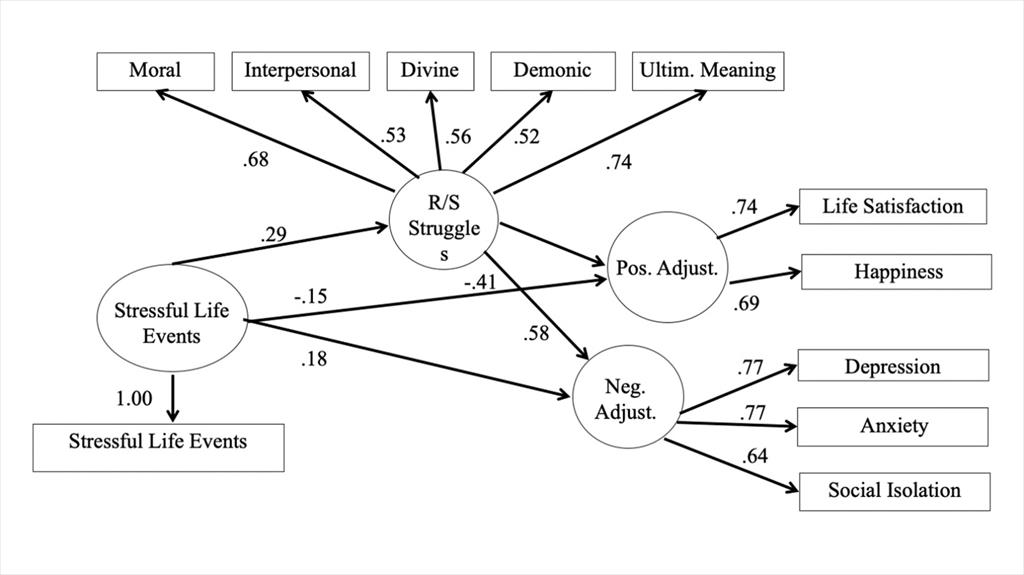
Religious/spiritual struggles have been consistently associated with mental health status across diverse groups and contexts. In a national sample, higher levels of religious/spiritual struggle were tied to many indicators of psychopathology, including anxiety, depression, paranoid ideation, obsessive-compulsiveness, and somatization (McConnell, Pargament, Ellison, and Flannelly, 2006). Another study, this one of veterans from the Iraq and/or Afghanistan wars (Currier, Smith, and Kuhlman, 2017), revealed that high levels of religious/spiritual struggles were strongly tied to greater suicidality. For every one point increase on the religious/spiritual struggles subscale of the Brief RCOPE (Pargament, Feuille, and Burdzy, 2011), the veterans were 1.44 times more likely to have discussed a plan to commit suicide with a desire to die, and 1.51 times more likely to attempt suicide in the future. Still other notable research suggests that stress and trauma may exert at least part of their effects on mental health problems, such as PTSD, through religious/spiritual struggles (Pomerleau et al., 2019; Wortmann, Park, and Edmondson, 2011). Working with a nationally representative sample, Pomerleau et al. (2019) found that religious/spiritual struggles partially mediated the relationship between the accumulation of  major life stressors and higher levels of depression, anxiety, and social isolation, and lower levels of life satisfaction and happiness (see Figure 2).


Figure 2: Religious/spiritual struggle as a mediator of the link between stressful life events and adjustment. (from Pomerleau et al., 2019)


Much of the research on this topic has been correlational in nature and, as a result, leaves open the question of the causal connections between religious/spiritual struggles and mental health. Pargament and Lomax (2013) distinguished among three causal models: religious/spiritual struggles as a source of psychological problems (primary struggles), religious/spiritual struggles as a result of psychological problems (secondary struggles), or religious/spiritual struggles as both a cause and effect of psychological problems (complex struggles). The answer to the question of whether religious/spiritual struggles are a cause and/or effect of mental health problems has important implications for mental health treatment. For example, if religious/spiritual struggles are a primary source of mental health problems, then treating the psychological concerns without attention to religious/spiritual struggles may not be effective.

Several studies have begun to investigate these models. A number of investigations have shown support for a primary model of struggles (see meta-analysis by Bockrath et al., in press). Several longitudinal studies have shown that baseline levels of religious/spiritual struggles are predictive of increases in psychiatric symptomatology over time, including symptoms of PTSD among military veterans (Currier, Holland, and Drescher, 2015) and symptoms of depression among Orthodox Jews (Pirutinsky, Rosmarin, Pargament, and Midlarsky, 2011). In one study of medically ill hospitalized elderly patients, religious/spiritual struggles at baseline increased the risk of mortality over the next two years, after controlling for initial psychological and medical status (Pargament, Koenig, Tarakeshwar, and Hahn, 2001). However, some support for a secondary model of struggles has also emerged. For example, in a six-month follow-up study of African Americans who had lost a loved one to homicide, those who experienced more complicated grief manifested increases in religious/spiritual struggles over time (Neimeyer and Burke, 2011). Another national study of college students reported that feelings of being overwhelmed and depressed as freshmen predicted greater religious/spiritual struggles in their junior year (Bryant and Astin, 2008). Although research on this topic is still emerging, the findings suggest that religious/spiritual struggles have the potential to act as both a cause and an effect of psychological problems.

But can religious/spiritual struggles lead to growth?

Robust as the relationships are between religious/spiritual struggles and psychological distress and decline, we should be careful about equating religious/spiritual struggles with psychopathology. The process of wrestling with challenging questions and dilemmas, although it may be distressing and disorienting, has been viewed by theorists from Piaget to Erikson as a precursor to growth. Theologian James Fowler (1981) has made a similar argument about the importance of spiritual conflicts in promoting faith development.

Indeed, many religious/spiritual struggles of the central figures from the world’s religions can be likened to “hero’s journeys” (cf., Campbell, 2008) in which they were called to leave their ordinary existence, found themselves tested by external or internal forces, and returned home victorious, transformed into world redeemers. 

Modern-day narrative accounts also describe growth and transformation through the process of religious/spiritual struggle. One woman with AIDS spoke about the profound changes she experienced through her religious/spiritual struggles: “I value life more now. I value moments and memories, and what is good about life. Things, material things don't mean anything anymore. Never, never before did I notice the sky like I notice the sky now. . . I savor a sunset . . . Life is different now. You see things more clearly” (Siegel and Schrimshaw, 2000, p. 1549). In one survey study of college students undergoing religious/spiritual struggles, when asked to indicate whether they had grown and/or declined through their struggles, almost half reported that they had grown and not declined and only 3% felt that they had declined and not grown (Desai and Pargament, 2015).  

However, correlational studies of the relationship between religious/spiritual struggles and self-reported growth have reported mixed findings. Some research has shown a positive link between struggles and growth. For example, in a study of breast cancer patients before they were diagnosed and 24-months post-surgery, Gall, Charbonneau, and Florack (2011) found that higher levels of spiritual discontent prior to the diagnosis predicted greater posttraumatic growth two years later. Other studies, however, have shown null or negative relationships between religious/spiritual struggles and growth (e.g., Wilt et al., 2019). Adding further complexity to the picture are studies that show religious/spiritual struggles tied to indicators of both growth and decline (e.g., Meisenhelder and Marcum, 2004). On this note, 29% of college students struggling with their religion/spirituality reported both growth and decline (Desai and Pargament, 2015), reflecting the possibility that religious/spiritual struggles lead to both pain and gain for a significant number of people.

Taken as a whole, these findings suggest that growth following religious/spiritual struggles is not inevitable. Rather, whether religious/spiritual struggles lead to growth or decline may depend on moderating variables. A few studies have begun to identify some of the factors that may foster growth and reduce distress among those who experience religious/spiritual struggles. These include an accepting attitude toward religious/spiritual struggles (Dworsky, Pargament, Wong, and Exline, 2016), reframing religious/spiritual struggles as an opportunity for positive change (Saritoprak and Exline, in press), finding a sense of meaning through religious/spiritual struggles (Wilt et al., 2016), drawing on religious/spiritual coping resources (Wilt et al., 2019), and having a sense of ultimate hope (Abu Raiya et al., 2016).

Religious/spiritual struggles are a relevant topic for research and clinical practice

What, if any implications, does this growing body of knowledge have for clinical practice? Practitioners may have concerns that, by delving into religious/spiritual issues, they may be overstepping their bounds. However, it is important to note that a majority of religious/spiritual strugglers themselves have voiced an interest in talking about these topics in treatment (Exline, Yali, and Sanderson, 2000). Moreover, practitioners can address religious/spiritual struggles in treatment within their roles as mental health professionals (e.g., Jones, 2019; Pargament and Exline, in press). Relevant practical activities include: asking basic questions about religion/spirituality and religious/spiritual struggles in particular as part of the assessment process; normalizing religious/spiritual struggles, which might otherwise be seen as morally wrong (Exline et al., 2012); encouraging reflection on religious/spiritual struggles as they relate to mental health; helping clients access resources to assist them with their struggles; and consulting and collaborating with clergy when appropriate.  

A few manualized programs have been developed and shown promising results with particular populations, such as survivors of sexual abuse (Murray-Swank and Pargament, 2005), people with serious mental illness (Gibbel, Reguiero, and Pargament, in press), and veterans exposed to trauma (Harris et al., 2011). The Winding Road is one such 9-week group program that was designed to help college students, religious and nonreligious, dealing with religious/spiritual struggles in their transition from life-at-home to life-at-college (Dworsky et al., 2013). Over the course of the program, participants experienced lower levels of shame and stigma, reductions in psychological distress, improved affect, and a change in perspective. One student put it this way: “I had a lot of rash emotions coming into this experience. . . [Now] I look at my struggles as more of a positive . . . I’ve matured in my view of the struggle—it doesn’t have to be resolved right now. . . Now it’s not so much of a struggle as an evolution” (p. 328).

Although the study of religious/spiritual struggles has grown dramatically, there is a great deal more to be learned. Further research is needed that focuses on:

  • the implications of specific religious/spiritual struggles (divine, demonic, moral, ultimate, meaning, doubt-related, and interpersonal) for growth and decline,
  • factors that impact the trajectory of religious/spiritual struggles,
  • the ways people across diverse cultures and religious traditions experience and express their religious/spiritual struggles,
  • longer-term changes that follow religious/spiritual struggles, and
  • the impact of various treatments on religious/spiritual struggles and mental health.

Acknowledgment

We thank the John Templeton Foundation (grants #36094, #59916) for its support of research cited in this paper.


The ideas expressed in this article are those of the authors and do not reflect the views of APA.

References

Abu-Raiya, H., Pargament, K. I., and Krause, N. (2016). Religion as problem, religion as solution: Religious buffers of the links between religious/spiritual struggles and well-being/mental health. Quality of Life Research, 25, 1265-1274.

Abu-Raiya, H., Pargament, K. I., Krause, N., and Ironson, G. (2015).  Robust links between religious/spiritual struggles, psychological distress, and well-being in a national sample of American adults. American Journal of Orthopsychiatry, 85, 565-575.

Ai, A. L., Tice, T. N., Huang, B., and Ishisaka, A. (2005).  Wartime faith-based reactions among traumatized Kosovar and Bosnian refugees in the United States. Mental Health, Religion, and Culture, 8(4), 291-308.

Bentzen, J. S. (2020).  In crisis we pray: Religiosity and the COVID-19 pandemic. Covid Economics: Vetted and Real Time Papers. 20, 52-108.

Bockrath, M. F., Pargament, K. I., Wong, S., Harriott, V. A., Pomerleau, J. M., … and Exline, J. J. (in press).  Religious and spiritual struggles and their links to psychological adjustment: A meta-analysis  of longitudinal studies. Psychology of Religion and Spirituality.

Bryant, A. N., and Astin, H. S. (2008).  The correlates of spiritual struggle during the college years. Journal of Higher Education, 79, 1-27.

Campbell, J. (2008). The hero with a thousand faces. Novato, California: New World Library.

Currier, J. M., Holland, J. M., and Drescher, K. D. (2015). Spirituality factors in the prediction of outcomes of PTSD treatment for U. S. military veterans. Journal of Traumatic Stress, 28, 57-64.

Currier, J. M., Smith, P. N., and Kuhlman, S. (2017). Assessing the unique role of religious coping in suicidal behavior among U.S. Iraq and Afghanistan veterans. Psychology of Religion and Spirituality. 9(1), 118-123.

Desai, K. M., and Pargament, K. I. (2015). Predictors of growth and decline following spiritual struggles.  International Journal for the Psychology of Religion, 25, 42-56.

Dworsky, C. K. O., Pargament, K. I., Gibbel, M. R., Krumrei, E. J., Faigin, … and Warner, H. (2013).  Winding Road: Preliminary support for a spiritually integrated intervention addressing college students’ spiritual struggles. Research in the Social Scientific Study of Religion, 24, 309-340.

Dworsky, C. K. O, Pargament, K. I., Wong, S., and Exline, J. J. (2016). Suppressing spiritual struggles:  The role of experiential avoidance in mental health. Journal of Contextual Behavioral Science, 5, 258-265.

Exline, J. J. (2013).  Religious and spiritual struggles. In K. I. Pargament (Ed.-in-Chief), J. Exline and J. Jones (Assoc. Eds.), APA handbooks in psychology: APA handbook of psychology, religion, and spirituality: Vol. 1, Context, theory, and research (pp. 459-476). Washington, D.C.: American Psychological Association.

Exline, J. J., and Grubbs, J. (2011). “If I tell others about my anger toward God, how will they respond?” Predictors, associated behaviors, and outcomes in an adult sample. Journal of Psychology and Theology, 39, 304-415.

Exline, J. J., Kaplan, K. J., and Grubbs, J. B. (2012). Anger, exit, and assertion: Do people see protest toward God as morally acceptable? Psychology of Religion and Spirituality, 4, 264-277.

Exline, J. J., Yali, A. M., and Sanderson, W. C. (2000). Guilt, discord, and alienation: The role of religious strain in depression and suicidality. Journal of Clinical Psychology, 56, 1481-1496.

Fowler, J. W. (1981). Stages of faith: The psychology of human development and the quest for meaning.  San Francisco, California: Harper and Row.

Gall, T. L., Charbonneau, C., and Florack, P. (2011). The relationship between religious/spiritual factors and perceived growth following a diagnosis of breast cancer. Psychology and Health, 26, 287-305. 

Gibbel, M. R., Regueiro, V., and Pargament, K. I. (in press). A spiritually integrated intervention for spiritual struggles among adults with mental illness:  Results of an initial evaluation. Spirituality in Clinical Practice.

Grubbs, J. B., Exline, J. E., Pargament, K. I., Volk, F., and Lindberg, M. J. (2017). Internet pornography use, perceived addiction, and religious/spiritual struggles. Archives of Sexual Behavior, 46, 1733-1745.

Harris, J. I., Erbes, C. R., Engdahl, B. E., Thuras, P., Murray-Swank, N., . . and TuVan, Le. (2011). The effectiveness of a trauma-focused spiritually integrated intervention for veterans exposed to trauma.  Journal of Clinical Psychology, 67, 425-438.

Johnson, C. V., and Hayes, J. A. (2003).  Trouble spirits: Prevalence and predictors of religious and spiritual concerns among university students and counseling center clients. Journal of Counseling Psychology, 50, 409-419.

Jones, R. S. (2019). Spirit in session: Working with your client’s spirituality (and your own) in psychotherapy. West Conshohocken, Pennsylvania: Templeton Press.

King, S. D., Fitchett, G., Murphy, P. E., Rajaee, G., Pargament, K. I., … and Johnson, R. H. (2018). Religious/spiritual struggle in young adult hematopoietic cell transplant survivors. Journal of Adolescent and Young Adult Oncology, 7(2), 210-216.

Koenig, H., King, D., and Carson, V. B. (2012). Handbook of religion and health (2nd edition). New York, New York: Oxford University Press.

McConnell, K., Pargament, K. I., Ellison, C. G., and Flannelly, K. J. (2006) Examining the links between spiritual struggles and symptoms of psychopathology in a national sample. Journal of Clinical Psychology, 62, 1469-1484.

Meisenhelder, J. B., and Marcum, J. P. (2004). Responses of clergy to 9/11: Posttraumatic stress, coping, and religious outcomes. Journal for the Scientific Study of Religion, 43(4), 547-554.

Murray-Swank, N. A., and Pargament, K. I. (2005). God, where are you? Evaluating a spiritually-integrated intervention for sexual abuse. Mental Health, Religion, and Culture, 8(3), 191-203.

Murphy, P. E., Fitchett, G., and Emery-Tiburcio, E. (2016). Religious and spiritual struggle: Prevalance and correlates among older adults with depression in the BRIGHTEN program. Mental Health, Religion, and Culture, 19, 713-721.

Neimeyer, R. A., and Burke, L. A. (2011). Complicated grief in the aftermath of homicide: Spiritual crisis and distress in an African American sample. Religions, 2, 145-164.

Pargament, K. I., and Exline, J. A. (in press). Shaken to the core: Spiritual struggles in research and clinical practice. New York, New York: Guilford Press.

Pargament, K. I., Feuille, M., and Burdzy, D. (2011). The Brief RCOPE: Current psychometric status of a short measure of religious coping. Religions, 2, 51-76.

Pargament, K. I., Koenig, H. G., Tarakeshwar, N., and Hahn, J. (2001). Religious struggle as a predictor of mortality among medically ill elderly patients: A 2-year longitudinal study. Archives of Internal Medicine, 161, 1881-1885.

Pargament, K. I., and Lomax, J. W. (2013). Understanding and addressing religion among people with mental illness. World Psychiatry, 12, 26-32.

Pargament, K. I., Murray-Swank, N., Magyar, G., and Ano, G. (2005) Spiritual struggle: A phenomenon of interest to psychology and religion. In W. R. Miller and H. Delaney (Eds.), Judeo-Christian perspectives on psychology: Human nature, motivation, and change (pp. 245-268). Washington, D.C.: APA Press.

Pirutinsky, S., Rosmarin, D. H., Pargament, K. I., and Midlarsky, E. (2011). Does negative religious coping accompany, precede, or follow depression among Orthodox Jews? Journal of Affective Disorders, 132, 401-405.

Pomerleau, J. M., Pargament, K. I., Krause, N., Ironson, G., and Hill, P. (2019). Religious and spiritual struggles as a mediator of the link between stressful life events and psychological adjustment. Psychology of Religion and Spirituality. Advance online publication.

Rosmarin, D. H., Malloy, M. C., and Forester, B. P. (2014). Spiritual struggle and affective symptoms among geriatric mood disordered patients. International Journal of Geriatric Psychiatry, 29, 653-660.

Saritoprak, S. N., and Exline, J. J. (in press). Applying a mindset of spiritual jihad to religious/spiritual struggles: The development of a preliminary measure. Chapter to appear in A. L. Ai, P. M. Wink, and K. A. Harris (Eds.), Assessing spirituality in a diverse world. New York, New York: Springer.

Sedlar, A. E., Stauner, N., Pargament, K. I., Exline, J. J., Grubbs, J. B., and Bradley, D. F. (2018). Spiritual struggles among atheists: Links to psychological distress and well-being. Religions, 9, 242.

Siegel, K., and Schrimshaw, E. W. (2000). Perceiving benefits in adversity: Stress related growth in women living with HIV/AIDS. Social Science and Medicine, 51, 1543-1554.

Smith, H. (1958). The religions of man. New York, New York: Harper and Row.

Trevino, K. M., Pargament, K. I., Krause, N., Ironson, G., and Hill, P. (2017). Stressful life events and religious/spiritual struggles: Moderating effects of the general orienting system. Psychology of Religion and Spirituality, 11(3), 214-224.

Wilt, J. A., Grubbs, J. B., Exline, J. J., and Pargament, K. I. (2016). Personality, religious and spiritual struggles, and well-being. Psychology of Religion and Spirituality, 8(4), 341-351.

Wilt, J. A., Pargament, K. I., Exline, J. J., Barrera, T. L., Stanley, M. A., and Teng, E. J. (2019). Spiritual transformation among veterans in response to a religious/spiritual struggle. Psychology of Religion and Spirituality, 11(3), 266-277.

Wortmann, J. H., Park, C. L., and Edmondson, D. (2011). Trauma and PTSD symptoms: Does spiritual struggle mediate the link? Psychological Trauma, 3, 442-452.


Recommended Reading

You may also like