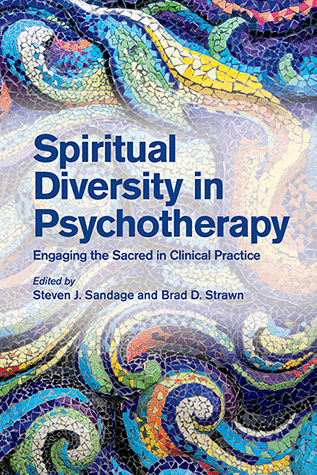
Spiritual Diversity in Psychotherapy
Available formats
Also available from
Although once marginalized in the field of psychotherapy, spirituality and religion have now become established ethical considerations in clinical research and practice.
Drawing from diverse spiritual and religious backgrounds, this book offers clinical guidance for addressing a vast variety of traditions and complex diversity considerations in psychotherapy.
This text uses strategies and in-depth case descriptions to serve as a guide for therapists and clinical professionals to effectively integrate spirituality and religion into clinical practice.
Acknowledgments
Contents
List of Contributors
Introduction: Spiritual Diversity in Psychotherapy
Part I: Spiritually Integrated Approaches to Psychology
- Chapter 1. Hindu Spirituality and Psychoanalytic Psychotherapy
Pratyusha Tummala-Narra - Chapter 2. Harvesting Religious Fruits in Spiritually Integrated Psychotherapy: Personal Reflections of a Jewish Psychologist of Religion
Kenneth I. Pargament - Chapter 3. The Healing Truth of Emptiness: Tibetan Buddhism in the Clinical Space
Pilar Jennings - Chapter 4. Navigating Deep Waters: Spirituality and Religion in the Womanist Psychodynamic Space
Phillis Isabella Sheppard - Chapter 5. A Sufi Muslim Model of Spiritually Integrative Psychotherapy
Shamaila Khan - Chapter 6. Christian Spiritually Integrated Psychotherapy: A Wesleyan Model
Brad D. Strawn - Chapter 7. Raising the Sparks: Psychotherapeutic Process as Tikkun Olam
Karen E. Starr - Chapter 8. The Name of God is Mercy: Reflections on Suffering, Healing, and Growth from a Roman Catholic, contemplative, mystic, psychoanalyst
Theresa Clement Tisdale
Part II: Spiritually Integrated Psychotherapy with Specific Diversity Dynamics
- Chapter 9. Approaching Intersections of Spirituality, Religion, and Non-Traditional Gender Identities in Psychotherapy
Ruben A. Hopwood - Chapter 10. Spiritually Integrated Psychotherapy with LGBQ Individuals
Sarah H. Moon - Chapter 11. Religious Differences in Spiritually Integrated Couple Therapy
Steven J. Sandage - Chapter 12. An Intercultural Approach to Spiritually Oriented Therapy of Military Moral Injury
Katy Barrs & Carrie Doehring - Chapter 13. Spirituality, Selfhood, and Social Class in Psychotherapy
Neil Altman - Chapter 14. Conclusion: Summary and Future Directions
About the Editors
Steven J. Sandage, PhD, is the Albert and Jessie Danielsen Professor of Psychology of Religion and Theology at Boston University School of Theology with a joint appointment in the Department of Psychological and Brain Sciences. He is also the research director and senior staff psychologist at the Danielsen Institute and visiting faculty in psychology of religion at MF Norwegian School of Theology (Oslo).
His books include To Forgive is Human; The Faces of Forgiveness; Transforming Spirituality; The Skillful Soul of the Psychotherapist; Forgiveness and Spirituality: A Relational Approach; and Relational Integration of Psychology and Cristian Theology. His research has been funded by the Lilly Endowment, the John Templeton Foundation, and the Fetzer Institute.
He has 24 years of clinical experience in a variety of settings and has taught in graduate therapy training programs for 19 years. He is a licensed psychologist with clinical specializations including couple and family therapy and multicultural therapy.
Brad D. Strawn, PhD, is Evelyn and Frank Freed Professor of the Integration of Psychology and Theology and chair of integration, Clinical Psychology Department, at the Fuller Seminary School of Psychology (Pasadena, CA).
His coauthored/coedited books include The Physical Nature of Christian Life: Neuroscience, Psychology & the Church (Cambridge University Press); Wesleyan Theology and Social Science (Cambridge Academic); and Christianity and Psychoanalysis: A New Conversation (InterVarsity Academic Press). He has coedited special issues of Psychoanalytic Inquiry, the Journal of Psychology and Theology, and the Journal of Psychology and Christianity. He is currently editing a new book series based on the annual Fuller Integration Symposium addressing psychology and theology.
Strawn is a licensed psychologist in clinical practice in Pasadena, CA.
These chapters on religious and spiritual diversity are by psychotherapists, for psychotherapists. People in the daily practice of helping patients have learned to appreciate each person’s uniqueness. This book mirrors the way we can generalize from unique cases, as each chapter author tells their story. Whether you are training for practice, practicing in your professional prime, or looking for ways to stave off burnout, this collection will stimulate, educate, invigorate, and update you.
—Everett L. Worthington, Jr., PhD, Commonwealth Professor Emeritus, Virginia Commonwealth University, Richmond, VA
This groundbreaking book not only adds to the knowledge of diversity-related issues—both religious/spiritual and cultural—in psychotherapy, it accomplishes this goal in a most creative and engaging way: by blending scholarship, clinical case examples, and fascinating personal background stories of the therapists themselves.
—Julie J. Exline, PhD, Professor, Department of Psychological Sciences, Case Western Reserve University, Cleveland, OH
This is a particularly important book at a critical juncture in the development of spiritually-integrated psychotherapy (SIP). While other books have addressed diversity in SIP, Steve Sandage, Brad Strawn, and the chapter contributors have elevated the theory and practice of it to the next level. An amazing accomplishment!
—Len Sperry, MD, PhD, Professor, Florida Atlantic University, Boca Raton, FL; author of Spirituality in Clinical Practice: Theory and Practice of Spiritually Oriented Psychotherapy, Second Edition