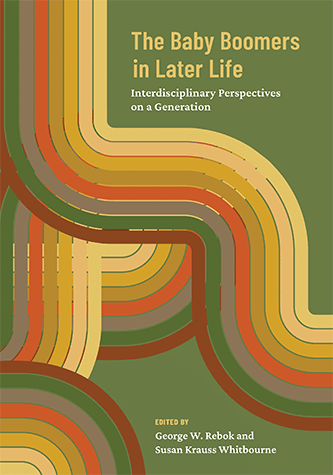
The Baby Boomers in Later Life
As the Baby Boom Generation reaches retirement age, this cohort presents unique challenges for researchers and mental health providers.
The Baby Boom generation (individuals born between 1946 and 1964) are shaped by particular historical and socioeconomic forces. Born in the post-World War era of widely shared affluence, they now face significant cultural, technological, and economic uncertainties in a rapidly changing world. This book examines the shared experiences as well as the key differences within this cohort, ranging from the early- vs. later-born ("Leading Edge" vs. "Trailing Edge"), as well as important racial/ethnic, and socioeconomic class distinctions, with an emphasis on impacts for common later-in-life challenges in mental and physical health. Chapters describe current research and clinical recommendations for treating conditions related to work and retirement, cognitive aging, health disparities and government services, technological and social trends, caregiving and palliative care, as well as the unique experiences of LGBTQ+ and ethnic minority populations.
Preface
- Chapter 1. The Aging Baby Boomers: Introductory Themes and Issues
Susan Krauss Whitbourne - Chapter 2. Demography of the Baby Boomer Generation
Linda A. Jacobsen - Chapter 3. Historical and Sociopolitical Influences on the Baby Boomers in Later Life
James Chappel and Katlin Risen - Chapter 4. Economic and Government Programs: Their Impact on the Baby Boomer Generation
Samsun Naher - Chapter 5. Perceptions of the Baby Boomer Generation
Hyun Kang - Chapter 6. Health of the Boomers, Health Behaviors, and Health Disparities
Roland J. Thorpe Jr. and Joseph J. Gallo - Chapter 7. Mental Health and Well-Being in the Baby Boomers
Brian D. Carpenter - Chapter 8. Cognitive Aging in the Baby Boomer Generation
Alden L. Gross, Sneha S. Mani, Andrea Morrello, George W. Rebok, and Sherry L. Willis - Chapter 9. Personality and Transition into Later Life Among the Baby Boomers
Jennifer Lodi-Smith, Sydney Kosnick, and Hollen Reischer - Chapter 10. Technology and Aging
Walter R. Boot - Chapter 11. Social Trends, Family, and Baby Boomers
Patricia Drentea and Allison Drentea-Tybor - Chapter 12. The Pride Generation: The Impact of Historical Social Change on Identity Development and Lifetime Outcomes among LGBTQ+ Baby Boomers
Jennifer L. O'Brien - Chapter 13. Long-Term Impact of Military Service on Veterans of the Baby Boomer Generation
Avron Spiro III, Anica Pless Kaiser, and Eve H. Davison - Chapter 14. Boomers, Work, and Retirement: Navigating the Process
Yisheng Peng, Gracie Schirle, and Lynn R. Offermann - Chapter 15. Caregivers and Caregiving: The Baby Boomers as Providers of Care
Joseph E. Gaugler, Christina Cauble, Amy Hobday, Shania Kuo, Kait Macheledt, Merve Altiner Yas, Siyu Gao, Linda Frizzell, and Adebowale Adeyemi - Chapter 16. Palliative Care: A Vital Component of Healthcare for Baby Boomers
Ashley L. Fromenthal, Alissa C. McIntyre, Timothy K. Ly, and Rebecca S. Allen - Chapter 17. Resilience in the Baby Boom Generation
Colin A. Depp and Lauren McBride - Chapter 18. Summary and Future Directions
George W. Rebok
George W. Rebok, PhD, is a lifespan developmental psychologist who develops community-based interventions to prevent age-related cognitive decline and reduce dementia risk. He has served as the principal investigator for two large intervention trials funded by the National Institute on Aging: the ACTIVE trial and the Baltimore Experience Corps® trial. Dr. Rebok is a professor emeritus at the Johns Hopkins Bloomberg School of Public Health and holds a joint faculty appointment in the Department of Psychiatry and Behavioral Sciences at the Johns Hopkins School of Medicine. He is the author of Lifespan Cognitive Development and numerous journal articles and book chapters on later life cognitive health and everyday function.
Susan K. Whitbourne, PhD, is a professor emerita of psychological and brain sciences at the University of Massachusetts Amherst and adjunct professor and faculty fellow in gerontology at UMass Boston. She is a co-researcher on the Rochester Adult Longitudinal Study, a 50-year, 4-cohort, 5-wave sequential study of Eriksonian psychosocial development in adulthood. The author of 22 books and 200 hundred journal articles and book chapters, Professor Whitbourne is regarded as an expert in the field of personality development in adulthood and old age. She is author of Psychological Disorders: Clinical Perspectives and coauthor of Adult Development and Aging: Biopsychosocial Perspectives (8th Edition).