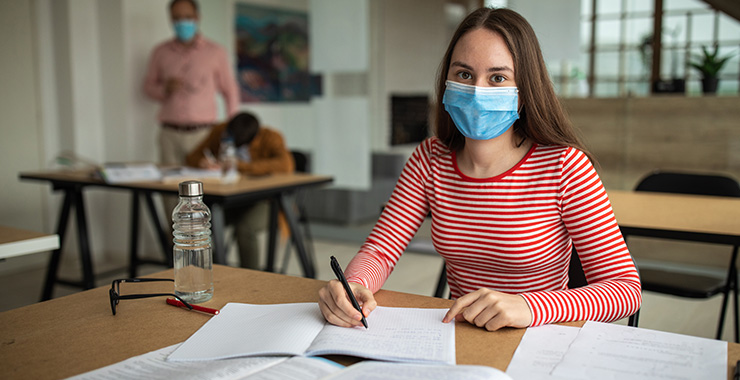
As schools grapple with how to support students and teachers as they return in the midst of the COVID-19 pandemic and social unrest spurred by the killing of George Floyd, psychologists are pointing to the benefits of social and emotional learning (SEL).
SEL is the process by which children (and adults) learn to understand and manage their emotions, set goals and make decisions, and engage in positive relationships. Psychological research has informed the development of evidence-based SEL programs based in school settings. Research has also shown that these programs significantly improve social and emotional skills, attitudes, behavior, and academic performance (Durlak, J.A., et al., Child Developmentopens in new window, Vol. 82, No. 1, 2011). During this tumultuous time, experts say those skills are more important than ever.
SEL benefits all children. School-based SEL programs also offer an opportunity to address educational inequities that have long existed but have become even more apparent during the events of 2020. The pandemic has disproportionately impacted Black people, Indigenous people, and people of color. Meanwhile, public awareness of systemic racism has grown following a surge in nationwide demonstrations and protests. Psychologists and education experts see this moment as an opportunity to recreate an educational system that better serves all students.
To guide schools as they open up for the new academic year, the Collaborative for Academic, Social and Emotional Learning and more than 40 expert partners released the how-to guide “Reunite, Renew, and Thrive: Social and Emotional Learning (SEL) Roadmap for Reopening Schoolopens in new window.”
“There’s this idea that kids are behind, or that there’s this catching up to do. We would argue that rather than focus on learning loss, we need to help our young people process what they have learned and experienced during this tumultuous time—and nothing could be more important than their social and emotional wellness,” says Kathleen Osta, managing director of the National Equity Project and a contributor to the roadmap.
The roadmap provides equity-focused strategies and hands-on tools to guide schools as they reopen on how to: