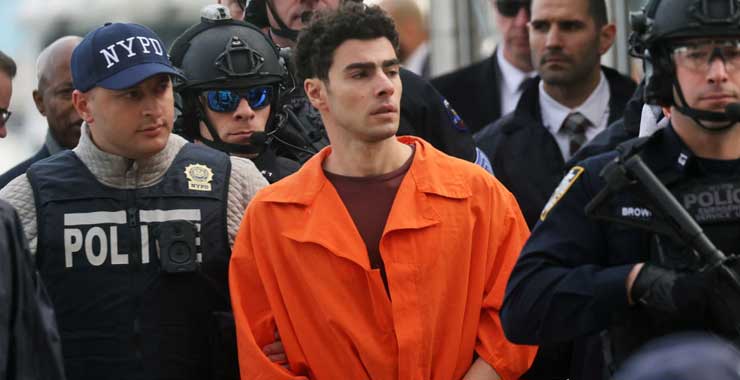
Supporters of vigilantes share the belief that the justice system fails to punish perceived wrongdoing. Isabel Pinto, PhD, director of the Social Psychology Lab at the University of Porto, conducted research showing that when people perceive formal institutions of social control, such as the justice system, as ineffective, they are more likely to support harsh and informal measures to punish those they see as offenders (Pinto, I., et al., Peace and Conflict: Journal of Peace Psychology, Vol. 30, No. 3, 2024opens in new window).
People are more likely to support vigilantes who are seen as defending core societal values or those who are part of their in-group, according to Pinto’s research. This is because the mismatch between the expected behavior of institutions and their actual behavior is seen as more threatening to one's in-group, and individuals support informal punishment to perceived wrongdoers. The danger is that vigilantism can result from the demonization of groups that are perceived as threats to individuals’ social identity, as is the case with marginalized groups, such as the unhoused or immigrants.
“Demonization is the perception that the ‘other’ has bad intentions against us. So, violence is legitimized as a defense that the in-group needs,” Pinto said. This demonization may increase support for vigilantes who are seen as defending the in-group against perceived threats—whether or not those threats are real.
Media, particularly social media, can amplify or reinforce narratives glorifying vigilantism, allowing people to find justifications that align with their feelings and biases. Misinformation on these platforms impacts moral judgments about vigilantism and other extreme behaviors.
“When people seek out information that confirms their existing beliefs on social media, that is a very dangerous cycle,” said Clifford Workman, PhD, a visiting assistant professor in the Department of Psychological and Brain Sciences at the University of Delaware. Our ability to reason is just as susceptible to misinformation as our emotions and may reinforce biases and extremist views, he said.
Workman’s research shows that people’s social values can influence their endorsement of violence (Workman, C. I., et al., AJOB Neuroscience, Vol. 11, No. 4, 2020opens in new window). Scientists asked study participants about their views on various sociopolitical issues. They then conducted functional MRIs of the subjects’ brains while they judged the appropriateness of violent protests that aligned with or deviated from their views. They found that certain brain areas were more active when people thought violence was appropriate, especially if it aligned with their beliefs. This suggests that strong moral convictions can make people more likely to support violence.
Dehumanizing language is often used to justify violence against certain groups, Workman added. “Talking about people in that way makes it a lot easier to view them as disposable in service of some moral greater good,” he said.